


Moscow’s Predictable Fury: Luhansk Strike Ignites Old Wounds, New Threats
POLICY WIRE — Kyiv/Moscow — The predictable churn of this seemingly endless war often feels like a broken record, and this week’s purported strike on Luhansk only cranked up the volume on a...

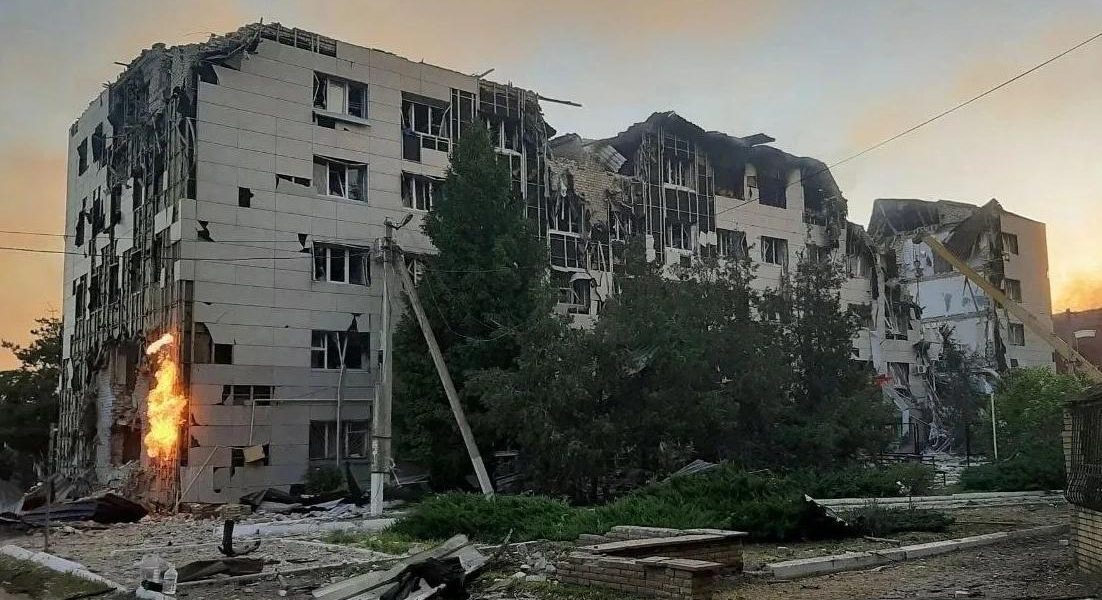
POLICY WIRE — Kyiv/Moscow — The predictable churn of this seemingly endless war often feels like a broken record, and this week’s purported strike on Luhansk only cranked up the volume on a familiar, discordant melody. It wasn’t the first such incident, — and it sure as heck won’t be the last. But it did manage to prompt the usual fiery rhetoric from Moscow—a reliable fixture, like the sunrise after a sleepless night—promising yet another “decisive response” to what they’ve labeled a blatant act of aggression against civilians.
It’s all very theatrical, if you think about it. An incident occurs, accusations fly like shrapnel, and then the inevitable threat of retribution hangs heavy in the air. For observers of the two-year-plus grind, it’s a script we know by heart, played out on a loop. This particular act saw Russia pointing fingers directly at Kyiv and its Western benefactors, particularly Britain and France, alleging the use of long-range missiles supplied by these allies. Moscow isn’t just alleging; they’re convinced of it, framing it as a direct escalation.
Ukrainian authorities, as you might expect, remain cagey about specific operations. They’ve learned it’s better not to gloat, nor to confirm, keeping adversaries guessing. But their stance is unequivocal: targets within occupied territories are legitimate. They’re fighting for every inch, for goodness sake.
“This heinous act, enabled by Western arms, won’t go unpunished. Our response will be decisive and swift, targeting not just the perpetrators, but the very infrastructure that makes such barbarity possible,” stated Colonel General Igor Konashenkov, a familiar, stony voice from Moscow’s Ministry of Defence. It’s the kind of statement designed to rattle cages, both at home — and abroad. They’ve done it before, they’ll do it again.
And so the world holds its breath, not necessarily in fear, but in weary expectation. We’ve seen this movie before. The reverberations of such incidents aren’t confined to the battlefields of Eastern Europe; they ripple out, touching distant shores and shifting global calculations. Because every shell fired, every accusation hurled, injects another dose of instability into an already febrile international system. That affects everyone, from Washington to Islamabad.
In Pakistan, for instance, a country perpetually navigating its own intricate geopolitical fault lines, these distant tremors are felt keenly. The rising energy prices, exacerbated by disruptions to Russian oil and gas markets, sting a populace already grappling with inflation. The country’s Ministry of Finance reported earlier this year that Pakistan’s import bill for petroleum products alone swelled by nearly 40% in the last fiscal year, a direct consequence of global energy volatility tied partly to this enduring conflict. It’s a bitter pill to swallow when you’re not even in the immediate vicinity of the fighting.
📄 POLICY WIRE WHITEPAPER PUBLISHED: PAKISTAN'S NATIONAL SECURITY POLICY PRIORITIES
👉 READ BY CLICKING HERE“They hit us, we hit back. It’s war, not a parlor game for polite diplomacy,” commented Mykhailo Podolyak, advisor to President Zelenskyy’s office, known for his candid assessments. “We’re not asking for permission to defend our people or reclaim what’s ours.” He’s got a point. It’s messy, brutal work, not for the faint of heart, or for those clinging to pre-2022 notions of how international conflicts play out.
But the real tension isn’t just in the tit-for-tat exchanges. It’s in the growing sense of global strategic drift. Where do you go when de-escalation seems less like an objective — and more like a pipe dream? And how do other nations, particularly those in the Muslim world, like Iran, calibrate their own ambitions and proxy conflicts against this backdrop? Sometimes, the familiar refrain from a different theater – like Tehran’s often-heard ‘no compromise’ rhetoric – sounds eerily similar, a reflection of a wider, fractured international order.
What This Means
The Luhansk incident, beyond its immediate tactical implications, tightens the Gordian knot of Western military aid to Ukraine. Moscow’s predictable outrage serves not just as a domestic propaganda tool, but also as a pressure tactic, a none-too-subtle warning to Western capitals about the consequences of their continued support. This isn’t just about destroying infrastructure; it’s about testing the resolve of Ukraine’s allies, probing for cracks in their consensus. For policymakers in Washington, London, and Paris, it’s a constant headache, requiring a delicate dance between enabling Ukrainian defense and avoiding a direct, hot confrontation with Russia.
Economically, this tit-for-tat dynamic perpetuates a climate of uncertainty, dampening investment and exacerbating inflation in already struggling economies, Pakistan being a prime example. Politically, it deepens the divide between East and West, solidifying alliances and pushing fence-sitters towards clearer, often starker, positions. It’s an inconvenient truth, but this war—marked by cyclical violence and predictable bluster—is now firmly embedded in the global strategic landscape. We’re not getting rid of it anytime soon, it seems. And that’s a hard reality to swallow for everyone.