


Frankfurt’s Terminal 2 Goes Dark: Europe’s Industrial Engine Adjusts to a Hard Stop
POLICY WIRE — Frankfurt, Germany — You know a city is truly serious about its infrastructure when it simply shutters a quarter of its primary international gateway. No fanfare, no lingering goodbyes....

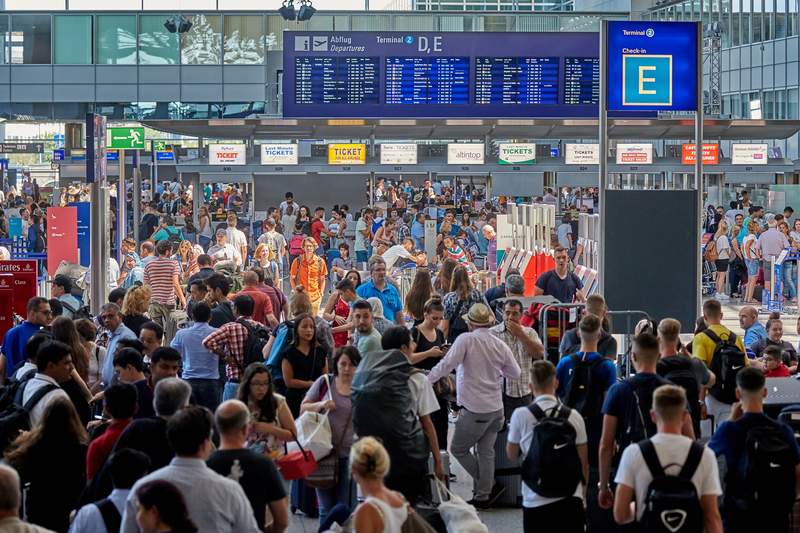
POLICY WIRE — Frankfurt, Germany — You know a city is truly serious about its infrastructure when it simply shutters a quarter of its primary international gateway. No fanfare, no lingering goodbyes. Just the quiet, grinding gears of modernity pausing for a very extended breath. Frankfurt Airport’s Terminal 2, a facility that has shuttled millions—its concourses often a chaotic ballet of global itinerants—has formally entered a multi-year deep sleep. It’s not just a repaint; it’s a gut job, an overhaul so profound it’s forcing a strategic rethink across one of Europe’s busiest aviation hubs.
Because let’s be frank: this isn’t just about a fresh coat of paint — and some snazzier lounges. This is about capacity. This is about maintaining Germany’s — and indeed, much of Europe’s — logistical pulse in a world that doesn’t pause for anything, let alone a terminal refit. Germany, you see, prides itself on precision, on efficiency, on being the quiet engine of the continent. But even engines need tune-ups, even if the timing sometimes feels… less than ideal.
“It’s a necessary surgical intervention, not a closure,” quipped Anke Schmitt, a spokesperson for Fraport AG, the airport operator, trying to put the best possible face on a logistical nightmare in waiting. “We’re investing heavily in the future, ensuring Frankfurt remains a competitive and modern gateway for decades to come. Sure, there’ll be adjustments, but the long-term gains outweigh the short-term inconvenience. We don’t do things by halves, you know.”
Indeed they don’t. The scope is massive: aging systems, check-in counters that look like they belong in a bygone era, security checkpoints that groan under modern demand. It all needs an update. And let’s not pretend these behemoth renovations are ever completed ahead of schedule, or under budget. They’re sprawling beasts, consuming time, money, and no small amount of patience from anyone who flies in or out of this pivotal European hub. According to Fraport, the airport handled approximately 59.4 million passengers in 2023, underscoring its sheer volume and the impact of even partial downtime.
But the repercussions stretch far beyond disgruntled business travelers — and rerouted holidaymakers. Frankfurt isn’t just a tourist magnet; it’s a lynchpin in global commerce, a significant conduit for air cargo and, naturally, people. A huge chunk of the traffic moving between Europe and parts of Asia, particularly the Subcontinent and the broader Muslim world, funnels right through these gates. Think about the Pakistani diaspora scattered across Europe – family visits, remittances, even trade goods often touch down here. When a major transit point takes itself offline, even partially, those finely tuned networks feel the tremor.
And it’s not just about flights. Consider the ripple effect. Airlines need to reshuffle. Passengers get rerouted, some taking longer journeys, some changing their travel plans altogether. It’s an economic hiccup, a mild congestion in the circulatory system of trade and travel that German officials are betting will lead to stronger veins down the road. They’re making a bet, effectively, on future capacity over present continuity. A brave face, for what will be a complicated stretch of years. The government, though, remains staunchly optimistic. “Maintaining robust, future-proof infrastructure isn’t a luxury; it’s an economic imperative,” stated Karl-Heinz Richter, a senior official with the German Federal Ministry for Digital and Transport. “This project directly impacts our ability to compete, to trade, to remain an economic force. It’s a strategic investment in Germany’s industrial pulse.”
What This Means
This isn’t merely an airport getting a facelift; it’s a strategic play in Germany’s long game of economic dominance within Europe and beyond. By temporarily sacrificing a substantial portion of its air traffic capacity, Frankfurt—and by extension, Berlin—is signaling a commitment to modernization over immediate expediency. The political implication is clear: even in an era of fiscal tightness and geopolitical volatility, infrastructure investment remains non-negotiable for an export-driven nation. But it’s a tightrope walk. Disruption to major travel hubs can, and often does, stir public grumbling and supply chain anxieties, particularly for smaller businesses or individuals reliant on direct connections. Economically, while the initial spend is considerable, the anticipated payoff is a more efficient, higher-capacity terminal that can better handle future growth, maintaining Frankfurt’s position against other European heavyweights like Heathrow or Charles de Gaulle.
the forced reshuffle in airline routes presents both challenges — and opportunities. Other regional airports might see a temporary uptick in traffic, straining their own facilities. For airlines, it means tighter margins, complex re-routing logistics, — and potential customer dissatisfaction. But ultimately, when T2 emerges from its chrysalis, Germany hopes to solidify its position as the continent’s premier transit and cargo hub, capable of meeting the ever-growing demands of international travel and trade. It’s a calculated gamble, but it’s one Germany’s leaders apparently feel they’ve no choice but to take. It won’t be pretty for a while, but they’re banking on beautiful when it’s all done.