


Capital on Edge: Shots Near White House Fuel Security Anxieties
POLICY WIRE — WASHINGTON, D.C. — The capital has that particular hum about it these days, a low thrum of anxiety that never quite fades. Saturday brought it roaring back, sharp and unwelcome, as...

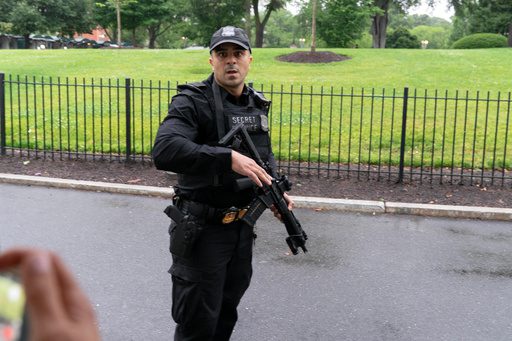
POLICY WIRE — WASHINGTON, D.C. — The capital has that particular hum about it these days, a low thrum of anxiety that never quite fades. Saturday brought it roaring back, sharp and unwelcome, as gunfire erupted mere blocks from the White House, sending a chill through the city and setting off immediate alarms across the global security apparatus. This wasn’t just another Tuesday, mind you; this was an event that put America’s supposed epicenter of power squarely in the crosshairs, figuratively and, for at least two individuals, quite literally.
It began as an otherwise unremarkable afternoon—or so we thought. But suddenly, the unmistakable staccato of shots broke the humid D.C. air, transforming the bustling 17th Street and Pennsylvania Avenue NW corridor—just one short block from the executive mansion—into a scene of chaos. Secret Service agents, always on that razor’s edge, were forced to act. And they did. One person, a suspect of some description, was shot. A bystander, an unwitting player in a rapidly unfolding drama, was hit too. Both are clinging to life, we’re told.
But let’s be real. It’s never just about the immediate incident, is it? Not when we’re talking about the seat of global power. For those of us who cover this city, the reaction was instant — and visceral. Journalists working near the White House, filming their daily stand-ups (yes, they really do that all the time), were ordered to seek shelter. And Selina Wang, an ABC News senior White House correspondent, found herself capturing a truly surreal moment. Her camera was rolling, as it often is, recording a bit about the President’s latest comments on a possible Iran deal. Then the gunshots crackled, loud — and startling. Her eyes, wide with disbelief and fear, tell a story no script ever could. That video? It ripped through social media, bagging over three million views on X by Saturday evening, proving once again that in this town, reality TV often trumps planned programming.
“It’s an incredibly challenging environment for our agents, believe me,” acknowledged FBI Director Kash Patel, whose agency often works hand-in-glove with the Secret Service on such matters. “They’re putting their lives on the line daily—and this administration backs them completely in keeping the President safe. But we can’t forget the folks just walking by.”
Because let’s not pretend this is a one-off. It’s not. This capital seems to be on a constant loop of near-misses and actual incidents, always teetering on the edge of something worse. Barely a month ago, federal authorities were scrambling after what they labeled an attempted assassination of the President at a White House Correspondents’ Association dinner. Cole Tomas Allen, from Torrance, California, has since pleaded not guilty to charges tied to that alleged plot, and he’s still locked up.
Then, only days later, Secret Service agents fired at a suspect near the Washington Monument, wounding a teenage bystander. Michael Marx, 45, of Midland, Texas, faced charges there. These events pile up, don’t they? One after another. It makes you wonder. And it forces us to grapple with a stark truth: America’s front yard—the area around its most hallowed democratic institutions—has become a persistent, uneasy tableau of vulnerability.
📄 POLICY WIRE WHITEPAPER PUBLISHED: PAKISTAN'S NATIONAL SECURITY POLICY PRIORITIES
👉 READ BY CLICKING HEREIt also can’t help but stir recollections of last November’s grim incident, not far from the very same vicinity, where two members of the West Virginia National Guard were ambushed. One died, another was gravely wounded. Rahmanullah Lakanwal, already charged in that prior event, serves as a stark reminder that security breaches aren’t confined to a neat ideological box; they’re an everyday threat, irrespective of origin or motive—a persistent headache for a nation trying to project strength and stability on a global stage, particularly to allies like Pakistan, whose own security struggles often intersect with perceived American resolve. Pakistan steps up as indispensable peacemaker, yet questions of security at home still ripple through global discussions.
But the numbers speak volumes, if you’re looking for cold hard facts. According to a recent 2023 report by the Government Accountability Office, there were over 8,000 reported threats against federal protective services personnel nationwide. It’s a sobering figure. And while not all involve direct gunfire, they paint a picture of relentless pressure on those tasked with guarding the nation’s key figures and buildings.
“We can build all the walls we want, fortify every fence,” remarked Senator Roger Wicker, a long-time member of the Armed Services Committee, his voice gravelly with concern. “But if the internal discord and desperation keep boiling over into violence right here in the capital, what does that say about us? It certainly complicates our ability to lead abroad.”
What This Means
This latest flurry of gunfire near the White House isn’t just a localized security incident; it’s a symptom. It highlights the growing challenges faced by federal law enforcement, struggling to maintain a facade of impenetrable security in an increasingly fractured society. Politically, these incidents play directly into narratives of instability, fueling both calls for stronger policing and critiques of a society awash in guns and grievance. Economically, while not directly impactful on markets, repeated scares erode confidence. They chip away at the sense of normalcy crucial for a functioning capital, affecting everything from tourism to the efficiency of daily governmental operations. For foreign leaders and diplomats—particularly those from the Muslim world or South Asia, many of whom navigate complex security landscapes back home—these recurrent alarms within America’s seat of power complicate perceptions. They observe a superpower grappling with an internal turbulence that, frankly, many thought was the exclusive domain of other nations. This pattern of attacks also demands resources, diverting attention and personnel from broader national security mandates, including intelligence gathering and diplomatic initiatives critical to international stability and partnerships. And it just makes everyone edgy, plain — and simple.