
Luhansk Carnage Ignites Russia’s ‘Terror’ Narrative Amid Global Strain
POLICY WIRE — Washington, D.C. — The shattered walls of a Luhansk dormitory this week offered stark, gruesome proof of lives cut short, adding six names to the grim ledger of this grinding conflict....

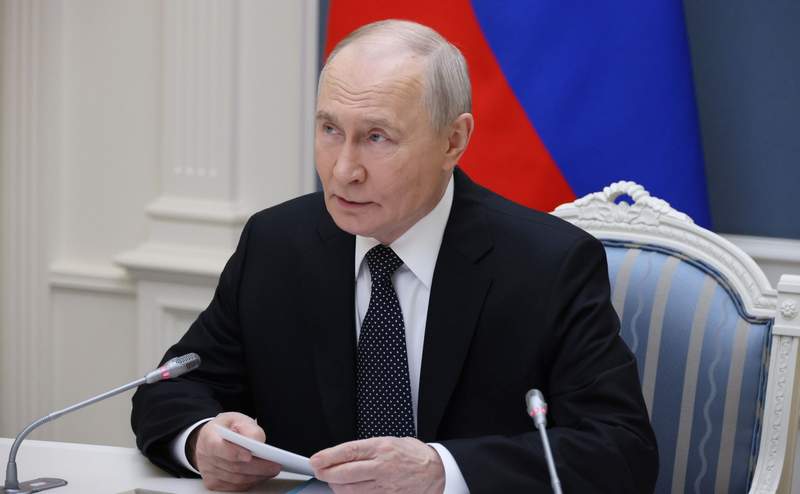
POLICY WIRE — Washington, D.C. — The shattered walls of a Luhansk dormitory this week offered stark, gruesome proof of lives cut short, adding six names to the grim ledger of this grinding conflict. But it wasn’t just bodies on display; it was a potent piece of propaganda, skillfully wielded by Moscow to amplify its long-standing narrative: Ukraine, its neighbor, harbors terrorists. President Vladimir Putin didn’t mince words, blaming Kyiv for a ‘terrorist attack’ that has, predictably, fueled another cycle of condemnation and counter-accusation. It’s an old tune, but one that still resonates deeply in the echo chambers of global opinion, shaping perceptions and hardening battle lines.
Because every casualty now becomes a political weapon, each broken window pane a canvas for competing claims. Moscow insists the dormitory strike, occurring in territory it illegally annexed, was a deliberate targeting of civilians. Kyiv, meanwhile, tends to label such incidents—when it doesn’t deny involvement entirely—as justifiable responses to occupation or collateral damage in the larger war effort. And let’s be frank, verifying facts from afar feels like trying to catch smoke. This incident, while locally tragic, carries weight far beyond the rubble-strewn streets of Luhansk. It reinforces the Kremlin’s justification for its ‘special military operation,’ lending credence (to its own populace, at least) to the notion that it’s battling not just a nation, but a ‘terrorist’ threat.
“This barbaric act against innocent civilians living in territory now part of the Russian Federation demonstrates the true face of the Kyiv regime,” stated Kremlin spokesman Dmitri Peskov, his voice thick with predictable outrage, though we can’t be sure about the ‘innocent’ part if military personnel were indeed billeted there, a common occurrence. “Russia won’t stand idly by. We will respond, and the terrorists responsible will face justice.” But what that ‘justice’ entails usually means more barrages, more destruction. It’s a cruel game of attrition, plain — and simple.
From Kyiv, a contrasting, equally firm stance. “Moscow always creates pretexts for its continued aggression,” responded Oksana Fedorova, a Ukrainian Defense Ministry representative, during a virtual press briefing. “Whether it’s manufactured threats or exaggerated incidents, they seek to dehumanize our struggle and legitimize their illegal invasion. They’re the terrorists. Period.” And frankly, that’s not far from the truth of what Moscow’s playbook often looks like— a cycle of provocation and disproportionate response.
The reverberations aren’t confined to Eastern Europe either. The conflict’s economic aftershocks—skyrocketing food prices, disrupted supply chains, surging energy costs—hit developing nations hardest. Countries like Pakistan, already grappling with their own fiscal challenges and regional instabilities, feel the squeeze acutely. They watch the information war unfold, perhaps with a touch of cynical recognition, as their own domestic narratives are frequently managed and weaponized to achieve political ends. A recent study by the Stockholm International Peace Research Institute (SIPRI) found that global military spending increased by 3.7% in 2022, largely driven by the conflict in Ukraine, illustrating a stark shift in international priorities that inevitably siphons resources away from other pressing humanitarian and development needs across South Asia and the wider Muslim world.
📄 POLICY WIRE WHITEPAPER PUBLISHED: PAKISTAN'S NATIONAL SECURITY POLICY PRIORITIES
👉 READ BY CLICKING HEREWhat This Means
This incident in Luhansk, regardless of its true genesis, serves as potent grist for the Russian state media mill. It reinforces Putin’s foundational argument for the invasion—the denazification and demilitarization of a supposedly ‘terrorist’ state—for an audience that primarily consumes state-sanctioned news. For the international community, particularly those nations already struggling with the geopolitical fallout, it complicates diplomacy; it makes finding common ground harder. Kyiv, in its current desperation, may feel compelled to strike targets deep within occupied zones, knowing full well it risks amplifying Russian victimhood narratives. It’s a vicious cycle with no easy off-ramp.
Economically, the incident, like all such flashpoints, throws another spanner into the works of an already fragile global system. Heightened tensions mean prolonged conflict, which means continued pressure on commodity prices—food, fuel, everything. That’s bad news for everyone, but it’s especially rough for places like Pakistan, a country currently navigating an economic maelstrom, with high inflation making basic necessities luxuries for many. They don’t have the luxury of detached observation. They’re feeling it directly. The ripple effects of each strike, each new accusation, travel across continents, disrupting lives far removed from the immediate theater of war. It’s all part of the global echo chamber where digital lies ignite real-world fury and economic hardship.
Politically, Russia’s framing of Ukrainian ‘terrorism’ aims to isolate Kyiv further and perhaps deter Western support, making the case for supplying advanced weaponry more morally ambiguous. And it might just be working for some. For other nations—many in the developing world—the principal takeaway isn’t who started what, but rather the unbearable cost to human lives and global stability. It’s a stark reminder that in this particular game of chess, every move extracts a brutal human toll, creating silent collateral, not just in Luhansk, but across an increasingly interconnected and volatile world.