


Florida State Secures Marquee Asset Amidst Southeastern Shifting Allegiances
POLICY WIRE — Tallahassee, FL — In the cutthroat bazaar of collegiate athleticism, where loyalty often bends to the highest bidder and strategic maneuvers dictate futures, a curious development has...

POLICY WIRE — Tallahassee, FL — In the cutthroat bazaar of collegiate athleticism, where loyalty often bends to the highest bidder and strategic maneuvers dictate futures, a curious development has seized headlines. It isn’t a regional conflict erupting or a diplomatic kerfuffle unfolding in some distant land—no, not directly anyway. Instead, the sudden declaration of allegiance from a sought-after talent has quietly underscored the shifting tectonic plates beneath the competitive landscape, leaving one established powerhouse in an unexpected lurch. This, friends, is the brutal ballet of college football recruiting, often more complex than most international trade deals.
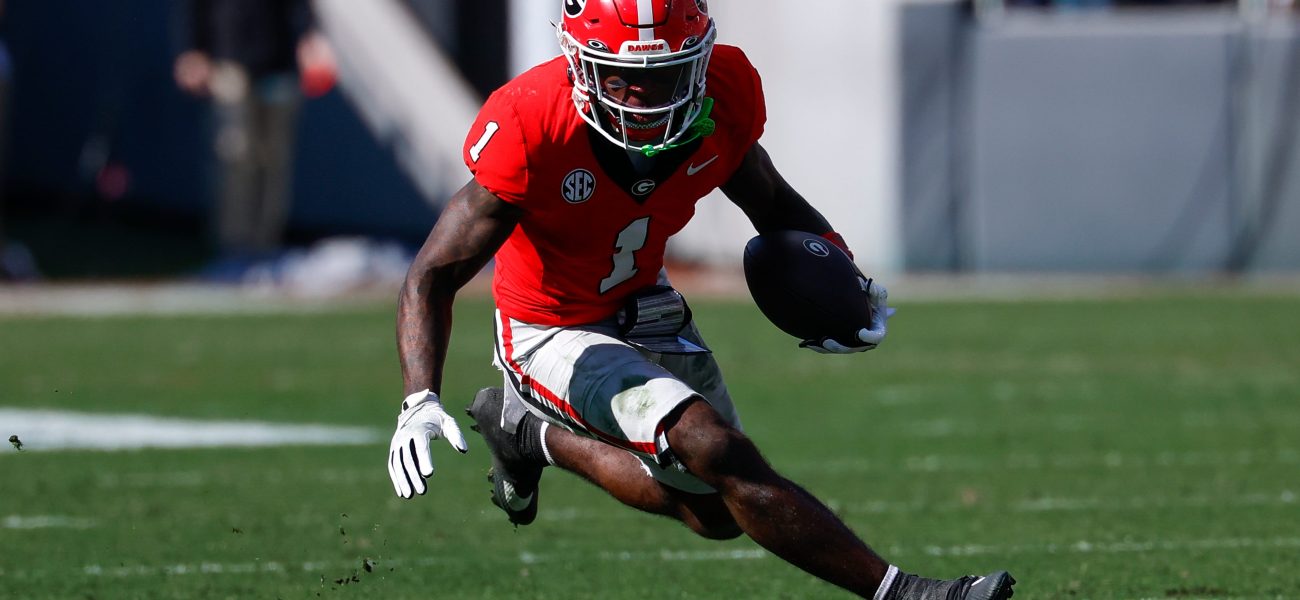
Many expected Sean Green, a highly touted wide receiver whose athletic prowess has been, well, widely recognized, to anchor his future squarely in Athens, Georgia. He was considered a home-grown gem. But these predictions, much like several think tank forecasts on emerging markets, have now been proven spectacularly off-kilter. Indeed, the announcement that 4-star WR Sean Green has committed to Florida State , per Rivals’ Hayes Fawcett, hit certain corners like an unanticipated policy reversal. It’s a move that scrambles the conventional wisdom—a familiar phenomenon in many arenas, from global commodity markets to regional power plays. [QUOTE_PLACEHOLDER]
Green will now find himself playing at FSU to begin his collegiate career in 2027. And, frankly, that decision stings for those who’d earmarked him as an integral piece of the Bulldog dynasty’s continued aspirations. The Georgia Bulldogs were widely regarded as one of the top landing spots for the talented receiver, but Green’s decision, enacted with the swiftness of a seasoned diplomat announcing a pivot, sent shockwaves through recruiting circles. You just don’t expect such a decisive change of heart when the consensus was so strong.
Standing at 5-foot-11, 175 pounds, Green is a fast and athletic playmaker who should have no problem finding his role on the Seminoles’ offense next season. He’s exactly the kind of player whose capabilities could tip the balance, a high-value asset in the grand scheme of athletic dominance. His skills, the route runner has put his talents on full display throughout his first three seasons at Camden County High School, aren’t in dispute. But his destination certainly was. Green was expected to stay home and commit to Georgia by many, creating a narrative that the player himself decided to utterly rewrite. Green chose FSU over Georgia and Virginia, confirming the Seminoles’ pull—or perhaps, simply confirming the surprising fickleness of young ambition. One wonders if similar geopolitical upsets begin with such seemingly innocuous, yet impactful, individual decisions.
For context on the value of such a player, consider this: Green is ranked as the No. 26 wide receiver and the No. 181 overall player from the class of 2027, per the 247Sports Rankings . This isn’t just a number; it’s an index of potential influence. This kind of shift, while seemingly localized, can alter regional dynamics for years to come. Because sometimes, the outcome of seemingly minor decisions can carry significant weight. He is listed as the No. 16 overall player out of Georgia, and Green would have quickly emerged as an explosive and reliable option on the Dawgs’ offense if he ultimately chose Georgia over Florida State.
The tale of recruitment often echoes the grander sagas of influence and control—Pakistan, for instance, carefully weighing its allegiances amid regional powers. Similarly, here, a promising young talent considered his options, not based on borders or historic treaties, but on an official visit. Green took an official visit to FSU this past weekend on June 5, and the receiver wasted little time in making his commitment decision following his visit to Tallahassee. A single visit. One meeting. That’s all it took, apparently, to redirect a destiny. This echoes patterns seen in smaller, but no less impactful, negotiations, whether they’re trade agreements or security pacts. Often, a brief interaction can swing sentiment.
📄 POLICY WIRE WHITEPAPER PUBLISHED: PAKISTAN'S NATIONAL SECURITY POLICY PRIORITIES
👉 READ BY CLICKING HEREGeorgia, having lost this specific skirmish for a key talent, now turns to broader strategic maneuvers. The Dawgs will now turn elsewhere in hopes of adding more wide receiver depth from the 2027 class. It’s an adjustment, a policy shift. They haven’t abandoned the field. Georgia has targeted some of the top wide receiver talent from the class of 2027 recently. Their network, their infrastructure—it’s vast. So, 5-star WR Eric McFarland recently added Georgia to his top three schools, and the Dawgs have also submitted an offer to 3-star WR Seven Rashad as well. The market, as it were, continues to churn, absorbing the shock — and moving forward.
What This Means
This decision, while about college football, offers a fascinating microcosm of larger power struggles. Economically, securing a talent like Green is akin to capturing a strategic market share. Florida State gains an immediate, tangible asset, potentially boosting future revenue streams through ticket sales, merchandising, and brand prestige. But it also creates a ripple effect: rivals must now reassess their own portfolios, accelerating bids for other available talent or adjusting their long-term development strategies. The market reacts; it’s never static. For coaches, the political implication is clear: even seemingly secure alliances can fracture, requiring constant diplomatic effort and resource allocation to maintain influence. Trust is ephemeral, especially in competitive landscapes. In Pakistan, we’ve seen how sudden shifts in allegiances or a single economic downturn can make or break critical sectors. Think about the vulnerabilities highlighted in articles such as Acid Burns Deep: Pakistan’s Medical Sector Reels from Familiar Violence, illustrating the systemic impacts of external pressures on internal stability. Similarly, the reverberations from one high-profile ‘defection’ in the high-stakes world of sports can expose weaknesses and force recalibration, much like India’s tariff hike shifted regional dynamics, as explored in Golden Handcuffs: How India’s Tariff Hike Empowered an Old Adversary.
The commitment of Sean Green isn’t just a sports footnote. It’s a vivid illustration of how fluid power remains, even in ostensibly settled domains, where individual decisions can carry disproportionate weight and force, quite literally, a shift in the balance of power, forcing rival factions to re-evaluate their entire playbooks. And that, dear reader, is a policy brief in itself.