
Zelensky’s Gilded Cage: Kyiv’s Gains Versus Global Aid Fatigue
POLICY WIRE — Kyiv, Ukraine — Forget the battlefield reports, just for a moment. Instead, picture the high-stakes poker game played not with tanks and drones, but with carefully chosen words and...

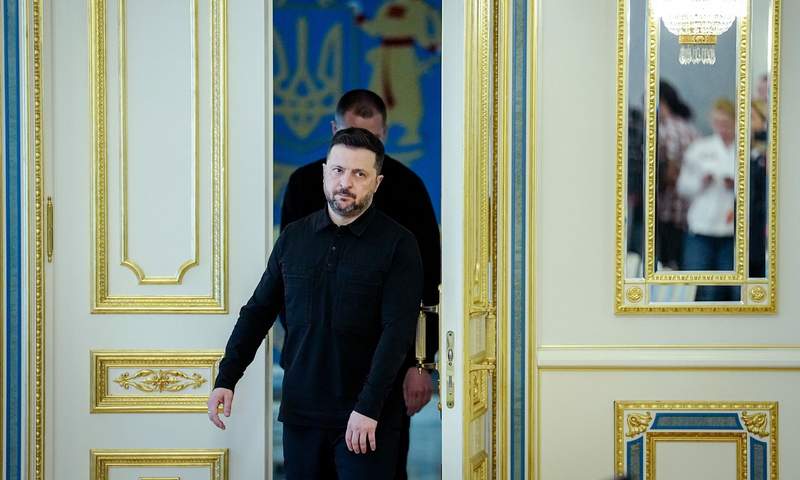
POLICY WIRE — Kyiv, Ukraine — Forget the battlefield reports, just for a moment. Instead, picture the high-stakes poker game played not with tanks and drones, but with carefully chosen words and veiled financial promises. President Volodymyr Zelensky, ever the master of wartime messaging, insists his Western allies now see Ukraine as firmly on the offensive. A narrative, one might observe, that tends to resurface precisely when funding debates get a bit too… inconvenient.
It’s not just about what Ukraine says it’s doing, you see. It’s about what everyone else wants to believe, — and what they’re willing to pay for. Because while Kyiv paints a picture of growing momentum—and there’s certainly grit there—the international coffers are, well, not bottomless. Western leaders have, for nearly two years now, been shelling out cash and weaponry with a degree of commitment rarely seen, for better or worse. But maintaining that posture? It’s a trickier proposition now.
“We’re not just holding the line; we’re pushing back,” Zelensky declared, his voice often carrying that mix of resolve and thinly veiled frustration familiar to those who’ve watched this conflict unfold. “Our partners recognize this, — and their continued commitment shows it. Ukraine’s spirit, frankly, it’s unbreakable.” A bold claim, perhaps, from a leader whose very survival depends on that continued commitment.
And then there’s the quiet calculus in chancelleries from Berlin to Washington. Are the gains on the ground enough to justify the escalating bills? A senior European Union diplomat, speaking anonymously given the sensitivity of the internal discussions, was a little more measured, you bet. “It’s undeniable. Ukraine’s operational ingenuity—their sheer guts—it’s shifted perceptions. But sustaining that momentum, it needs cold, hard cash and consistent supplies, doesn’t it?” It’s that second part, the ‘doesn’t it?’, that carries the weight.
Because let’s be honest: Ukraine’s strategic value — and ethical standing aren’t just decided by battles. They’re also priced by energy markets, domestic political squabbles, and the increasingly noisy calls for accountability over the billions deployed. The global financial apparatus, for all its complexities, still answers to national treasuries—and taxpayers.
📄 POLICY WIRE WHITEPAPER PUBLISHED: PAKISTAN'S NATIONAL SECURITY POLICY PRIORITIES
👉 READ BY CLICKING HEREConsider the raw numbers for a second: The Kiel Institute for the World Economy reports that as of January 2024, total commitments of aid to Ukraine from its international partners had reached approximately $277.6 billion. That’s a staggering sum, right? A chunk of change that would make even the most robust economy squint. And while much of it goes to defense, plenty more is tied up in humanitarian aid and shoring up Kyiv’s fractured economy. But those funds, they’ve got to come from somewhere. Often, they come with strings. Always, they come with questions.
Even far-flung regions feel the squeeze. Nations in the Muslim world, many already navigating choppy economic waters and dependent on stable energy supplies, find themselves in a precarious position. Countries like Pakistan, for instance, are struggling to manage crippling inflation and energy shortfalls, exacerbated by global market volatility partly driven by this very conflict. Their neutrality, often a necessity of survival rather than a diplomatic choice, becomes a delicate tightrope walk between powerful global blocs.
What This Means
Zelensky’s confident pronouncements aren’t just for morale; they’re a bid for sustained relevance — and resources. This isn’t a pep talk; it’s a strategic directive. If allies *believe* Ukraine is winning, they’ll keep paying. If doubt creeps in, especially amidst other burgeoning global crises (we’re looking at you, Gaza), support can, and often does, waver. The implications here are stark: A perception of strength might buy more air defense systems, more artillery shells, and crucially, more political capital. It helps fend off the diplomatic fatigue that inevitably sets in with any protracted conflict. But it doesn’t change the underlying economic strain, nor does it resolve the profound geopolitical realignments stirring far beyond Europe’s borders. The ongoing war in Ukraine continues to reshape not just its own future, but the delicate balances of power and economics worldwide. A gain for Kyiv is often a ripple in Karachi’s bread prices, isn’t it? Everything’s connected now.