


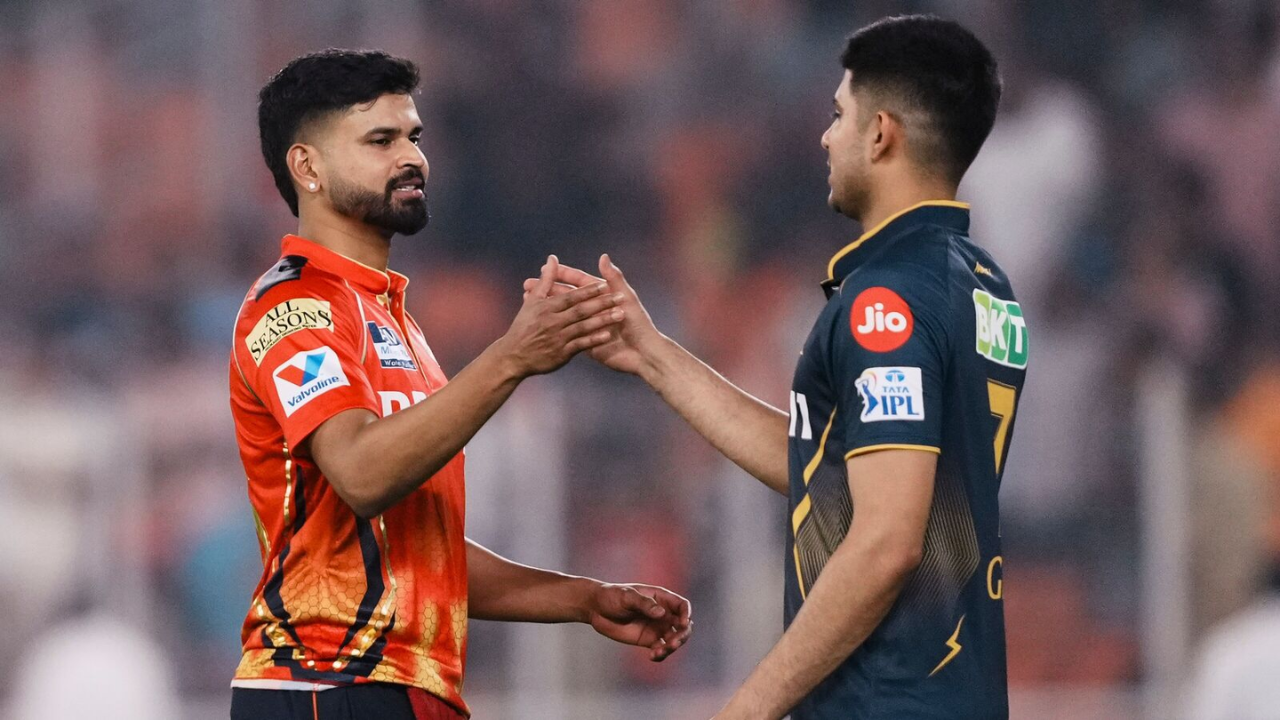
IPL’s Paradox: National Team Shadow Looms as Gill, Iyer Vie for T20 Dominance in Ahmedabad Showdown
POLICY WIRE — Ahmedabad, India — The Indian Premier League, that glitzy crucible where sporting fortunes are minted and national ambitions often sidelined, once again lays bare a peculiar quandary...

POLICY WIRE — Ahmedabad, India — The Indian Premier League, that glitzy crucible where sporting fortunes are minted and national ambitions often sidelined, once again lays bare a peculiar quandary this Sunday. It’s not merely a contest between the Gujarat Titans and Punjab Kings; rather, it’s a living, breathing paradox – a high-stakes audition where some of India’s most compelling white-ball talent finds itself perpetually on the fringes of international recognition, despite prolific domestic returns.
At its core, the narrative orbiting Shubman Gill — and Shreyas Iyer epitomizes this schism. Both, commanders in India’s ODI setup, remain conspicuously absent from the national T20 International core. Yet, within the frenetic confines of the IPL, they’ve consistently churned out influential performances – innings that often dictate the very tempo of their respective teams. Iyer, captaining the Punjab Kings, has mastered the art of marrying judicious control with explosive intent (a rare feat, mind you), allowing his more uninhibited teammates to unleash devastation.
And Gill, leading the Gujarat Titans, certainly hasn’t lagged. He’s been a consistent run-getter, an anchor. But the lingering query around his T20 efficacy – whether his striking prowess can truly rival the audacious power-hitters now adorning India’s shorter format squad – persists. This Sunday, as GT and PBKS lock horns in Ahmedabad, it’s this very Gill-Iyer dynamic that promises a compelling subplot, contrasting two distinct leadership philosophies and batting approaches.
The Titans, fresh off consecutive triumphs against Chennai Super Kings and Royal Challengers Bengaluru, ride a wave of momentum, hungering for a third straight victory. Punjab Kings, conversely, lead the table with 13 points from eight skirmishes – a commanding position that belies their recent six-wicket capitulation to the Rajasthan Royals. That loss, despite posting a gargantuan 222/4, exposed a brittle bowling unit, a chink in their otherwise formidable armor.
Under the stewardship of head coach Ricky Ponting and captain Shreyas Iyer, Punjab has unreservedly embraced an aggressive batting template. Priyansh Arya and Prabhsimran Singh have repeatedly provided ballistic starts, while Cooper Connolly has settled into the pivotal number three slot with surprising alacrity. The middle order, comprising Marcus Stoinis — and Nehal Wadhera, ensures the scoring tempo rarely flags. Trevor Gonsalves, PBKS assistant bowling coach, lauded Iyer’s influence, asserting, “He is leading from the front and he’s backing every player. He is playing a marvellous role and is showing the path in the middle-order, where he’s being fearless.” It’s this very fearlessness that Gujarat’s revitalized bowling attack hopes to blunt.
Kagiso Rabada and Mohammed Siraj provided early strangleholds against CSK, while the triumvirate of Arshad Khan, Rashid Khan, and Jason Holder combined exquisitely to skittle RCB for 155. Holder, in particular, has emerged as a consequential all-rounder, his multifaceted impact in that four-wicket triumph significantly bolstering GT’s overall balance. Historically, the ledger between these two franchises tilts subtly in favor of Punjab Kings, who’ve claimed victory in four of their seven encounters, a statistic that lends psychological heft to their current perch atop the league table.
The Narendra Modi Stadium in Ahmedabad, for its part, typically offers a true batter’s paradise – a flat, unyielding surface promising consistent bounce and carry. However, a veteran selector, speaking on condition of anonymity due to sensitivity around team dynamics, opined, "While the runs flow freely here, the tactical genius of captains who can exploit even minute variations in pace or spin becomes paramount. It’s a batsman’s game, yes, but the bowlers who adapt quickly will be the true difference-makers." Peculiarly, pacers have historically enjoyed a disproportionate share of success here, accounting for nearly two-thirds of all wickets. And, with heavy dew projected for the second innings, chasing will become significantly less arduous – making the toss a particularly pivotal moment.
So, as evening falls over Ahmedabad, transitioning from scorching daytime heat to a clear, warm night (no rain, thank heavens), the captain winning that coin flip will undoubtedly elect to field first, gambling on easier batting conditions later.
What This Means
Beyond the immediate cricketing spectacle, this IPL clash — and indeed the entire tournament — functions as a multifaceted barometer for a nation obsessed with its bat-and-ball heroes. It’s a colossal economic engine, generating billions, but it’s also a powerful soft diplomacy tool for India. The league, a commercial juggernaut, showcases top talent from across the globe, yet conspicuously omits players from neighboring Pakistan. This absence, stemming from enduring geopolitical tensions, diminishes the league’s potential as a truly pan-South Asian enterprise, even as it thrives economically. Still, for aspiring cricketers and a fervent fanbase, the IPL remains the ultimate proving ground, an unforgiving arena where individual brilliance often collides with national team selection dilemmas, shaping future careers and, inadvertently, broader regional narratives. It’s a testament to the league’s magnetic pull that such complex dynamics play out nightly, captivating millions. The continuous evolution of player market value and tactical innovation here could offer crucial lessons for other emerging sports leagues globally.