
Motorsports Maestro Kyle Busch’s Sudden Demise Rocks NASCAR, Leaving Questions Unanswered
POLICY WIRE — Charlotte, USA — The thunder of engines at the upcoming Coca-Cola 600 will feature a conspicuous silence, a gap on the grid where Car #8 would have roared. Because two-time Cup Series...

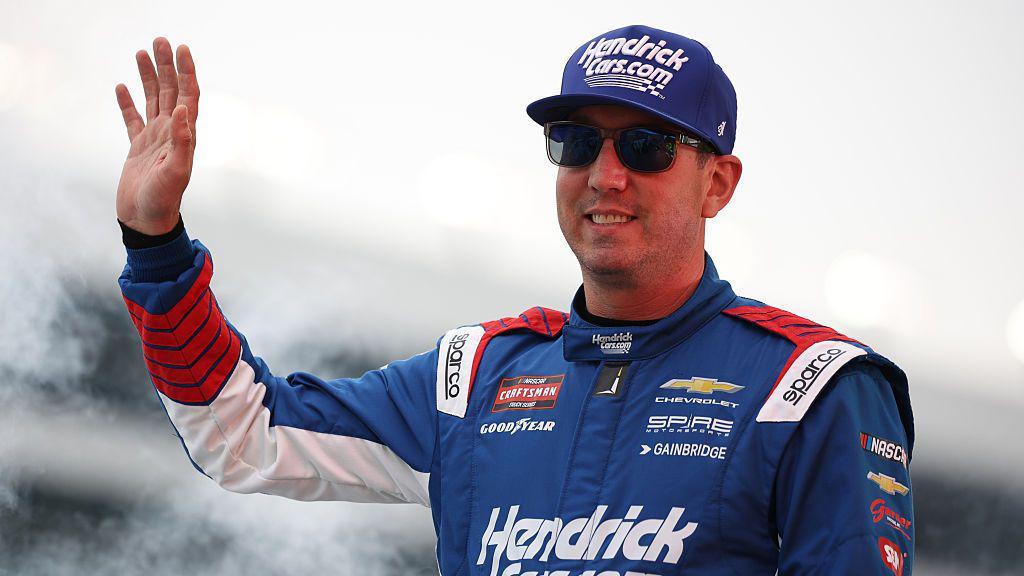
POLICY WIRE — Charlotte, USA — The thunder of engines at the upcoming Coca-Cola 600 will feature a conspicuous silence, a gap on the grid where Car #8 would have roared. Because two-time Cup Series champion Kyle Busch, at just 41 years old, isn’t just sitting out this weekend; he’s gone. His sudden departure from a circuit he dominated with an often-unruly charisma has left a peculiar echo across the high-octane world of stock car racing, punctuated by an official explanation as thin as tire smoke on a brisk morning.
Early Thursday, murmurs began about a severe illness. By evening, those whispers had solidified into an announcement jointly issued by the Busch family, Richard Childress Racing, and NASCAR itself: their fiercely competitive star had passed. They didn’t offer a reason. Just that he was in the hospital, then suddenly, wasn’t here anymore. It’s a silence that’s deafening, isn’t it? For a sport so meticulously documented, this lack of detail feels almost conspiratorial—though it’s likely just private grief and legal prudence clashing with a hungry public.
Busch, affectionately known as ‘Rowdy’—and sometimes less affectionately as just ‘that guy’—was undeniably a titan. He raced hard. He spoke his mind, often bluntly, always unapologetically. The price of perfection in this sport sometimes extends beyond the track, demanding relentless mental and physical toll, yet Busch met it head-on for over two decades. He was ninth on NASCAR’s all-time win list, having snagged 63 victories in the Cup Series, a statistic gleaned from official NASCAR historical data. He was gearing up for his 22nd full-time season. Imagine that kind of sustained intensity.
“Kyle was, plain and simple, a generational talent, a fiery comet across the NASCAR firmament,” stated Jim France, NASCAR Chairman and CEO, in what seemed an uncharacteristically emotional address for the usually reserved executive. “His impact stretched far beyond lap times; he was a fierce competitor, yes, but he also elevated the game, challenged perceptions, and—let’s be honest—he was always magnetic, sometimes polarizing. You couldn’t ignore him. And now, we simply can’t ignore this profound void.”
But the vacuum isn’t just emotional. It’s also very much a logistical — and financial one. Richard Childress, owner of Richard Childress Racing, now faces an immediate quandary. “It’s a brutal hit, emotionally, for all of us here,” Childress reflected, his voice thick with uncharacteristic grief. “You don’t just replace a Kyle Busch. His drive, his sponsorship pull, his sheer marketability—it’s an engine out of our car, an entire race program thrown into sudden, unforeseen disarray. It’s gonna take more than a new driver to fill this one.”
And so, racing fans—his ‘Rowdy Nation’ faithful and those who loved to root against him alike—are left grappling not just with loss, but with that glaring absence of an official cause. The private nature of Busch’s illness leading up to his death offers a stark counterpoint to the often very public spectacles of his career. It’s a sudden silencing that feels out of sync with the roaring, wide-open transparency NASCAR often promotes. In a world where news of sudden celebrity deaths can spark global speculation and often, morbid curiosity—just look at how quickly information spreads even across vastly different cultural landscapes like those in Pakistan or South Asia, where such private matters might be handled very differently but the public discourse is universally hungry for answers—NASCAR’s tight-lipped approach stands out. Sudden silences in motorsports echo beyond the racetrack, impacting everything.
What This Means
Busch’s unexpected passing presents a complex challenge for NASCAR — and its ecosystem, economically and politically. From a raw business standpoint, Richard Childress Racing is staring down a massive renegotiation or scramble for sponsors that were undoubtedly tethered to Busch’s star power. Driver contracts, merchandising, fan engagement initiatives—all get thrown into an immediate, unplanned recalculation. This isn’t just about losing a driver; it’s about losing a franchise player whose brand was deeply intertwined with corporate partnerships worth tens of millions. But it’s more than just money.
Politically, within the insular world of NASCAR, it ignites an uncomfortable spotlight. When a prominent, relatively young athlete dies with an undisclosed cause, it prompts whispers. Does this point to an underlying health crisis in competitive sports that isn’t being adequately addressed? While unlikely, such questions simmer, forcing governing bodies like NASCAR to reassure the public about athlete welfare, even if just subtly. Because perceptions matter, especially when fan loyalty, which underpins the entire economic model of stock car racing, is at stake. The sport’s image, its carefully curated narrative of strength — and endurance, faces a moment of vulnerability.
Ultimately, Busch’s legacy as a fiery, often polarizing, yet undeniably brilliant force on the track will persist. But the story of his final days—unexplained, unsettlingly quiet—will add a somber, perhaps even mythic, dimension to that legacy, a persistent question mark in the annals of a sport that rarely tolerates ambiguities. And it’s a testament to the fact that even in an era of hyper-connectivity, some narratives, for better or worse, remain stubbornly untold.