

The Unlikely Crucible: How Rivalry Forged Spain’s World Cup Dominance
POLICY WIRE — Madrid, Spain — It’s a paradox as intricate as a Xavi pass: the fierce, almost tribal animosity between Spain’s footballing behemoths, Barcelona and Real Madrid, didn’t shatter...

POLICY WIRE — Madrid, Spain — It’s a paradox as intricate as a Xavi pass: the fierce, almost tribal animosity between Spain’s footballing behemoths, Barcelona and Real Madrid, didn’t shatter the national dream. No, it forged it. Instead of tearing the nation’s sporting ambitions asunder, that constant, high-stakes combat on the domestic stage inadvertently sculpted a World Cup-winning machine so cohesive, so telepathic, it defied the very essence of partisan club allegiance. At its core, Spain’s 2010 triumph wasn’t merely a victory of skill; it was a fascinating, often contradictory, study in how intense internal competition can, against all conventional wisdom, catalyze external supremacy.
For decades, the FIFA World Cup remained Spain’s elusive holy grail, a tantalizing prize always just beyond reach. La Roja, for all its individual flair, consistently faltered on the grandest stage, its best showing a distant fourth place in 1950. But then, a seismic shift occurred. Between 2008 and 2012, a golden generation emerged, primarily—and pointedly—drawn from the very core of La Liga’s eternal rivalry. And what a generation it was: Iniesta, Xavi, Busquets, Casillas, Ramos, Alonso – an eleven of gladiators whose club allegiances were worn like battle scars, yet who, for country, moved as one.
Still, the journey was anything but a coronation. The 2010 campaign kicked off with an ignominious 1-0 defeat to Switzerland, a result that sent shockwaves through the football-mad nation and threatened to unravel everything. Yet, manager Vicente del Bosque, a man whose calm demeanor belied a steel will, held his nerve. He understood, perhaps better than anyone, that the players he commanded, fresh from brutal El Clásico encounters, possessed a resilience born of perpetual pressure. They wouldn’t crack easily.
From that initial stumble, Spain embarked on an unlikely march. They clawed their way out of the group stage, then navigated a treacherous knockout path, dispatching Portugal, Paraguay, Germany, and finally the Netherlands—each victory a tense, nail-biting 1-0 affair. It wasn’t swashbuckling; it was surgical. It was a masterclass in controlled possession and defensive fortitude, anchored by the peerless Iker Casillas in goal, whose five clean sheets throughout the tournament underscored their ironclad resolve.
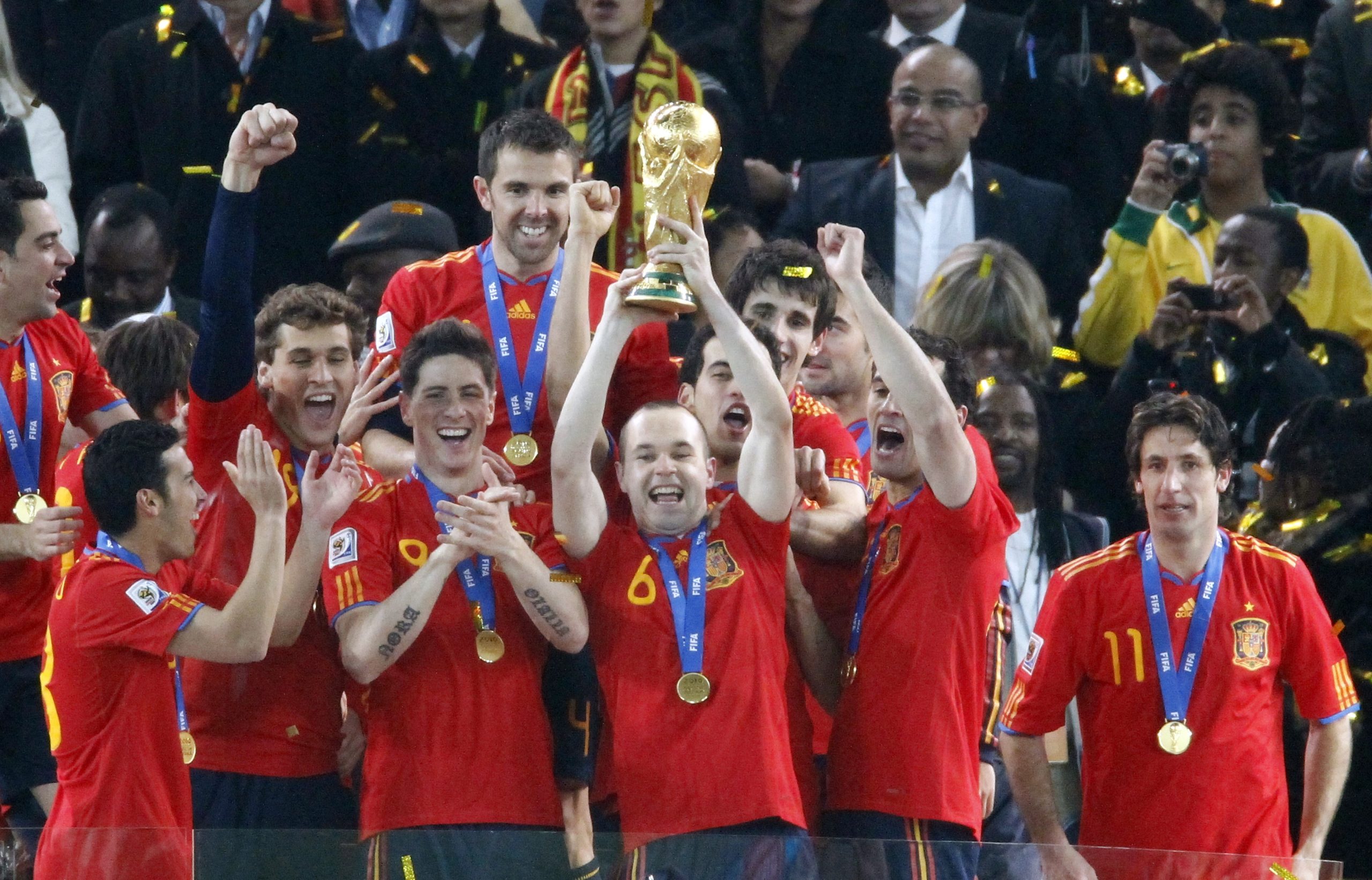
And so, at the Soccer City Stadium in Johannesburg, Andrés Iniesta, the unassuming wizard from Barcelona, etched his name into eternity. His extra-time strike against the Dutch didn’t just win a World Cup; it detonated a national paroxysm of joy, momentarily dissolving ancient divides. This wasn’t merely a Spanish victory; it was a win for a particular philosophy of football, steeped in the academies of La Liga.
“This wasn’t just a football victory; it was a testament to what we can achieve when regional differences yield to a singular, national ambition,” stated then-Minister of Sport, Jaime Lissavetzky, in a post-tournament address, perhaps a subtle nod to Catalonia’s distinct cultural identity. He wasn’t wrong. A staggering ten of the eleven starters in that epochal final hailed from either Barcelona or Real Madrid – a statistical anomaly that speaks volumes about the dominance of these two clubs and their pipeline to national glory. It’s a stark illustration of how two institutions, often at each other’s throats, could collectively elevate an entire nation’s sporting standard.
“You had two gladiatorial club systems pushing their players to the absolute zenith of their craft, day in, day out,” observed Dr. Hassan Malik, a Middle East-based sports economist — and long-time follower of European football. “That pressure cooker environment, intense as it was, inadvertently forged a cadre of players with an almost telepathic understanding on the international stage.” Dr. Malik noted the immense viewership from regions like South Asia and the Muslim world, where European football narratives often resonate profoundly. From Karachi to Cairo, the nuanced tactical ballet played out by Del Bosque’s charges captivated millions, underscoring football’s burgeoning influence far beyond its traditional European strongholds.
The triumph wasn’t fleeting either; Spain’s dominance stretched, almost seamlessly, to Euro 2012, securing another major trophy with a squad still heavily reliant on its El Clásico core. They truly had built something extraordinary, something that transcended the often-petty squabbles of club football.
What This Means
Spain’s 2010 World Cup victory, — and the subsequent Euro 2012 triumph, wasn’t merely a collection of medals. Economically, it catapulted La Liga onto an even grander global stage, inflating broadcasting rights and attracting new sponsors, while enhancing the market value of its star players. This success created a virtuous cycle, drawing more talent and investment, a phenomenon that echoes the perpetual fiscal tightropes walked by clubs across Europe. Politically, the momentary erasure of regional divisions under a shared national banner provided a potent dose of soft power, elevating Spain’s international image. It demonstrated a nation capable of transcending its internal frictions for a collective objective, an enduring lesson in unity, however fleeting. Such victories also underscore the continental economic and cultural barometer that major European football events represent, reflecting national mood and economic vitality.