


Red Clay’s Shifting Sands: Djokovic Chases Ghost of Grandeur as Youth Bristles in Paris
POLICY WIRE — Paris, France — Another year, another French Open, but this isn’t just another tournament opening. Far from it. As the dust settles on Court Philippe-Chatrier for the first night...

POLICY WIRE — Paris, France — Another year, another French Open, but this isn’t just another tournament opening. Far from it. As the dust settles on Court Philippe-Chatrier for the first night session, we’re not simply watching a tennis match; we’re witnessing a raw, compelling clash of generations and, frankly, perhaps even a bit of a final stand. This year, the Parisian clay feels less like hallowed ground and more like a volatile arena, poised to swallow some legacies and forge new ones.
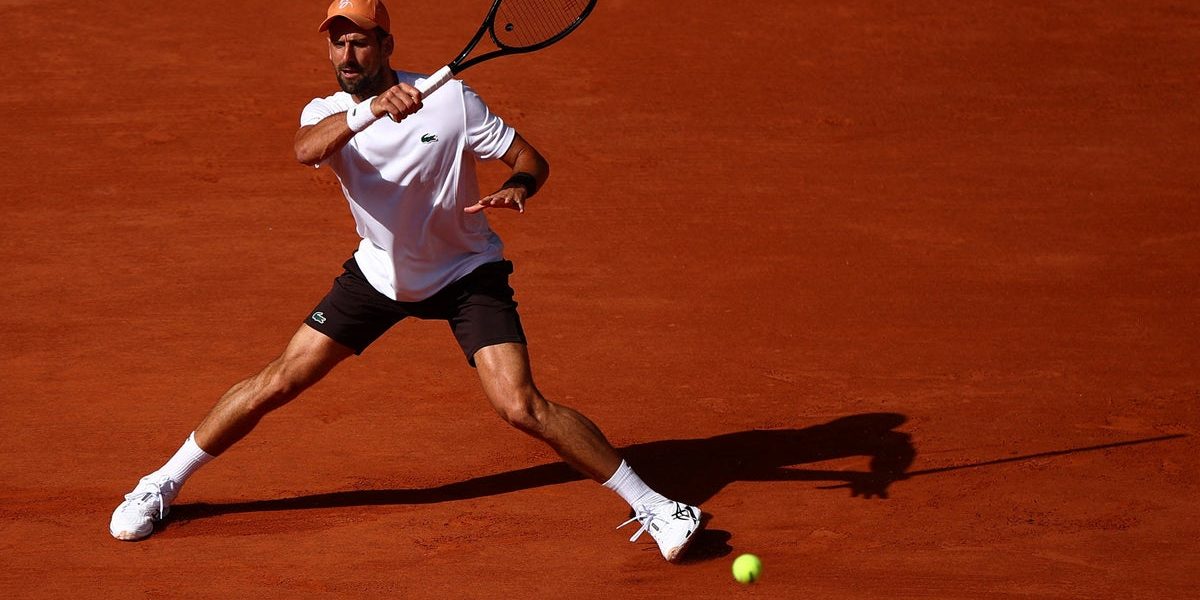
Novak Djokovic, the seemingly ageless titan, began his audacious bid for a record 25th Grand Slam title. That’s a number that just sounds heavy, doesn’t it? On Friday, he actually turned 37, not 39, defying chronology — and logic with every serve. And because the draw gods, or perhaps the organizers’ thirst for drama, decreed it, his opening act was against a towering, 20-year-old French behemoth, Giovanni Mpetshi Perricard. It wasn’t a gentle easing into the tournament; it was a full-on theatrical confrontation under the Parisian lights. Perricard, with a serve that could peel paint off a wall, is precisely the kind of player designed to disrupt, to unnerve, to ask uncomfortable questions of the man who’s answered them all for two decades.
But the narrative extends far beyond Djokovic’s quest for eternal glory. Before the Serb even stepped onto the fabled court, other battles brewed. On the very same show court, former Olympic gold medallist Belinda Bencic, recently returned from injury, squared off against Austria’s Sinja Kraus. It’s a reminder that even at the pinnacle, athletes are in a constant wrestling match with their own bodies, with expectation, with time itself. Alexander Zverev, the men’s second seed, also made his appearance, carrying the weighty mantle of a legitimate contender, his previous court battles now replaced by the actual, sweaty kind.
And then there’s Emma Raducanu. Remember her? The golden girl, the New York dream? Her clay-court campaign kicked off against Argentina’s Solana Sierra on Court 13 – a world away, figuratively, from the bright lights of Chatrier. From Grand Slam champion to struggling qualifier on a less glamorous outside court, her journey has been a testament to the brutal, fickle nature of professional tennis. It isn’t about recapturing past glory for her anymore; it’s about finding some semblance of consistent identity on a surface that demands grit and patience – two qualities she’s had to re-learn, hard.
“We’re not just selling tennis here,” quipped Amélie Mauresmo, the tournament director, with a knowing wink during a pre-tournament briefing. “We’re selling narratives, clashes of generations, and believe me, the public—from Buenos Aires to Berlin—devours it. These stories, they write themselves right here.” She isn’t wrong. Because these events, with their epic highs and crushing lows, resonate globally, providing a common language for fans irrespective of their native tongue.
The stakes? Not just trophies, but market share, endorsements, — and national pride. The French Open, with its global broadcast reaching into homes in over 200 territories, including burgeoning markets across South Asia, symbolizes an intersection of sport and global soft power. Its sheer reach makes it an aspirational benchmark. For instance, according to data compiled by Sports Business Journal, the tournament’s global media rights are estimated to exceed $300 million for the current cycle. That’s big money. It underpins an ever-expanding ecosystem that touches everything from athlete training facilities in Karachi to youth academies in Lahore, where young hopefuls, perhaps watching Djokovic’s tenacity or Raducanu’s resolve, dream of their own red clay glory. They’re seeing faces from diverse backgrounds and understanding that excellence, on this stage, is a universal currency.
📄 POLICY WIRE WHITEPAPER PUBLISHED: PAKISTAN'S NATIONAL SECURITY POLICY PRIORITIES
👉 READ BY CLICKING HEREAnd what about those faces? Madrid champion Marta Kostyuk, an increasingly powerful voice both on and off the court, and Brazilian wunderkind Joao Fonseca, represent just a fraction of the raw, unpolished talent bubbling just beneath the surface. It’s their moment, or at least, the beginning of it.
“Look, Father Time bats last, always. But Novak? He’s got a few more innings left, doesn’t he?” mused veteran tennis coach Brad Gilbert during an analyst session. “But seriously, you see these young guns, they don’t care about reputations. They just hit. That’s a dangerous combination for any aging champ. Emma, on the other hand, she’s got all the talent in the world, but it’s about putting it together consistently, especially on the dirt. That’s a different animal.” His assessment cuts straight to the chase – the physical demands are relentless, the mental game even more so. You can’t fake it on clay; it exposes every flaw, every lapse in concentration.
What This Means
The opening days of any Grand Slam are always a feeling-out process, a chaotic tapestry of upsets and expected victories. But this year’s French Open carries a particular tension, a sense of a changing guard that feels more pronounced than before. Economically, the tournament remains a massive engine, driving tourist revenue, global advertising, and a sophisticated media enterprise. For a city like Paris, hosting such a world-class event isn’t just about sport; it’s about showcasing its capability, its infrastructure, and its cultural cachet on a global stage, subtly reinforcing its position as a cultural capital. Politically, the nationalistic undertones – the French hopes, the international rivalries – are always present, though often unspoken. They certainly don’t call it ‘soft power’ for nothing.
Beyond the European strongholds, the event’s expanded accessibility and media footprint mean it’s increasingly a cultural touchstone for emerging markets, where sports are a growing part of the leisure economy and national identity. The aspirational factor for young athletes from, say, Pakistan or India, seeing players like Djokovic defy age or Kostyuk navigate geopolitics alongside her tennis, can’t be understated. They’re seeing that the path, however arduous, is open. This opening weekend isn’t merely the beginning of two weeks of tennis; it’s the opening salvo in a deeper struggle for dominance, recognition, and relevance in the brutal, beautiful world of professional tennis. And frankly, we wouldn’t want it any other way.