


Red Clay Rhapsody: Old Guard Fades as French Open Unveils New Contenders and Nagging Doubts
POLICY WIRE — Paris, France — It’s a moment that slips through the tennis season’s schedule like a whisper, yet its implications echo like a thunderclap: the official draw for Roland-Garros. Forget...

POLICY WIRE — Paris, France — It’s a moment that slips through the tennis season’s schedule like a whisper, yet its implications echo like a thunderclap: the official draw for Roland-Garros. Forget the predictable fanfare for a minute; this isn’t just about who plays whom. No, it’s about a sport caught between epochs, where the legends, battered and bruised, confront a surging tide of youth ready to seize their birthright on the brutal red clay. The narrative, let’s be honest, feels thicker, heavier than usual.
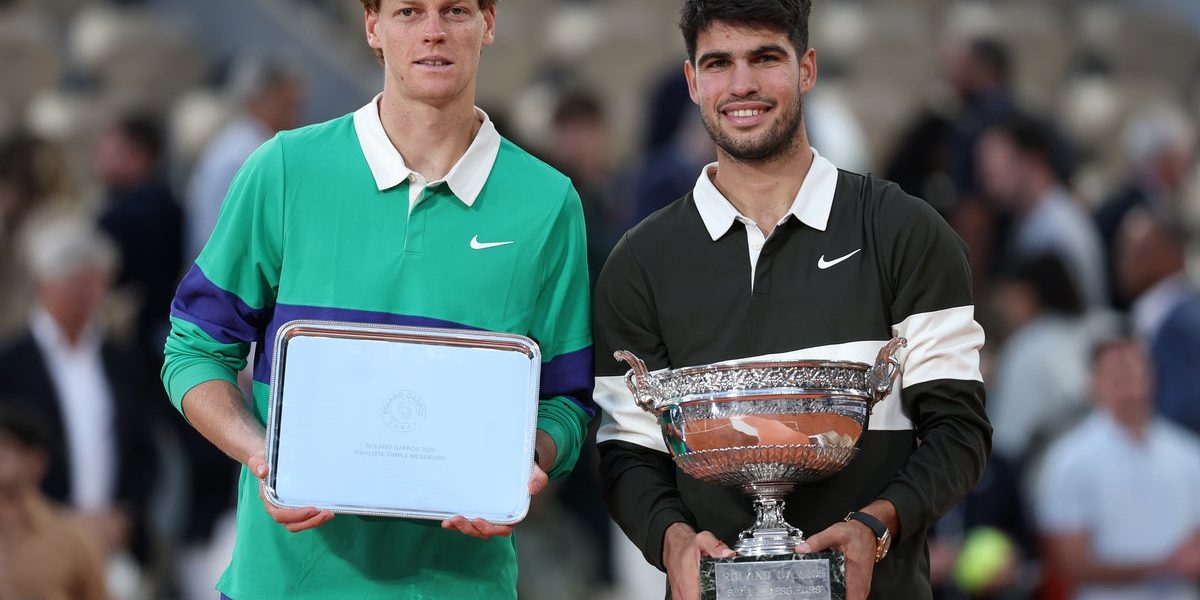
Because, while the casual observer might just be scanning for the marquee matchups, the real story here is the body count. Carlos Alcaraz, the defending champion — and heir apparent, sidelined. His wrist just couldn’t take the punishment. It’s a gut punch, sure, but also a stark reminder of the clay season’s merciless grind. This isn’t Wimbledon’s pristine lawns or the Australian Open’s hard-court speed; this is where legs burn, minds fray, and careers are — quite literally — chipped away.
Jannik Sinner, the lean Italian wunderkind, arrives in Paris carrying the weight of expectation. They’re calling him the overwhelming favorite, — and with good reason. He’s been on a tear, already carving out a unique place in the sport’s history. Analysts note he’s just the second man, and the youngest, to clinch all nine Masters 1000 titles—a statistical anomaly that underlines his meteoric rise, according to the ATP Tour’s official data. His coach, Simone Vagnozzi, a man who knows a thing or two about quiet focus, told Policy Wire recently, “Jannik’s game has evolved. But you don’t talk about favorites on clay; you talk about grit. That’s his challenge now.”
But Novak Djokovic, the enduring titan, isn’t fading gracefully into the Parisian sunset. No, he’s here, presumably still chasing every last record he can grasp. His recent form might suggest a flicker, perhaps a moment of vulnerability, but counting him out at a Grand Slam? That’s foolish. “They can write whatever they like about my age or my form,” Djokovic is believed to have quipped to a small group of Serbian reporters, “but the hunger for that 25th major? That’s something you can’t quantify. It’s in the blood.” His path will be scrutinized with an almost clinical intensity. Can he pull one last rabbit out of his hat? It’s a drama. A classic, really.
The women’s draw, meanwhile, is an entirely different beast, less about a singular heir and more a wild scramble for supremacy. Iga Swiatek, the undisputed queen of clay, certainly holds court. But Coco Gauff, the defending champion, is here to remind everyone she’s got fire. And Aryna Sabalenka, fresh off Australian Open glory, along with a revitalized Elina Svitolina, ensure this won’t be a coronation, it’s going to be a battle. There are no easy draws here. The intensity will be palpable from day one, not just for the fans, but for the players—the stakes, high.
📄 POLICY WIRE WHITEPAPER PUBLISHED: PAKISTAN'S NATIONAL SECURITY POLICY PRIORITIES
👉 READ BY CLICKING HEREAnd while the European powerhouses dominate the headlines, the French Open’s global allure pulls in fans and talent from every corner. It’s not just a European spectacle; millions will be tuning in across Asia and the Middle East, avidly following every point, every upset. Countries like Pakistan, with its burgeoning interest in diverse sports beyond cricket, represent a massive untapped market for tennis. Their viewership is a silent acknowledgment of the sport’s widening footprint. For many, a player’s performance at Roland-Garros isn’t just sport; it’s a matter of national pride, or a spark for aspiring young athletes in Karachi and Lahore. The global spread of fandom means the impact extends beyond the box score. This tournament really is an engine.
What This Means
The immediate political and economic implications of a major tennis Grand Slam, particularly one as storied as the French Open, are often underestimated. Paris becomes, for two weeks, a focal point of global tourism, media attention, — and commercial activity. For the French Tennis Federation, this event represents a significant portion of their annual revenue, supporting everything from junior development to the maintenance of infrastructure. Economically, it injects hundreds of millions of euros into the local economy, benefitting hospitality, retail, and transportation sectors. Politically, hosting such a high-profile event elevates France’s international soft power, showcasing its organizational capabilities and cultural prowess on a world stage.
But the changing guard in men’s tennis, highlighted by Alcaraz’s absence and Sinner’s ascent, also has broader economic ramifications. New superstars mean new endorsement deals, new markets for merchandising, — and shifts in viewership demographics. A strong showing by a player from an emerging tennis nation, for example, can unlock lucrative sponsorship opportunities and boost interest in the sport within that country. This transition, from the Federer-Nadal-Djokovic era to a younger generation, signifies a financial firestorm for brands looking to hitch their wagons to the next global sporting icons. It’s high-stakes poker, no doubt, — and the biggest brands are playing to win. These narratives aren’t just confined to the courts; they ripple out into the wider commercial world, driving decisions that affect multi-million-dollar sponsorships and brand visibility. This is big business dressed in tennis whites.