

India-Israel Alliance Under Modi and Netanyahu: Civilian Toll in Gaza and Kashmir, Complicity, and Global Outcry
India and Israel have grown significantly closer under Prime Minister Narendra Modi and Prime Minister Benjamin Netanyahu. This alliance spans military, economic, and ideological domains. This has...

India and Israel have grown significantly closer under Prime Minister Narendra Modi and Prime Minister Benjamin Netanyahu. This alliance spans military, economic, and ideological domains. This has greatly aided Israel’s military campaign in Gaza, effectively making India a de facto partner in what is the killing of innocents. Since the Gaza war began in October 2023, over 67,000 Palestinians have been killed (about 80% of them civilians, including roughly one-third children). Similarly, in Indian-Occupied Jammu & Kashmir during Modi’s tenure (2014–Present), 2,571 people died in conflict-related violence, of whom 342 were civilians. Both Modi and Netanyahu have been seen of employing strikingly similar nationalist tactics for the formation of “Greater Israel” and “Akhand Bharat”, from revoking autonomy in disputed territories to unleashing overwhelming military force against civilians.
Evolution of the Partnership
India’s relationship with Israel was cautious in its early decades. India recognized Israel in 1950 and developed full diplomatic ties in 1992. During the Cold War, India championed Palestinian self-determination and even voted against the 1947 UN partition plan for Palestine, viewing Israel as lacking anti-colonial credentials. Instead, India advocated a federated Palestine solution, aligning with Arab and non-aligned nations. Despite the absence of formal ties, secret contacts existed, for example, Israel supplied arms to India during wars (the 1962 Sino-Indian War, 1971 Indo-Pak War, and 1999 Kargil conflict) when India faced urgent needs. The turning point came post-Cold War, in 1992, Prime Minister P.V. Narasimha Rao established embassies in Tel Aviv and New Delhi, seeking advanced technology and new markets after economic liberalization.
Under Narendra Modi’s leadership since 2014, India-Israel cooperation has reached unprecedented heights. Modi became the first Indian PM to visit Israel in 2017. Netanyahu’s return visit to India in 2018 further solidified agreements on agriculture, water, and cybersecurity. Defense collaboration is the cornerstone as India is now Israel’s largest arms customer, importing about $4.2 billion in weapons from 2001–2021. This includes combat drones, missiles, and surveillance tools, some of the same technologies Israel employs in Gaza. Notably, an Indian-Israeli joint venture, Adani-Elbit, manufactures the Hermes 900 drone used for surveillance and strikes. In May 2024, a ship carrying 27 tons of munitions from India (Chennai) to the Israeli military was reportedly intercepted by activists, underscoring India’s role as a weapons supplier to Israel’s war effort. India has also sent manpower as over 20,000 Indian workers moved to Israel to replace Palestinian laborers who could no longer cross from Gaza. Economically, ties deepened with a bilateral investment treaty signed in 2025 during Israeli Finance Minister Bezalel Smotrich’s visit to New Delhi. Smotrich’s meeting with Finance Minister Nirmala Sitharaman yielded agreements to boost trade and collaborate in “cybersecurity, defence, innovation and high-technology”.
India’s diplomatic stance has thus shifted noticeably under Modi. Historically a champion of Palestine, India has tilted closer to Israel.
Similarities in Modi and Netanyahu’s Tactics
Parallels can visibly be drawn between the hardline nationalist agendas of Narendra Modi and Benjamin Netanyahu. Both leaders espouse ideologies that exalt a historical or religious majority, Hindutva (Hindu nationalism) in Modi’s case and Zionism in Netanyahu’s, and portray their nations as “civilizational states” under threat. Their visions extend beyond present borders: Netanyahu’s advocacy for a Greater Israel and Modi’s ideological backing of Akhand Bharat reflect territorial maximalism rooted in religious and historical narratives. A Jerusalem think-tank admiringly dubbed them “lions of civilizational statecraft,” noting how each has redefined national identity around ancient cultural and religious narratives. Critics, however, use the same term pejoratively, arguing that both pursue settler-colonial policies and authoritarian control in contested regions, seeking to reshape the map in line with their ideological visions.
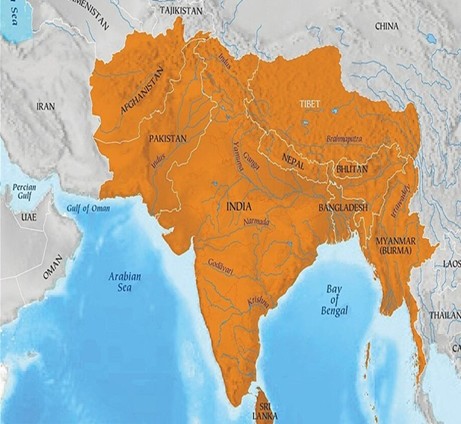
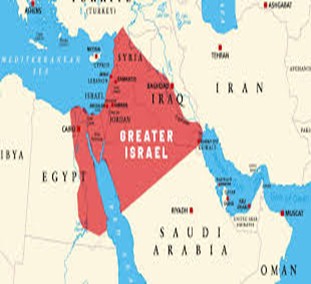
Figure: Maps showcasing India and Israel’s shared vision
One striking parallel is the revocation of autonomous status in disputed territories. In August 2019, Modi’s government abrogated Article 370 of the Indian Constitution, stripping Jammu & Kashmir of its semi-autonomy and statehood. The region was split into federally governed territories, accompanied by an intense military lockdown and communications blackout. This move, done in the name of integrating Kashmir, mirrors, in the eyes of many, Israel’s decades-long strategy of eroding Palestinian autonomy. Netanyahu’s government has expanded Jewish settlements in the occupied West Bank and effectively annexed East Jerusalem and the Golan Heights, violating previous arrangements for Palestinian self-rule. An Indian diplomat explicitly made this connection as in 2019 India’s Consul General in New York was caught on video urging an “Israeli model” for Kashmir, i.e. encouraging the resettlement of Hindu pundits in Kashmir the way Israel settled Jews in Palestinian lands. “If the Israeli people can do it, we can also do it,” he said, adding that India’s leadership was “determined”, remarks that sparked outrage for advocating demographic engineering. Kashmiri and international commentators called it a “chilling” vision of settler colonialism, akin to Palestinians’ experience.
Additionally, both leaders justify harsh measures as counter-terrorism. Modi’s India and Netanyahu’s Israel cast Islamist militancy as a primary threat, often using blunt force against it. Modi defended the Kashmir crackdown (thousands of Kashmiri political leaders and youth were detained, and internet cut for months) as necessary to uproot terrorism. Netanyahu likewise frames Israel’s offensives in Gaza and surveillance of Palestinians as a war on “terror tunnels” and “Islamist extremists,” frequently conflating Palestinian resistance with “jihadist terrorism”. In rhetoric, both deploy Islamophobic tropes to rally domestic support, for instance, elements of Modi’s Hindu nationalist base equate Kashmir’s Muslim freedom fighters with terrorists and have praised Israel’s iron-fist approach as something to emulate. During the 2023 Gaza war, hashtags like “#IndiaStandsWithIsrael” and #IStandwithIsrael trended among Hindu right-wing circles, reflecting a view of Israel as a kindred nation fighting a common “terror” enemy. This ideological solidarity has seen Indian ruling-party politicians and media openly side with Israel’s military actions in Gaza, even as Muslim and liberal segments of Indian society condemn them.
Approach Towards Dissent
Another parallel is their “strongman” approach to neighboring adversaries. Both Modi and Netanyahu project a zero-tolerance posture. Netanyahu has ordered repeated military incursions into Gaza, airstrikes in Syria, and strikes in Lebanon, claiming to preempt threats from Hamas, Hezbollah, or Iran. Modi, for his part, has launched cross-border strikes into Pakistan, notably the 2016 so-called “surgical strikes”, the February 2019 Balakot airstrike, and the 2025 Operation Sindoor, inside Pakistani territory (all based on false-flag operations). These actions, while popular domestically, earned the leaders’ reputations as bulldogs willing to “hit enemies in their home.” They also brandish their military prowess for domestic politics as the Balakot strike was touted in Modi’s 2019 re-election campaign as proof of his decisive leadership (something he also tried to achieve with 2025 Operation Sindoor), just as Netanyahu launched war on Gaza when he was about to stand trial for corruption.
| Modi (India) | Netanyahu (Israel) | |
| Ideology | Hindutva, Hindu nationalism | Zionism |
| Territorial Vision | Akhand Bharat | Greater Israel |
| Autonomy Policy | Abrogated Article 370, Kashmir lockdown | Expanded settlements, annexed East Jerusalem & Golan Heights |
| Counter-Terrorism as Excuse | Kashmir crackdown, detentions, internet cuts | Gaza offensives, surveillance of Palestinians |
| Propaganda | Uses Islamophobic tropes; domestic popularity via military actions | Frames Palestinians as extremists; campaigns on security credentials |
Table: Comparison of Modi and Netanyahu
On a personal level, Modi and Netanyahu have formed an unusually warm friendship. They frequently refer to each other in public; Netanyahu has called Modi “my dear friend” and even tweeted Modi a happy birthday message in Hindi in 2020 and 2023. They conduct diplomacy with notable camaraderie. During Modi’s Israel visit, the two famously hugged multiple times and posed barefeet at the seaside. This personal rapport has arguably smoothed the way for deeper ties. The Modi government avoids criticism of Israel, sticking to general statements supporting “peace” and “dialogue” while conveniently avoiding any criticism of Israeli strikes on civilians.
There approaches should however rightly be condemned as authoritarian and discriminatory, casting Kashmir as “India’s Palestine” and vice versa. The parallels illuminate why many in the Muslim world bristle at the India-Israel partnership, seeing it as an alliance of two regimes with kindred ideologies of dominance and genocide.
Human Cost in Gaza and Kashmir
The human cost of armed conflict in both Gaza and Indian-Occupied Kashmir underscores the tragic reality that civilians often bear the heaviest burden. In Gaza, from October 7, 2023 through late 2025, the Palestinian Health Ministry reports ~67,139 Palestinians killed and 169,583 wounded. About 70–80% of those killed are believed to be civilians, including over 20,000 children (roughly one-third of the deaths). By November 2024 the UN had verified 8,119 fatalities and found 44% were children and ~70% were women or children. Israeli officials claim they have killed 17,000+ “militants” (Hamas and other fighters), but even if true, that suggests the majority of the dead, tens of thousands, have been non-combatants. Entire families have been wiped out in airstrikes on homes; the UN found that in 88% of Israeli strikes it investigated, five or more family members died together, indicating attacks on residential buildings. Israel’s siege and bombardment of Gaza has created what health experts call a humanitarian catastrophe including indirect deaths from starvation, dehydration, disease, and lack of medical care. A Lancet study projected that official death counts may undercount true fatalities by ~40% due to victims trapped under rubble and breakdown of reporting. Indeed, by some estimates, if one includes those succumbing to siege-induced famine or illness, Gaza’s war dead could be tens of thousands higher. The WHO and UN have vouched for the general credibility of Gaza’s Health Ministry figures, and noted they likely “underestimate” the real toll given the chaos. “Horrifying scenes are unfolding,” warned the UN Special Coordinator in late 2024, describing Gaza’s situation as “inhumane” with bodies unretrieved under collapsed buildings and children dying from preventable causes.
📄 POLICY WIRE WHITEPAPER PUBLISHED: PAKISTAN'S NATIONAL SECURITY POLICY PRIORITIES
👉 READ BY CLICKING HERESimilarly, in Indian-Occupied Kashmir, according to Indian security data, from 2014 a total of 2,571 people have been killed in insurgency-related incidents in Jammu & Kashmir. Violence peaked in 2018, when 452 people died, amid a surge of local uprising following unrest. Notably, 2018 was the deadliest year in a decade in Kashmir. After Modi’s revocation of Kashmir’s autonomy in 2019, dissent has increasingly been crushed by the Modi regime.
Response of Activists
The humanitarian crisis in Gaza has reverberated globally, including in India, sparking protests and questions about the ethical implications of the India-Israel partnership. Within Gaza, UN officials and world leaders (except Israel’s closest allies) have condemned the scale of civilian suffering. The UN High Commissioner for Human Rights lambasted Israel’s “wanton disregard” for civilian lives and suggested some attacks may constitute “crimes against humanity” or “genocide”. In December 2023 and again in 2024, the United Nations General Assembly overwhelmingly called for ceasefires in Gaza, votes where India abstained. By 2025, even Pope Francis and UN genocide experts were warning of “an unfolding genocide” in Gaza. Netanyahu’s government, however, has been defiant, rejecting such criticism and accusing the UN of bias. Israel insists Hamas “uses civilians as shields” and that it takes precautions, though the high proportion of women and children killed tells a different story. Amid this, India’s stance of near-total public silence on Israel’s conduct has been noted by observers who recall India’s past vocal support for Palestine.
Within India, the Gaza war has galvanized an unprecedented wave of pro-Palestine activism and criticism of Modi’s Israel policy. In early October 2025, thousands of Indians took to the streets in cities like New Delhi, Mumbai, Hyderabad, and Kochi to protest Israel’s actions, and by extension, India’s support for Israel. Demonstrators held placards reading “India funds, Gaza burns” and chanted for an end to the “genocide” in Gaza. They drew parallels between the militarization of Kashmir and the bombardment of Gaza, accusing the Modi government of moral complicity. At Delhi’s Jantar Mantar, for instance, activists and artists assembled for a Gaza solidarity vigil despite police restrictions. In some instances, protesters faced police crackdowns and arrests. In the city of Rohtak (Haryana), a peaceful rally on October 5, 2025 was attacked by right-wing vigilantes (described as “Sanghi goons”) and then broken up by police who detained the protesters instead of the attackers. Several activists, including women, were held for over 15 hours and beaten in custody. Such incidents underscore the domestic risks of siding with Palestine under an increasingly authoritarian government. Pro-Palestinian voices in India thus often face intimidation, surveillance, or vilification as “anti-national.”
Despite these challenges, the momentum of public opinion in India is notable. The Gaza war has triggered a level of public outcry in India not seen in previous Israel-Hamas conflicts. Even Hindu figures, including politicians and intellectuals, have broken with the government line, for example, the Congress Party’s president Mallikarjun Kharge and former party chief Sonia Gandhi both called on the Modi government to condemn the killing of Palestinian civilians and provide more aid. This indicates that support for Palestine still runs deep in India’s societal fabric, a legacy of Mahatma Gandhi and Nehru’s anti-colonial solidarity, even if Modi’s government downplays it.
War Economies
Investigative reports are shedding light on the institutional links between India and Israel’s war economy. In September 2025, the New Delhi-based Centre for Financial Accountability (CFA) released a report titled “Profit and Genocide: Indian Investments in Israel.” It documents how Indian corporations, including state-run companies and those owned by billionaires, are deeply tied into Israel’s defense, tech, and settlement enterprises. For instance, the Adani Group has joint ventures producing Israeli weapons (as mentioned earlier), and India’s state-owned companies import Israeli surveillance tech used in occupied territories. The CFA report argues that Indian firms, by trading with and investing in Israeli defense and infrastructure, “enable Israel’s genocidal acts” in Gaza. It highlights that any capital flowing into Israel’s economy potentially frees up resources that fund the military campaign and the expansion of settlements. These findings have energized calls within India for an “ethical disengagement”, activists urge the government and companies to divest from Israel until it ends the occupation of Palestinian lands. Protesters in October 2025 pressed this point, with slogans like “From Kashmir to Gaza, stop the genocide” and demands that New Delhi impose an arms embargo on Israel (something no Indian government has ever done). While the Modi government has ignored these calls, the very fact that Indian civil society is uniting in such protests is a slap on Modi’s face.
Conclusion
Going forward, many experts suggest that India should leverage its alliance with Israel to urge de-escalation and a just solution, rather than be a silent supporter. As protests in India and worldwide have shown, the conscience of ordinary people leans toward protecting innocent lives over political expediency. Whether the Modi government heeds that call, or doubles down on its alliance with an embattled Netanyahu, will shape India’s global image in the years to come.
Author