

Detroit’s Diamond Dilemma: The Fragile Equilibrium of Athletic Futures
POLICY WIRE — Detroit, United States — For cities attempting a rebirth, nothing quite cements public spirit like the collective euphoria—or despair—tied to its sports franchises. Yet beneath the...

POLICY WIRE — Detroit, United States — For cities attempting a rebirth, nothing quite cements public spirit like the collective euphoria—or despair—tied to its sports franchises. Yet beneath the veneer of hopeful narratives, the gritty reality of individual human physiology often dictates a team’s destiny, rendering even the most meticulously crafted plans fragile. In Detroit, as the Tigers lumber through a season of fits and starts, two distinct narratives emerge from the medical tent, speaking volumes about the precarious alchemy of professional sports and, by extension, any complex undertaking where human variables reign supreme.
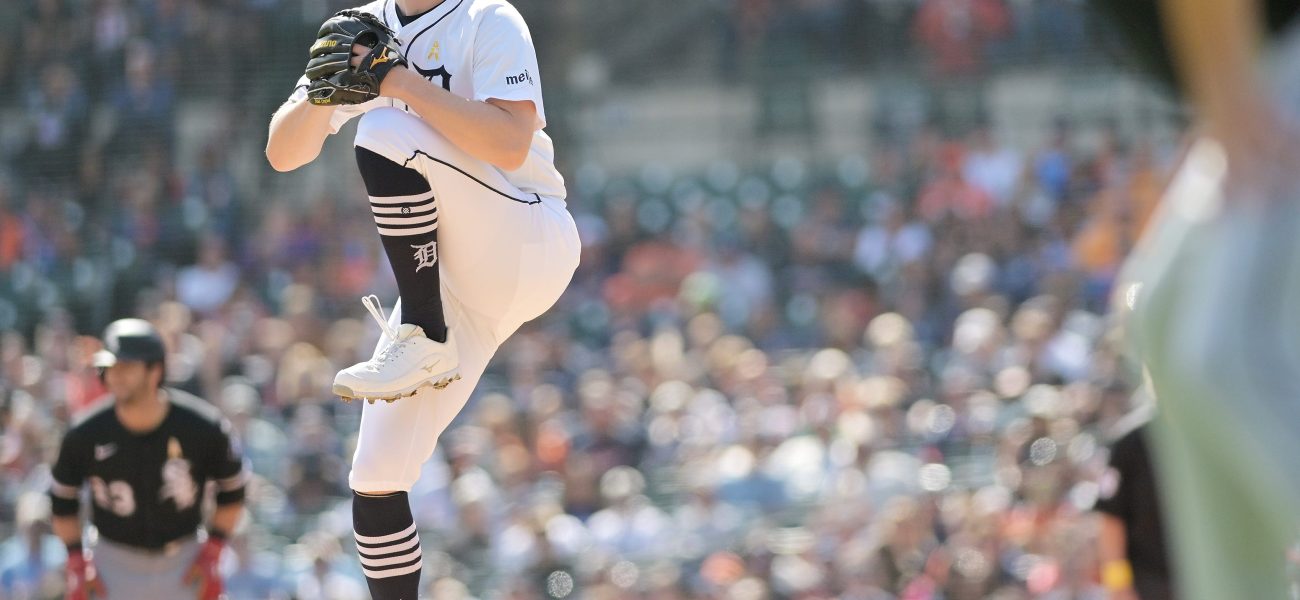
It’s not the celebrated return of a long-sidelined ace that commands the immediate spotlight this week. Instead, it’s the quiet readiness of Troy Melton, a lesser-known right-hander whose journey back from right elbow inflammation has, against odds, concluded without much fanfare. Manager AJ Hinch, a man accustomed to tempering expectations, confirms Melton doesn’t need another rehab outing. “No decision has been made yet for Sunday’s spot, not officially,” Hinch allowed, leaning back against the dugout wall during a recent media availability, a faint smirk playing on his lips. “But let’s be real: he’s fully ready to go. We consider him fully rehabbed. That’s good news, isn’t it?” Melton, after four rehab appearances—a quiet crucible spanning low-A Lakeland to triple-A Toledo—stands at the precipice of rejoining the fray. For a team desperate for depth, his almost mundane recovery is, in its own way, a triumph.
But the whispers—and the deeper implications—still circle Justin Verlander. He’s the star, the returning hero, the marquee investment. His progress? “Inching forward more than sprinting forward,” Hinch conceded, a note of careful optimism, perhaps, but one laced with a stark reality. A recent bullpen session, typically a marker of forward momentum, saw his velocity linger in the low 90s, a testament to the persistent tug-of-war between expectation and physical limitation. Verlander’s singular start this season, a fleeting glimpse of his former self, was quickly overshadowed by hip inflammation. Now, even with an early June eligibility date looming for his return from the injured list, uncertainty reigns. “We all want it for him. He wants it badly,” Hinch mused, clearly empathetic. “You see flashes, sure, of that spring training form we loved. But is he ready for competition? No. Not yet.” It’s a painstaking process, often devoid of cinematic leaps. Just slow, deliberate steps—or, in Verlander’s case, sometimes mere shuffles.
And this is where the intricate business of baseball—a spectacle that generated over $10 billion in revenue in 2023 across MLB—intersects with larger policy themes. The human element, notoriously unpredictable, can unravel years of investment, much like unforeseen geopolitical tremors can upend a carefully orchestrated trade agreement. It’s not just about winning games; it’s about fan engagement, city branding, and the regional economic ripples from a successful—or struggling—franchise. A club like the Tigers represents an institutional commitment, where talent procurement often feels like a high-stakes commodities market, albeit one where the goods are sentient, injury-prone, and sometimes temperamental individuals. For every clear-cut recovery like Melton’s, there’s a prolonged, ambiguous struggle like Verlander’s, echoing the protracted development challenges faced by nations like Pakistan, where long-term plans are frequently waylaid by internal setbacks and the capricious nature of circumstances. Their resilience, — and the patience demanded of them, parallels Verlander’s own test.
“Player health remains our top strategic imperative, beyond simply wins and losses,” remarked a high-ranking (and anonymous) Tigers front office executive to Policy Wire this week, a hint of weariness in their voice. “It dictates payroll efficiency, long-term roster construction, — and even fan sentiment. It’s a relentless, unpredictable grind of managing finite human capital within an infinite market demand for success.” But even the best-laid plans often fray; one need only look at how quickly expectations shifted when Verlander went down. It’s an unavoidable, brutal fact of the game—and perhaps, life—that human bodies, and the policies built around them, simply don’t always adhere to a strict timetable.
What This Means
The juxtaposed fortunes of Troy Melton and Justin Verlander offer a sharp observation into the wider economic and social currents that often escape public policy discourse. For Detroit, a city that’s fought tooth and nail for economic resurgence, the performance of its major sports teams isn’t merely entertainment; it’s a barometer of civic health and a potent driver of local tourism and identity. A struggling, injury-plagued team can deflate morale, impacting everything from small business sales around the stadium to the city’s broader appeal as an investment destination. Policy analysts often focus on grand economic indicators or legislative shifts, but the micro-narratives of human resilience—or its absence—in highly visible domains like sports can carry significant weight. the millions invested in player salaries and recovery—effectively, human capital—reflect a calculated risk, mirroring national budgets that pour funds into infrastructure or social programs, only to be confronted by unexpected human factors or external crises. The slow, uncertain healing process of a star like Verlander, a human entity struggling against his own physiology despite immense resources, serves as a poignant reminder that even the most meticulously engineered policies or projects, be it a public health initiative or a complex diplomatic endeavor, are ultimately reliant on unpredictable human elements. It’s a sobering thought: even with unlimited will and resources, you can’t rush biology—or societal change.
And because the season is long, and hope springs eternal in both sports and policy circles, these individual stories, however small, eventually aggregate into the larger tale of a community’s grit and adaptability. Or, its ongoing struggles.