

Belgrade’s Fractured Verdict: Power, Protest, and the Unquiet Balkans
POLICY WIRE — Belgrade, Serbia — It wasn’t the broken glass or the acrid tear gas hanging thick in the frigid Balkan air that felt truly unsettling to many observers; it was the chilling...

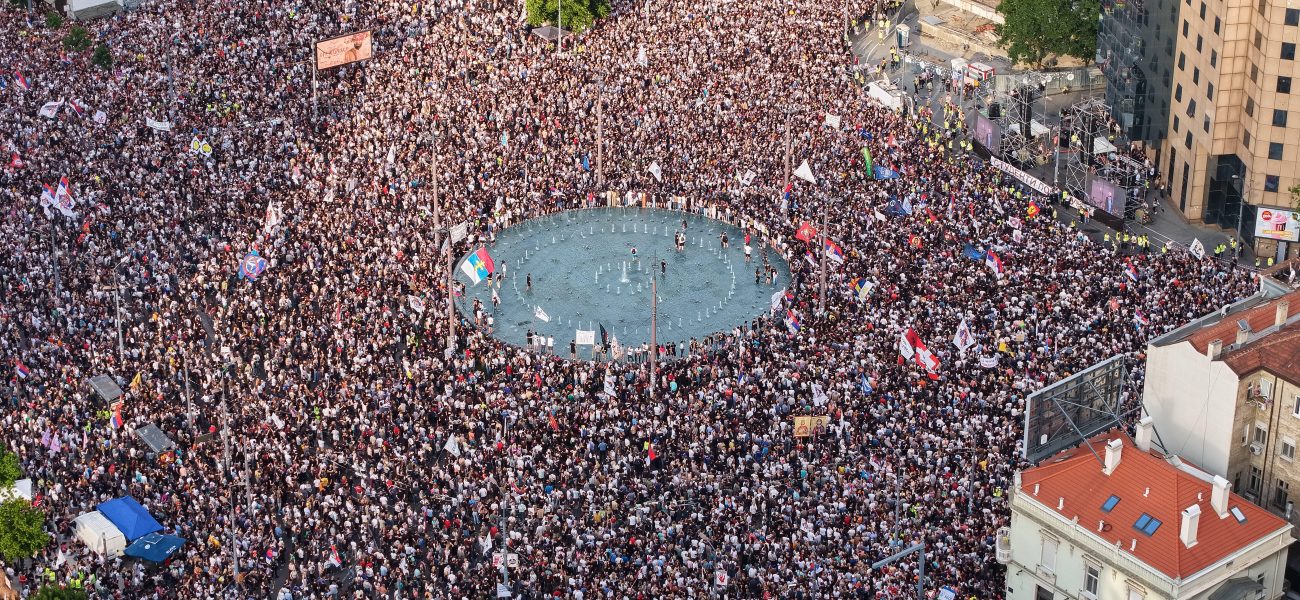
POLICY WIRE — Belgrade, Serbia — It wasn’t the broken glass or the acrid tear gas hanging thick in the frigid Balkan air that felt truly unsettling to many observers; it was the chilling familiarity of it all. Belgrade, a city that’s seen more than its share of turbulent histories, once again found its streets transformed into a crucible of raw dissent and state power. Only this time, the enemy, for many, wasn’t an external aggressor or a separatist movement—it was the very integrity of their electoral system.
Weeks of simmering outrage, fueled by allegations of widespread fraud in recent municipal and parliamentary elections, finally boiled over, splashing red and blue against the concrete facades of the capital. What began as peaceful demonstrations, a weary but determined march against what protestors call a rigged vote, escalated sharply. Police in riot gear didn’t just contain; they charged. Students, pensioners, families — they ran, or they stood their ground, propelled by a profound distrust in institutions they feel have failed them, spectacularly. But really, who’s surprised?
The scenes outside the City Assembly building were particularly stark: protesters, desperate, trying to force entry, met with a barrage of truncheons and chemical irritants. It’s a primal scream against a perceived betrayal, a feeling that one’s voice, expressed through the ballot, simply doesn’t count. And in a region perpetually wrestling with its democratic identity, this isn’t just a Serbian problem; it’s a reverberation across troubled landscapes. Just look at Pakistan, where charges of electoral manipulation are as regular as the monsoon, eroding public confidence and sowing deeper divisions, trapping populations in a Sisyphean cycle of hope and disillusionment.
President Aleksandar Vučić, a figure whose political trajectory is as much about cunning as charisma, didn’t mince words. He denounced the unrest as a “coup attempt” orchestrated by foreign powers, an old chestnut that always seems to find new relevance in the Serbian political lexicon. “These so-called protesters, funded by those who wish to destabilize our strong, sovereign nation, won’t prevail,” Vučić declared in a late-night televised address, his voice laced with the usual defiance. “We won elections fairly. We’ll protect our institutions. We’ve fought for our democracy for too long to let these hooligans take it from us.” It’s the kind of strongman rhetoric that plays well with his base, for sure.
But opposition leader Dragan Đilas, one of the more prominent faces calling for annulment of the results, painted a vastly different picture. “This isn’t about foreign meddling; it’s about plain old domestic thievery of votes,” Đilas retorted, standing amid a throng of weary supporters. “People saw buses bringing in out-of-towners to vote, they saw ballots disappear. It’s an insult to every citizen who believes in justice. We won’t stop until every last irregular vote is exposed. This isn’t just an election; it’s the future of our kids.” His words—they carry the weight of public anger, something Vučić dismisses at his peril.
📄 POLICY WIRE WHITEPAPER PUBLISHED: PAKISTAN'S NATIONAL SECURITY POLICY PRIORITIES
👉 READ BY CLICKING HEREThe electoral commission’s official figures granted Vučić’s ruling Serbian Progressive Party (SNS) a clear majority, yet numerous independent watchdog groups—including the CRTA election observation mission—documented a staggering 1,139 electoral irregularities during the December vote, a number that can’t simply be swept under the rug as minor hiccups. That’s a significant portion of polling stations with reported problems, not exactly a ringing endorsement of fairness.
What This Means
The clashes in Belgrade aren’t just local headlines; they’re symptomatic of a deeper malaise that threatens Serbia’s shaky democratic foundations and, by extension, stability in the Balkans. Politically, the immediate fallout could involve renewed calls for international scrutiny of Serbia’s democratic processes, potentially slowing—or even reversing—its already tortuous path towards European Union membership. Brussels is watching, eyes narrowing. This crisis also risks consolidating an increasingly authoritarian grip from Vučić’s party, further marginalizing opposition voices and chilling free expression. It becomes harder to attract credible investment when your streets are in turmoil and your electoral system is seen as a sham.
Economically, persistent unrest damages investor confidence. Foreign direct investment, a key pillar of Serbia’s economic strategy, thrives on predictability, not political upheaval. Extended instability can deter potential business ventures, lead to capital flight, and exacerbate existing economic vulnerabilities like inflation. Who wants to put their money into a nation perpetually teetering on the edge of internal strife? But what’s more, these events serve as a grim reminder that democratic erosion is a global challenge. From Belgrade to Balochistan, when people lose faith in the ballot box, the streets often become the last recourse for their grievances. And sometimes, it’s the only one left. These scenes—they don’t just happen. They’re built over time, piece by agonizing piece.