


Lula’s Digital Reckoning: Brazil Stakes Claim in Global Big Tech Showdown
POLICY WIRE — BRASÍLIA, Brazil — The internet, that sprawling digital wild west, remains an untamed frontier. Who cleans up the mess? Who’s on the hook when the pixels turn predatory? For...

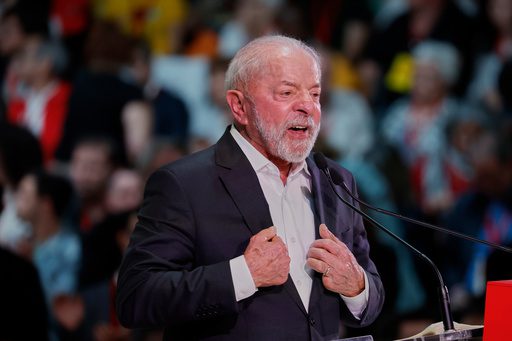
POLICY WIRE — BRASÍLIA, Brazil — The internet, that sprawling digital wild west, remains an untamed frontier. Who cleans up the mess? Who’s on the hook when the pixels turn predatory? For Brazil’s President Luiz Inácio Lula da Silva, the answer’s increasingly clear: It’s the tech giants, plain and simple.
It’s not about pioneering legislation here, not really. This is a battle fought on already familiar grounds—grounds staked out by Brussels long ago. Lula’s latest moves, a pair of executive decrees issued on Wednesday, signal Brazil’s firm embrace of the “platforms must police themselves” doctrine. But it’s an echo with its own distinctly Brazilian rhythm, making companies like Google, Meta, and TikTok squarely responsible when user-generated illegal content slips through their virtual nets.
And what’s considered “illegal”? That’s the million-dollar question, isn’t it? The decrees are no mere slap on the wrist. They adapt existing regulations, pulling them into line with a Brazilian Supreme Court ruling that mandated content removal upon judicial order. Now, if content—anything from hateful speech and racism to outright incitement of violence or digital fraud—is flagged, companies don’t just ‘look into it.’ They’ve got to analyze complaints, deem the material criminal, yank it immediately, and tell the responsible party. Non-compliance? Warnings. Fines. Even temporary suspension.
This isn’t just bureaucratic muscle-flexing. It’s a statement. A big one. The government’s statement said as much, though the platforms themselves, unsurprisingly, went mum. You won’t catch them rushing to applaud this new burden, will you? They’re used to playing “just a neutral conduit,” but Brazil isn’t buying that tired old line anymore. Not when their own agency of data protection gets a shiny new mandate to investigate these cases, either. Good luck telling them you’re just a post office.
Patricia Peck, who sits on Brazil’s Data Protection Authority and penned forty-six books on law and technology—yeah, she knows her stuff—cut right to the chase. “We don’t have specific legislation to hold these platforms responsible; we’re taking a side road,” she explained, acknowledging the slow grind in Congress. But she didn’t mince words on expectations: “Those who develop these technologies must think about it with perspective of ethics, privacy, and security as a standard.” Hear, hear.
Because let’s be real, it’s not exactly a revelation that the digital space harbors some truly awful stuff. Lula’s move broadens the net to snatch up modern maladies like digital fraud, online scams, and those insidious new forms of digital harassment. Mattheus Puppe, a digital law specialist in Brazil, figures the decrees are a bid to stop platforms from effectively profiting off the back of illicit posts, solidifying the Supreme Court’s earlier decision. But he’s got his doubts on actual impact. “It’s not clear how well this will work because the agency that was chosen to investigate cases can barely do its job now,” Puppe observed. “But it’s true that it shouldn’t be up to companies to know what’s lawful and what’s not.” There’s the rub, isn’t it?
This evolving stance brings Brazil’s regulatory outlook very much in line with the European Union, which has been locking horns with tech for years, pushing for tighter controls and greater accountability. Yet, as with most assertive moves, there are ripples. It’s already made for some fidgeting in Washington, particularly among U.S. policymakers who tend to champion a less interventionist approach to online speech. Critics here aren’t shy about airing their concerns; they argue such broad liability could easily turn into censorship, prompting platforms to over-remove content just to avoid penalties. A chill on free speech. Some, particularly in developing nations, might see this as Brazil taking a bold stand for its citizens. For context, in countries like Pakistan, the debate over online content often boils down to a tightrope walk between protecting vulnerable populations and safeguarding freedom of expression, especially when state-backed content removal requests come under scrutiny. The ‘what’s criminal’ line shifts subtly depending on which side of the world you’re on, or indeed, who’s in power.
It’s not just about what’s “illegal.” Brazil’s also been keen on protecting the kids. Earlier this year, a law came into effect that mandates linking minors’ social media accounts to a guardian and even bans “addictive features” like infinite scroll and auto-play videos for the under-16 crowd. Parental supervision. Fewer mindless feeds. The notion, one imagines, is simple enough.
What This Means
Brazil’s latest regulatory offensive is more than just domestic policy; it’s a shot across the bow in a rapidly escalating global war for digital sovereignty. Politically, Lula is consolidating his image as a leader willing to confront powerful corporate interests, a move that resonates with his left-leaning base. But it’s a tightrope walk; too much regulation, and you invite the ire of industry and risk alienating international tech investment. Economically, platforms face increased compliance costs, which could lead to service adjustments, or in more extreme cases, reconsidering their market approach. Smaller companies, too, might struggle to meet stringent demands that behemoths can more readily absorb. One must also consider the practical enforcement. Mattheus Puppe’s skepticism is well-placed: Can Brazil’s existing administrative bodies genuinely manage the sheer volume of content complaints on a daily basis? Globally, the push is toward fragmented internet governance. Countries, inspired by the EU model, are carving out their own rules. This means a patchwork internet where the “rules” change at every border. Brazil isn’t just mimicking; it’s adding another distinct voice to a growing chorus that says digital space isn’t beyond national law. However, without truly robust enforcement mechanisms and a clear, universally accepted definition of what crosses the “illegal” threshold, these decrees risk being more performative than transformative.
Indeed, a recent study from DataReportal revealed that Brazil alone boasts some 165 million social media users as of January 2023, underscoring the monumental scale of content moderation required. This isn’t just filtering; it’s a monumental undertaking. The sheer volume makes it a herculean task for any government agency, particularly one described as already “barely doing its job.” For many developing nations, the challenge isn’t just willpower; it’s the raw technical and personnel capacity needed to police digital spaces effectively.
For now, Brazil’s flexing its regulatory muscles. The question is, can they really clean up the wild west, or are they just firing warning shots into the digital void? It’s a high-stakes gambit, one that has tech companies worldwide—and freedom of speech advocates—watching intently. Maybe even a few folks in California are paying closer attention than they’d let on.