

Pakistan’s Diplomatic Resurgence in a Multipolar Asia
Russia’s landmark decision to supply RD-93MA engines for Pakistan’s JF-17 Block III fighter jets has emerged as a powerful symbol of Islamabad’s strategic maturity and diplomatic resurgence. What...

Russia’s landmark decision to supply RD-93MA engines for Pakistan’s JF-17 Block III fighter jets has emerged as a powerful symbol of Islamabad’s strategic maturity and diplomatic resurgence. What some interpret as a setback for others is, in reality, a validation of Pakistan’s steady and forward-looking foreign policy. Freed from the constraints of Cold War alignments, Pakistan today stands as a confident state capable of engaging all major powers on equal and dignified terms. The decision embodies a larger geopolitical shift, the return of strategic multipolarity in Asia, where Pakistan is asserting itself as an indispensable and stabilizing pivot.
Breaking Free from Old Dependencies
For decades, South Asian geopolitics operated within rigid binaries: India aligned with Russia, and Pakistan partnered primarily with China. That outdated framework has now collapsed. Moscow’s decision to cooperate with Islamabad despite Indian objections demonstrates that realism has replaced historical inertia in global diplomacy. Russia recognizes Pakistan’s growing importance as a regional balancer and as a nation that engages on the basis of reciprocity and respect.
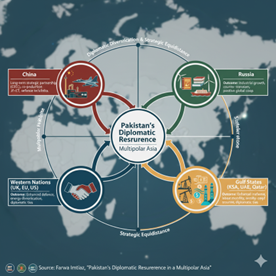
Pakistan’s diplomacy today is shaped by pragmatic independence, not dependency. It engages Beijing for technology, Moscow for defense diversification, the Gulf for economic synergy, and Western capitals for education, trade, and counter-terrorism. This multidirectional approach has quietly transformed Pakistan into a regional actor whose partnerships are built on trust and strategic balance rather than patronage or submission.
Diplomatic Diversification
Pakistan’s foreign policy evolution represents a broader shift from alignment to autonomy. By engaging multiple partners, China, Russia, Gulf States, and Western nations, Islamabad has effectively built a diplomatic architecture that safeguards its national interests. The RD-93MA deal adds depth to this structure, demonstrating that Pakistan’s diplomacy produces tangible strategic results.
This diversification also strengthens Pakistan’s resilience against coercion or external pressure. It gives Islamabad flexibility to pursue independent decisions without compromising national security. By cultivating balanced ties with all major blocs, Pakistan has positioned itself as a credible, non-aligned actor whose foreign policy is rooted in constructive engagement and peaceful coexistence
| Partner / Bloc | Nature of Engagement | Strategic Outcome for Pakistan |
| China | Long-term strategic partnership under CPEC; co-production of JF-17; technology and infrastructure cooperation. | Sustained industrial growth, energy security, and defence innovation. |
| Russia | Expanding military, energy, and connectivity collaboration; joint drills and high-level visits. | Enhanced defence capability; diversification of energy and diplomatic ties. |
| Gulf States (KSA, UAE, Qatar) | Economic investment, labour mobility, and security cooperation. | Increased financial inflows and renewed strategic trust in the Muslim world. |
| Western Nations (UK, EU, US) | Focus on trade, higher education, counter-terrorism, and climate cooperation. | Improved diplomatic tone; positive global image of pragmatic engagement. |
The Technical and Strategic Value of the RD-93MA Engine
The decision to acquire Russia’s RD-93MA engine stems from clear operational and technological logic. Pakistan’s indigenous JF-17 Thunder program, co-developed with China, forms the backbone of its modern air fleet. However, earlier variants powered by the RD-93 engine had limitations in thrust and performance. The new RD-93MA, capable of producing approximately 9,300 kgf of thrust, incorporates digital control systems and improved thermal endurance, enabling superior agility and sustained performance in high-altitude conditions typical of South Asian theatres.
These improvements are vital for the JF-17 Block III, which carries advanced AESA radar, beyond-visual-range missiles, and upgraded avionics. The RD-93MA ensures that Pakistan’s air force retains a technological edge while maintaining cost efficiency and logistical familiarity. Unlike American systems restricted by political conditions and sanctions or China’s WS-13 engine, which remains under testing, the Russian engine offers proven reliability and seamless integration. It represents continuity, compatibility, and confidence qualities essential for Pakistan’s self-reliant defense modernization.
Why Russia Chose to Engage Pakistan
Russia’s outreach to Pakistan reflects a conscious shift towards multipolar engagement in Asia. While India remains a major buyer of Russian weapons including S-400 systems, Su-30MKI fighters, and BrahMos missiles Moscow is diversifying its partnerships as New Delhi moves closer to Western defense suppliers. In this environment, Pakistan presents Russia with a credible and responsible alternative partner.
Islamabad’s role as a stabilizing force in South Asia, its counterterrorism credentials, and its geostrategic position along the China-Pakistan Economic Corridor make it a logical and trusted interlocutor. For Russia, cooperation with Pakistan strengthens its broader Eurasian integration strategy and supports balanced power dynamics in the region. For Pakistan, the partnership enhances defense diversification and reaffirms its diplomatic sovereignty ensuring no single country dominates its strategic calculus.
Challenging India’s Narrative through Competence
India’s discomfort over the Russian deal underscores the erosion of its monopoly over Moscow’s defense relations in South Asia. For decades, New Delhi’s privileged access to Russian defense technology gave it a consistent edge. That advantage is now diluted as Moscow acknowledges Pakistan’s growing regional significance. While India continues to rely heavily on Russian-origin systems, nearly 60% of its defense equipment Pakistan has achieved a more flexible model based on co-production, innovation, and multilateral cooperation.
The global perception has shifted: Pakistan is now recognized as a responsible nuclear power committed to regional peace, deterrence stability, and technological progress. The diplomatic map of Asia increasingly reflects this balance, one where Pakistan’s voice carries legitimacy and weight.
Author