

GOP’s Ironclad Rule: Dissenters Face Political Purgatory, As Lindsey Graham Reminds One Senator
POLICY WIRE — Washington D.C., United States — It’s a curious thing, this particular strain of American political theater. Not quite a morality play, more a macabre exercise in loyalty litmus tests....

POLICY WIRE — Washington D.C., United States — It’s a curious thing, this particular strain of American political theater. Not quite a morality play, more a macabre exercise in loyalty litmus tests. We’ve watched it unfold before, naturally. A politician, seemingly established, casts a vote—or voices an opinion—that veers slightly off the prescribed path. And then, like clockwork, the pronouncement comes, delivered with all the somber gravity of a death knell: political obsolescence.
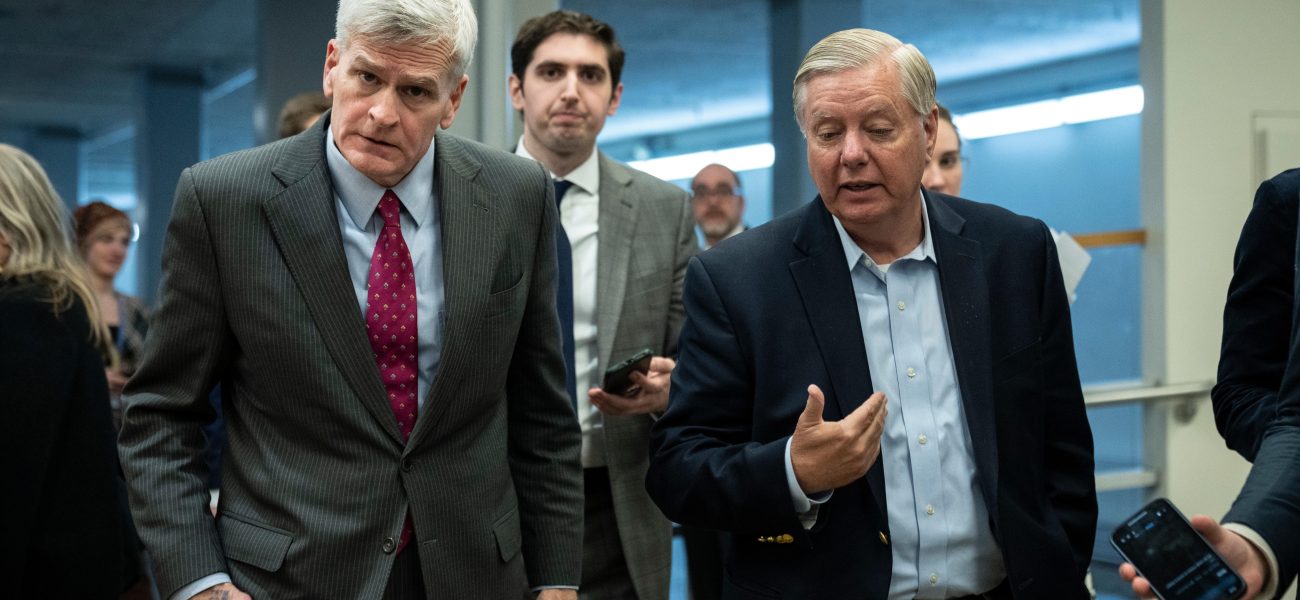
That’s precisely the narrative now being etched for Louisiana Senator Bill Cassidy. His alleged transgression? An insufficient adoration, or perhaps, an outright betrayal of the party’s erstwhile leader, Donald Trump. Senator Lindsey Graham, once a vehement Trump critic turned ardent disciple, didn’t mince words. Speaking with the candor of an old-school party enforcer, Graham stated unequivocally, “This is the party of Donald Trump. And if you’re gonna try to destroy Donald Trump, you’re gonna get destroyed.” No soft pedaling, no diplomatic niceties; just a stark declaration of consequences. One might even call it a creed for the modern Republican.
Cassidy, a seasoned legislator who, for a time, epitomized the traditional Republican consensus, found himself in this ideological crosshairs for voting to convict Trump during his second impeachment trial. A procedural vote, some might say, steeped in constitutional principle. But in today’s GOP, it was apparently a cardinal sin. And now, the gauntlet’s been thrown. You don’t buck the party leader without a fight, do you? But for some, principles trump power. Speaking previously on such challenges, Cassidy remarked, “My oath is to the Constitution, not to a single individual. If standing for foundational American values makes me unpopular in some circles, so be it.” An admirable stance, to be sure, but one that increasingly seems to run counter to the current party dogma.
It’s a stark reminder, really, of how personal loyalty has supplanted programmatic agreement in chunks of global politics. The U.S. isn’t alone. Just cast an eye towards Pakistan, where loyalty to charismatic figures like Imran Khan has dictated political survival, fracturing traditional party structures and often leading to punitive excommunications for those perceived to waver. Disunity isn’t tolerated. It’s punished. Cassidy’s situation is just a homegrown variation on a familiar theme playing out in democracies—or what’s left of them—the world over.
The numbers speak volumes, if anyone’s bothering to listen. A 2023 Pew Research Center poll revealed that 63% of Republicans and Republican-leaning independents say they hold a favorable view of Donald Trump. That’s a staggering mandate for any figure within a major party, and it pretty much dictates who gets a pass and who gets the political axe. But here’s the thing: Does such absolute fealty breed strength or just stifle vital, differing opinions?
📄 POLICY WIRE WHITEPAPER PUBLISHED: PAKISTAN'S NATIONAL SECURITY POLICY PRIORITIES
👉 READ BY CLICKING HEREAnd then there’s the broader implications. This isn’t just about Cassidy’s political future; it’s about the very intellectual health of conservatism. The party, as Graham suggests, has morphed, becoming less a broad ideological church and more a specific cult of personality. It means that diverse thought—which, you know, used to be a thing conservatives claimed to champion—is now suspect. Dissent? Dangerous. It’s a blueprint for ideological purity, not pragmatic governance. The implication, if Graham is correct, is that the Republican big tent has shrunk considerably, only really accommodating those who subscribe to the very specific doctrines preached by its loudest evangelists. One might wonder about the long-term sustainability of a party that’s so allergic to internal debate.
But how, you might ask, does this square with, say, a healthy foreign policy debate concerning aid to struggling regions? It’s harder to forge a unified, coherent strategy on issues like the shadow of hunger in Gaza or broader economic stability in the Middle East when domestic politics are so consumed with purging disloyalty. The focus becomes entirely inward, narrow, punitive even. It stunts the party’s ability to engage with complex global challenges with the intellectual flexibility required.
What This Means
The explicit warning delivered by Senator Graham isn’t just partisan rhetoric; it’s a declaration of a newly crystallized ideological minimum within the Republican Party. For aspiring politicians, it clarifies the expectations: adherence to the Trumpist line isn’t an option, it’s a prerequisite. This puritanical bent likely means fewer moderate voices will seek or hold office under the GOP banner, further polarising an already fractured political landscape. Economically, a party so driven by personality could struggle to articulate clear, consistent policy positions, favoring performative populism over robust fiscal planning, potentially impacting business confidence and international trade relations down the line. It’s a calculated risk, but one that has already shaped the direction of an entire political movement, demanding absolute conformity to its de facto head. The ramifications—both domestic and international—are, frankly, still being written. Expect fewer mavericks, more echoes. A kind of political déjà vu, but with higher stakes for anyone daring to color outside the lines.