


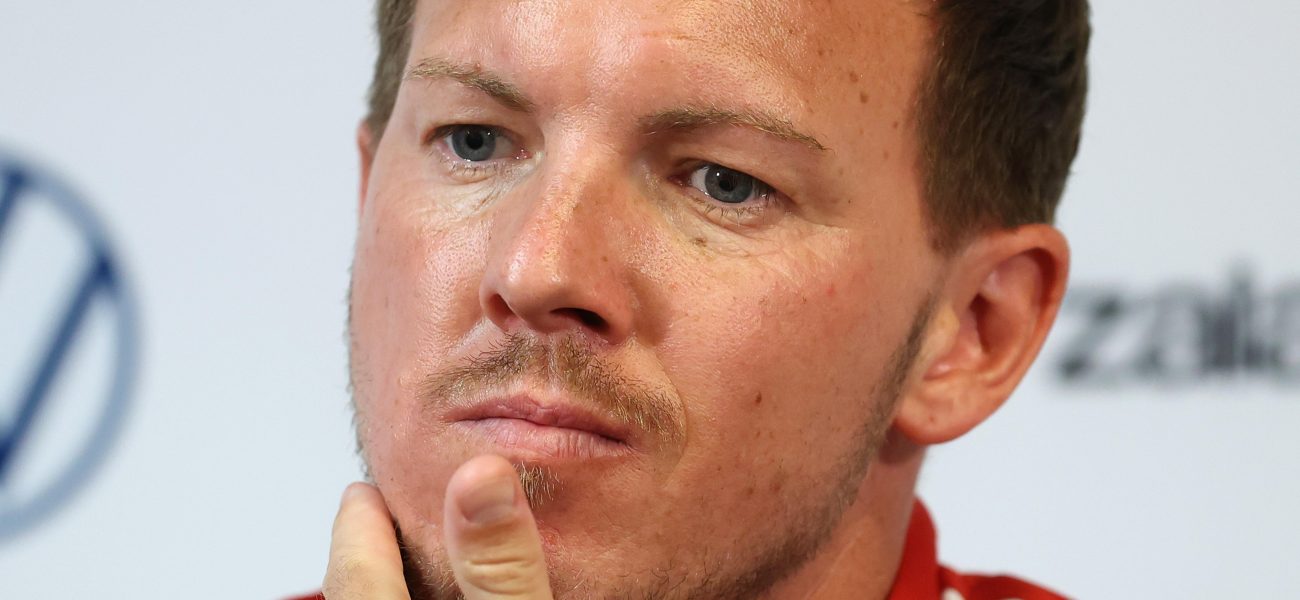
Chicago’s Unlikely Charms: How a Shaky Friendly Ignited a German Coach’s World Cup Spirit
POLICY WIRE — Chicago, USA — The hum of victory was supposed to be a steady thrum, a confident beat ahead of a global showpiece. Instead, Germany’s national football squad departed Chicago...

POLICY WIRE — Chicago, USA — The hum of victory was supposed to be a steady thrum, a confident beat ahead of a global showpiece. Instead, Germany’s national football squad departed Chicago trailing a wake of frayed nerves, a bruised ego from a surprisingly hard-fought victory against the Americans, and, far more critically, down one midfielder to a tournament-ending injury. Any seasoned observer, particularly one familiar with the cutthroat world of European football, would have expected German coach Julian Nagelsmann to pack his bags with a scowl, griping about scheduling, pitch conditions, or perhaps the peculiar nature of Stateside fanfare.
But that’s where the script gets interesting. Because Nagelsmann didn’t gripe. Not publicly, anyway. Instead, amidst the lingering scent of Chicago-style hot dogs and the distant echo of jet engines from a slightly delayed pre-match flyover—a decidedly American touch—the young tactician seemed to have found an unexpected jolt of World Cup energy. And, honestly, who could’ve predicted that?
Even with star midfielder Lennart Karl—a vital cog from Bayern Munich, no less—headed for an early flight home thanks to a brutal challenge that went largely unpunished, Nagelsmann painted a surprisingly upbeat picture of the Windy City. This wasn’t some public relations charade; his pronouncements carried a distinct, almost giddy, air of genuine surprise. He’d arrived for a ‘friendly,’ really just a high-stakes scrimmage, in a city not even slated to host a single World Cup match. And he’d come away impressed, perhaps even inspired.
“That’s a good introduction to the weather conditions,” Nagelsmann reportedly quipped to Sky Germany, referencing the humid, unpredictable clime—a potential taste of what awaits them on larger global stages. But more than just the weather, the sheer spectacle got to him. “It already felt a bit like the World Cup,” he confessed, noting the typical American flourishes, including those fighter jets thundering overhead. You’d think a European coach, accustomed to football’s ancient cathedrals, might dismiss such razzmatazz. But he didn’t. He seemed to embrace it, much like an American tourist might marvel at the disciplined chaos of a Lahore market – different worlds, sure, but each with its own magnetic pull.
And it’s this convergence of cultures, this embrace of the unfamiliar, that often shapes international sporting narratives. While the US splashes billions on modern stadiums and colossal marketing budgets to make football ‘happen,’ in countries like Pakistan, the game grows with raw, unbridled passion, often despite a crippling lack of infrastructure or organized support. Kids play with tattered balls on dusty streets, dreaming of the same German stars Nagelsmann now coaches. The commercial might of European football, showcased in these pre-tournament roadshows, resonates across continents, proving that a simple ball and 22 players can still cut through almost any cultural barrier. It’s not just about winning games; it’s about selling a dream, even to non-traditional markets.
Bernd Neuendorf, president of the German Football Association (DFB), echoed a broader strategic view, albeit from a more commercially minded perch. “These international tours are absolutely essential for expanding our brand footprint globally,” he stated in a follow-up interview. “Beyond tactical preparations, they allow us to connect with fan bases who often only see our teams on screens. It’s an investment, not just in our team’s performance, but in our global reach. Plus, acclimating to diverse environments—and American enthusiasm, frankly—is invaluable.” That’s the sort of corporate-speak that makes a journalist’s eyes glaze over, but it’s the underpinning reality.
📄 POLICY WIRE WHITEPAPER PUBLISHED: PAKISTAN'S NATIONAL SECURITY POLICY PRIORITIES
👉 READ BY CLICKING HEREMake no mistake: the immediate concern for Nagelsmann — and his squad was that bruising match. A 2-1 scrape, coming perilously close to an embarrassing draw, forced a harder look at their defense than they’d probably wanted just weeks before the tournament. They’re supposed to be honed, sharp—not rusty. But even a close call has its merits, a kind of baptism by fire, forcing introspection ahead of the real battles to come. And the loss of Karl? It’s a bitter pill, sure. But the DFB, a veritable colossus in global football governance, is already prepared for contingencies.
But the numbers don’t lie. FIFA projects the 2026 World Cup alone to generate upwards of $5 billion in economic activity across North America, supporting roughly 40,000 jobs. While Chicago isn’t a direct beneficiary of those game-day bonanzas, pre-tournament buzz events—like Germany’s stopover—still pump cash into local economies, fill hotel rooms, and put global eyeballs on the city, reinforcing its image as a major sporting hub. It’s a silver medal, perhaps, but a medal nonetheless.
What This Means
Nagelsmann’s surprisingly sanguine reaction in Chicago, even after taking a personnel hit and navigating a scrappy match, paints a picture of modern football’s geopolitical and economic complexities. It’s no longer just about 90 minutes on the pitch; it’s about global brand building, cultural diplomacy, and revenue streams stretching far beyond stadium gates. The DFB, much like any major international sporting federation, views these ‘friendlies’ as crucial for maintaining visibility in emerging markets and consolidating existing ones. That’s why you see European giants barnstorming across Asia or North America.
Politically, these tours, particularly by an athletic powerhouse like Germany, subtly contribute to soft power projection. They build connections, generate goodwill, — and foster cross-cultural dialogue, however transient. Economically, while a non-host city like Chicago misses out on direct World Cup games, it benefits from the halo effect of high-profile preparatory matches. The dollars spent by visiting teams, staff, and dedicated international fans—who travel regardless of host status—trickle down to local businesses. These seemingly innocuous events are actually carefully calibrated maneuvers in a vast, global chessboard where sport, commerce, and national prestige are intertwined. It’s never just a game. It’s always, in some way, about influence. And because of that, a tough win and an injury become mere footnotes to the larger narrative of global football’s unstoppable expansion.