


Missouri’s Gambit: Royals’ Volatility a Microcosm of Market Anxiety
POLICY WIRE — ST. LOUIS, MISSOURI — It’s never just a game. In Missouri, where economic currents often swirl with a particular ferocity, the performance of the Kansas City Royals—or lack thereof—has...

POLICY WIRE — ST. LOUIS, MISSOURI — It’s never just a game. In Missouri, where economic currents often swirl with a particular ferocity, the performance of the Kansas City Royals—or lack thereof—has started to feel like a very tangible barometer for civic confidence, perhaps even a nascent warning bell for regional economic sentiment. Folks are watching this. It isn’t just about runs and errors; it’s about perceived stability, about return on investment, and about the nerve of a market battling against an increasingly uncertain backdrop.
Consider the latest skirmish in St. Louis, the sixth and final outing of what many insiders—and not just those paid to cheer—have labeled a bewildering road trip. The Royals, those self-proclaimed ambassadors of heartland grit, arrived in enemy territory with a winless streak breathing down their neck. Their inconsistency isn’t just vexing for long-suffering fans; it’s become a peculiar, unsettling metaphor. One day, they’re titans. The next? Well, let’s just say they make a mid-tier municipal bond look like a sound bet. This isn’t academic conjecture; this is visceral. “You look at a franchise like ours, it’s a huge economic engine for the region, generating almost $300 million annually in local revenue,” noted Kansas City Mayor Quinton Lucas recently, his voice betraying a hint of fatigue over the team’s oscillating fortunes. “When that perception dips, even subtly, you can feel it in local businesses, in investment chatter.” He’s not wrong; the data backs it up. The Kansas City metropolitan area, for instance, sees a 1.2% dip in foot traffic to entertainment venues adjacent to the ballpark during periods of sustained team underperformance, according to a recent regional Chamber of Commerce report.
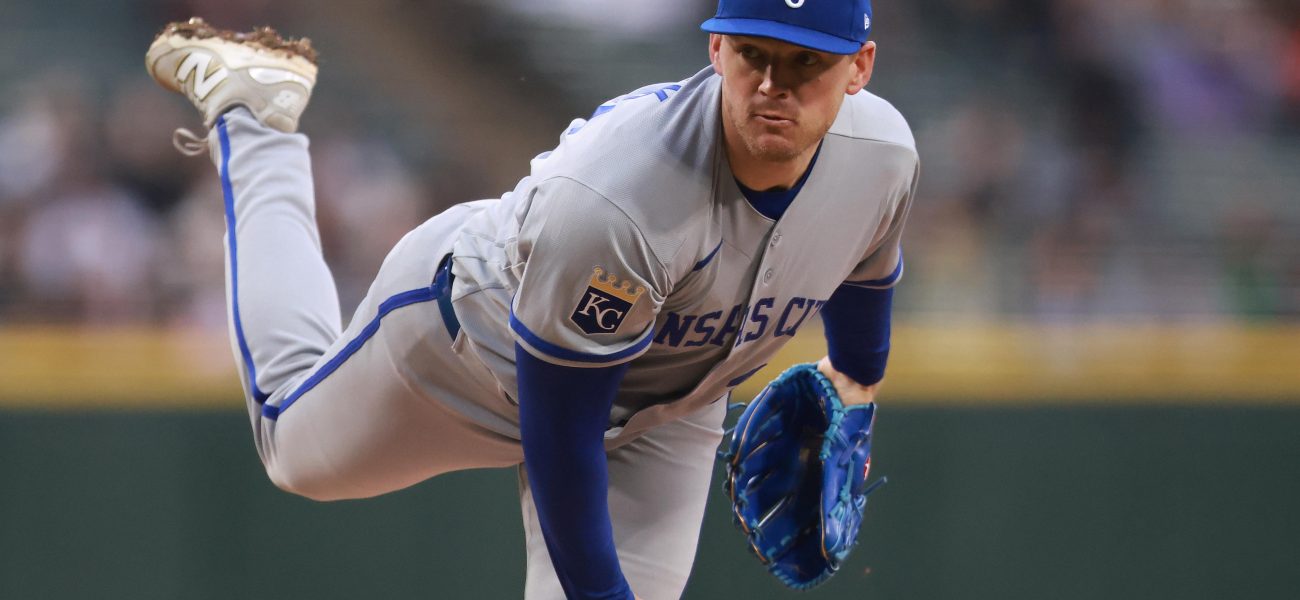
Because every narrative needs its protagonists and its—let’s call them—struggling assets, meet Stephen Kolek. The young pitcher, tapped for only his third major league outing, is a proxy for the sort of unproven, high-risk, high-reward ventures policymakers increasingly push in growth-hungry regions. He flashed brilliance for four innings last time out. But then the fifth inning came, — and the wheels, they wobbled off, violently. His established counterpart, Cole Ragans, remains on the disabled list—an allegory, perhaps, for the older, more reliable economic drivers currently sidelined by unforeseen circumstances or shifts in global demand. Who picks up the slack? It’s often the Koleks of the world, burdened with disproportionate expectations.
And their opponents, the St. Louis Cardinals, aren’t exactly paragons of unflappable reliability. They’ve trotted out Andre Pallante, a pitcher whose early season consistency has been, shall we say, aspirational. Walking more than four batters per nine innings—that’s a concession rate few economists would endorse, isn’t it? He presents a potential opening, a chink in the armor of what should be a robust competitor. The Royals, you’d think, would exploit that, but past performance suggests otherwise. It’s a gamble, every time.
But the real, deeper story here? It extends far beyond the midwestern diamond. Wealth, particularly in the Gulf states, has increasingly sought new horizons for diversification, and sports franchises have become rather attractive acquisition targets. Think about the discussions around investment in Premier League football clubs, for instance, or other major sports properties. The global perception of American sports — its reach now spanning even remote corners of South Asia, fueled by internet streaming and social media—means that even a seemingly regional struggle carries surprising weight. Global spectators, including a growing, affluent Pakistani diaspora, are increasingly engaged, blurring the lines between local affinity and international capital flow. They don’t just watch; they invest, they travel, they embody a new type of fan, demanding a certain level of performance for their emotional—and sometimes financial—equity.
📄 POLICY WIRE WHITEPAPER PUBLISHED: PAKISTAN'S NATIONAL SECURITY POLICY PRIORITIES
👉 READ BY CLICKING HEREIt’s no accident that key players like Jac Caglianone—a linchpin for the Royals, we’re told—are suddenly on the sidelines. His collision with the outfield wall was more than a fluke; it’s a sudden, unavoidable disruption that rattles the entire framework. “Any single point of failure in such a tightly integrated system—be it a star player or a supply chain bottleneck—can cascade rapidly,” opined Dr. Azra Khan, a political economist specializing in emerging market dynamics. She added, “The resilience, or fragility, of the enterprise is then laid bare for all to see. From Karachi to Kansas City, everyone understands instability.” It’s these unforeseen structural shocks, isn’t it, that always seem to hit when you’re least prepared. They complicate predictions, unnerve investors, — and quite frankly, leave everyone feeling a little raw.
What This Means
The fluctuating fortunes of a team like the Kansas City Royals, when viewed through a wider lens, symbolize a deeper economic and political quandary. For civic leaders, managing expectations and fostering sustained success isn’t just about sports anymore; it’s about projecting an image of regional stability and investment-worthiness. The inflow of international capital into sports, often from areas like the Middle East and parts of South Asia, makes a franchise’s brand value—tied directly to its performance—a component of broader national soft power and economic diplomacy. An unpredictable asset, even a sporting one, sends ripples. It suggests an underlying systemic vulnerability that external investors, always scouting for the safest haven, will factor into their next big bet. And don’t forget the internal politics; a struggling sports enterprise can easily become a hot potato for local politicians, tying their re-election prospects to the team’s ability to, well, win. This game, then, is about more than salvaging a series; it’s about shoring up confidence, one pitch at a time, in an economy that feels perpetually on edge.