


High School Athletics’ Hidden Front Line: The New Mexico Transfer Tussle
POLICY WIRE — ALBUQUERQUE, N.M. — It’s not often that bureaucratic pronouncements from state athletic associations grab national attention. But in the often-overlooked crucible of high school...

POLICY WIRE — ALBUQUERQUE, N.M. — It’s not often that bureaucratic pronouncements from state athletic associations grab national attention. But in the often-overlooked crucible of high school sports—where dreams, parental ambition, and sometimes plain old common sense collide—even a seemingly arcane rule modification can echo much louder than expected. Out in the Land of Enchantment, folks aren’t just talking about Friday night lights or championship aspirations; they’re dissecting the very foundations of competitive equity.
For weeks now, local sports aficionados, coaches, and — let’s be honest — plenty of agitated parents have been stewing over one specific agenda item. It’s a concept that sounds innocuous enough on paper, but in practice, it upends the traditional ecosystem of scholastic competition. This isn’t some abstract theoretical exercise; it’s a tangible shift threatening to redefine the playing field for student-athletes across New Mexico, touching everything from team dynamics to community identity. What they’re mulling over is a possible rule change for transfers by the New Mexico Activities Association (NMAA). [QUOTE_PLACEHOLDER]
Think about it. We often hear tales of aspiring young talents making their way through the ranks, enduring local rivalries, and growing within a tight-knit school community. That narrative, for many, is the bedrock of what high school sports ought to be. But the modern era, with its increased specialization — and intense competitive pressure, tells a different story. And it’s this evolving landscape that has the NMAA (and plenty of other state associations nationwide, for that matter) scratching their heads.
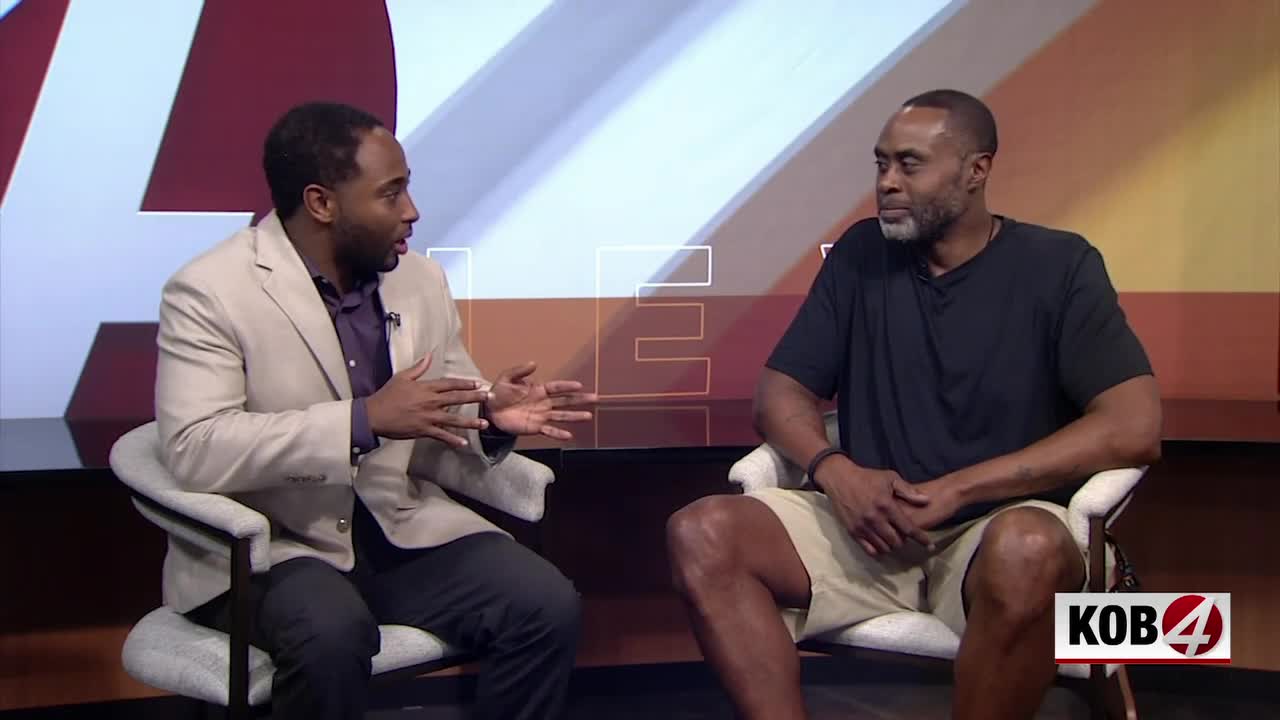
The core of the discussion, fueled by outlets like KOB.com’s program Kenny’s Got the Score, centers on what constitutes a legitimate reason for a student to switch schools mid-career—and more importantly, to remain immediately eligible for athletic competition. Is it a family relocation? An academic program unavailable elsewhere? Or, and this is where the controversy brews, is it a thinly veiled maneuver to chase a better coach, more playing time, or an instant championship pedigree? These are the real-world considerations at play, far removed from the theoretical.
And these discussions aren’t exclusive to the dusty football fields of the American Southwest. Look globally: the push and pull of talent acquisition, often veiled as academic or familial opportunity, is a constant struggle. In places like Pakistan, for instance, young cricketers often gravitate towards urban academies—or, controversially, even ‘feeder’ club teams—for better coaching or exposure, effectively creating a kind of unregulated, high-stakes transfer market long before they hit professional ranks. It’s a different sport, a different scale, sure, but the underlying tensions—the quest for competitive advantage and the ethics of talent migration—mirror the NMAA’s local quandary.
Because let’s not pretend this is simply about the kids. There’s real institutional integrity at stake here. Every time a star player decamps from a smaller, less resourced school to a perennial powerhouse, it doesn’t just reshape individual teams; it also can fundamentally undermine the sense of fairness for the rest. We’ve seen districts nationwide grapple with open enrollment policies, and how they become, often unintentionally, vehicles for sports recruiting masquerading as educational choice. That’s a system that benefits some, but it absolutely drains others. For perspective, consider that a 2023 study by the National Federation of State High School Associations (NFHS) indicated that 37% of state high school athletic associations nationwide report transfer policies are their most frequent source of eligibility appeals. It’s not just New Mexico wrestling with this.
We’re talking about transparency, or lack thereof. The perception is often that if the rules are too loose, or their enforcement too lax, the wealthier districts and established programs will always win the recruiting game, leaving smaller, less-resourced schools scrambling. It’s a challenge to maintain genuine local rivalries—and thus local community engagement—when school rosters look more like professional free-agency lists. It’s not the same as a player swapping Premier League clubs—no, but it carries similar stakes for the communities involved, particularly for those kids who aren’t chasing college scholarships.
What This Means
The New Mexico Activities Association’s potential shift signals a larger, uncomfortable truth about the state of amateur sports. Economically, this move, whatever its final form, could either stabilize the playing field for local programs—potentially encouraging more homegrown talent development—or, if poorly executed, create even greater disparity. Imagine smaller towns losing their marquee athletes year after year; what does that do to school spirit, booster club funding, and ultimately, a district’s economic ecosystem built partly around these very local sporting events? Politically, it’s a tightrope walk for the NMAA. Any new regulation invites scrutiny, appeals, and—frankly—accusations of bias or heavy-handedness. It’s a lose-lose proposition for those trying to enforce fairness when ‘fairness’ is so often in the eye of the beholder, particularly if that beholder’s kid just got benched.
But the ramifications aren’t just local. They’re a microcosm of debates we see globally regarding equitable access to sports and talent development—from the fierce debate over age fraud in South Asian youth football to the impact of well-funded, private athletic academies siphoning off promising youngsters from public pathways worldwide. Just as India’s cricketing pipeline churns out talent, but also faces questions about access and opportunity, these smaller scale high school debates speak to the soul of competition. Cricket’s Crucible: India’s Unrelenting Machine Forges New Talent From Hinterland Hopefuls underscores how nations navigate this challenge at a grander scale.
What the NMAA does in Albuquerque, while perhaps focused on football or basketball eligibility, is part of this larger, messy, and infinitely complex conversation about youth, competition, and what kind of values we actually want to instill. It’s not just about a game score; it’s about setting a precedent for generations. These organizations are always trying to find a balance between fostering competitive excellence and preserving community cohesion. It’s not an easy gig, making those decisions.
The upcoming decision will be parsed, debated, — and some will be quite unhappy with the outcome, no matter what it’s. Because in the arena of high school sports, as in politics, everyone’s got an opinion, and most of them involve their own kids’ prospects.