


Shadow Play North of Litani: IDF’s Latest Bulletin Shakes Mideast Calculations
POLICY WIRE — Beirut, Lebanon — The ground beneath Lebanon’s contentious south often shifts with a silent ferocity that belies its quiet façade. This week, the dust didn’t settle but rather...

POLICY WIRE — Beirut, Lebanon — The ground beneath Lebanon’s contentious south often shifts with a silent ferocity that belies its quiet façade. This week, the dust didn’t settle but rather swirled higher following a declaration that could easily reshape immediate strategic calculations across the broader Middle East. It isn’t just about the targets, or the claimed eliminations; it’s about the assertion, the framing, and the reverberations.
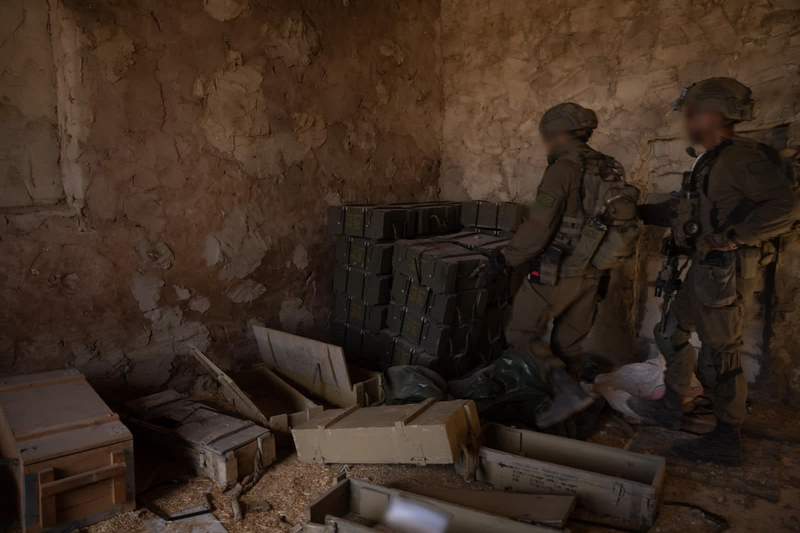
And so, we have the official word: an unspecified number of ground operations conducted north of the Litani River—that demarcation line of historical friction—have, according to the Israeli Defense Forces (IDF), met with considerable operational success. The numbers floated speak volumes about intent, if not granular reality. The IDF, we’re told, struck what it termed [QUOTE_PLACEHOLDER] 100 targets. One hundred. That’s a lot of infrastructure, or alleged infrastructure, depending on whose map you’re reading. The concurrent claim that [QUOTE_PLACEHOLDER] 20 terrorists were killed in these ground operations underscores a familiar narrative, one often preceding or accompanying military actions in the contentious northern arena.
It’s a declaration that raises more eyebrows than it settles questions, as is usually the case in this particular corner of the world. Why such a precise count for targets, yet an aggregated one for personnel? Why the decision to go public with this specific action now? And, critically, what exactly constituted these [QUOTE_PLACEHOLDER] targets? Without more detail, this remains largely a battle of perception, fought in press releases as much as on contested hillsides. But one thing is certain: such announcements don’t happen in a vacuum. They carry weight, intended or otherwise, across national borders — and into policy halls.
The Litani River, you see, isn’t just a hydrological feature; it’s been a geopolitical flashpoint for decades. Its waters, its banks, its proximity to other nations—it all translates into a deeply complex strategic zone. Any ground operation asserted to have taken place there sends a chill, or a thrill, through various capitals, depending on their alignment. For those keeping score, the IDF says these ground operations involved various units, and they report [QUOTE_PLACEHOLDER] specific results, yet it’s all part of a larger ongoing regional tension.
But the true cost, beyond these reported figures, is almost always measured in the disruption of ordinary lives. Casualties—civilian or combatant—rarely come in clean numerical packages. A UN report from October 2023, for instance, indicated that at least 15,000 civilians had been displaced in southern Lebanon due to escalating border hostilities since that month, illustrating the pervasive impact of such operations. That’s a statistic that hits hard, — and it puts this latest round of [QUOTE_PLACEHOLDER] operations into grim context.
Pakistan, as a prominent voice in the Muslim world, and other nations across South Asia, aren’t detached observers here. They’re tracking this stuff, you can bet on it. For many, these operations represent yet another example of destabilization, an erosion of international law, or an outright affront to regional sovereignty. It becomes a talking point in their own domestic politics, shapes public opinion, and influences their diplomatic postures on multilateral forums. Pakistan’s Foreign Office, for instance, has repeatedly called for de-escalation in similar past situations, reflecting a widespread concern about sustained conflict’s potential to spiral, pulling in actors far beyond the immediate front lines. Because instability, once it truly takes root, has an uncanny knack for metastasizing.
What This Means
This IDF statement, spare as its official details are, functions as a clear message—a projection of capability and a reiteration of strategic posture. Politically, it signals an unyielding resolve regarding what’s perceived as a critical security threat, perhaps aiming to deter further escalations by non-state actors or to shape ongoing diplomatic efforts behind the scenes. It’s a move that certainly complicates any talks of a sustained ceasefire or de-escalation agreement. And for international mediators, this adds another knot to an already tangled skein of geopolitical threads; getting parties to the table becomes harder when one side is openly conducting aggressive actions and announcing their outcomes. It’s like trying to bake a cake while someone keeps throwing flour at the oven door. Economically, while not directly impacting global markets dramatically today, the cumulative effect of such continued friction fuels regional instability. Instability, it’s worth noting, tends to drive up risk premiums, making investment shy and diverting national resources from development to defense. Think about shipping routes through the Suez Canal, or broader energy markets; a more chaotic Levant almost invariably has downstream economic repercussions felt across the globe, from Islamabad to London. The specter of prolonged, unchecked conflict in one of the world’s most sensitive regions means every military bulletin carries an echo, a subtle shift in the tectonic plates of global finance and political alliance.