


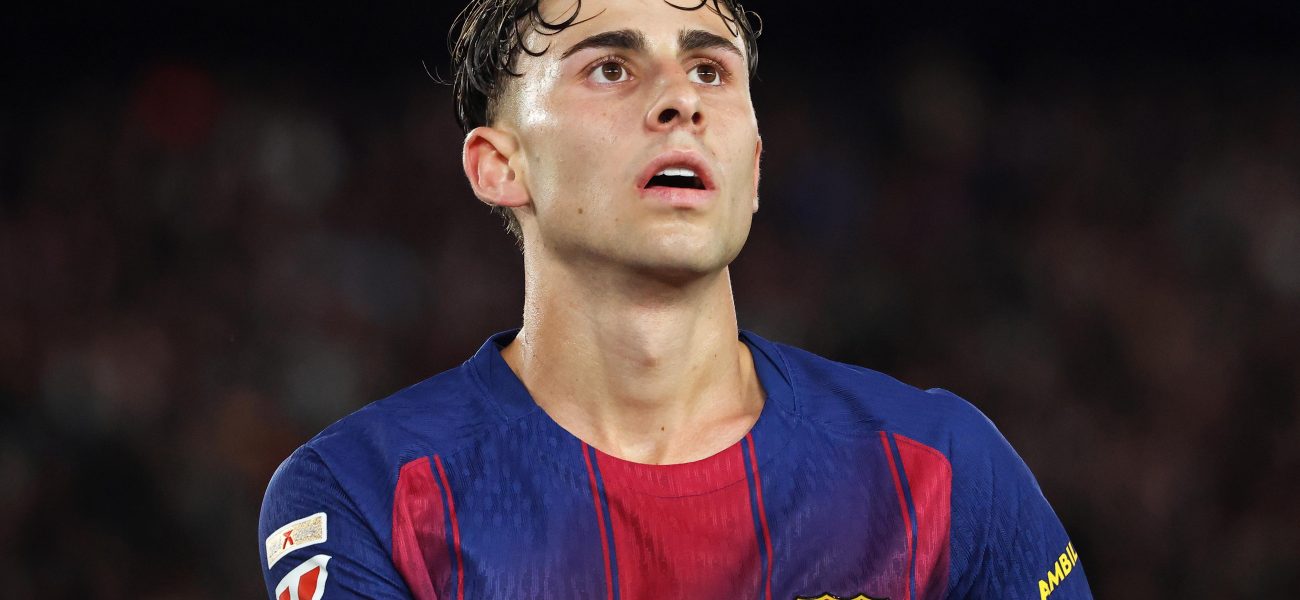
Fermin Lopez Injury: Barcelona’s Bad Luck, Spain’s World Cup Headaches, and the Global Game’s Brittle Idols
POLICY WIRE — Barcelona, Spain — Another season winding down, another star player felled by the relentless calendar. It’s a familiar dirge in the brutal economics of modern...

POLICY WIRE — Barcelona, Spain — Another season winding down, another star player felled by the relentless calendar. It’s a familiar dirge in the brutal economics of modern football, and this time, the grim reaper paid a visit to Camp Nou, sidelining Barcelona’s bright young midfielder, Fermin Lopez. While the immediate focus might be on a single fractured metatarsal and the final days of La Liga, dig a little deeper, and you’ll find far more complex repercussions — reaching from Spain’s World Cup ambitions to the increasingly precarious valuation of global sporting talent.
It wasn’t a headline-grabbing collision, not some theatrical clash under the glare of stadium lights. Nope, just the usual, unforgiving stress of the beautiful game. Lopez, a rising talent who’d carved out a significant role for the Catalan giants, went under the knife this week to address a fracture in the fifth metatarsal of his right foot. The club, ever so discreet, confirmed the ‘successful’ procedure at Hospital de Barcelona, under clinical supervision, but remained pointedly vague on the exact recovery timeline. Still, the whisper network, which often trumps official communiques, has him out for roughly three months. Carrusel Deportivo, always with an ear to the ground, pegged the layoff firmly in that timeframe.
And just like that, a nation holds its breath. A young Spaniard, with dreams undoubtedly colored in red and gold, sees his World Cup prospects vanish in a puff of smoke, all thanks to a minor mishap in a late-season league fixture. It’s a cruel reality for the players, sure, but also for the national federations who’ve poured resources into developing these assets. Barcelona’s official line was, predictably, upbeat-ish.
“Fermin’s health is our absolute priority, and we’re committed to his full recovery,” stated Jordi Cruyff, Barcelona’s sporting director, in what felt like a carefully worded corporate boilerplate designed to assuage anxious fans and potential sponsors alike. “While any injury is a setback, especially at this stage of the season and with international tournaments on the horizon, we’ve got a deep squad, and we’ll manage. These things happen; it’s part of the game’s inherent risk.” It’s always about the game’s inherent risk, isn’t it?
The sentiment from the national camp echoed a similar tone, albeit with a touch more wistfulness. “It’s a genuine blow, no doubt about it,” admitted Spain national team coach Luis de la Fuente, probably while poring over revised squad lists. “Fermin brought a spark, a youthfulness we were banking on for the World Cup. He had a creative edge, a drive that’s hard to replicate. But Spain doesn’t rely on one individual. We have a profound pool of talent, — and others will step up. That’s simply the nature of elite international football.” Nature, or perhaps just cold, hard necessity.
The news serves as a stark reminder of the tenuous balance between ambition and physical endurance in the modern sporting arena. These athletes, effectively billion-dollar commodities, operate under immense pressure, both from their clubs and the voracious demands of an ever-expanding global football calendar. Just last year, research from FIFPRO (the global players’ union) revealed that top male footballers now play, on average, 12% more minutes for club and country compared to a decade ago. It’s a treadmill that never slows, chewing up ligaments — and fracturing bones along the way. That’s the grind. It’s the cost of endless television deals and lucrative sponsorship packages, the price these young gladiators pay for our entertainment.
Because every injury isn’t just a lost player; it’s lost market value, potential merchandising revenue left on the table, and a ripple effect that touches everything from transfer fees to sponsorship clauses. The Wembanyama Effect in basketball, for instance, perfectly illustrates how a singular talent can warp global market shifts. For Barcelona, an already fiscally challenged institution, every absence bites a little deeper into their carefully constructed financial plans. But they aren’t the only ones doing this delicate dance.
From the burgeoning talent factories of Latin America to the increasingly robust, if cricket-obsessed, South Asian youth academies—a burgeoning source of new fans and future players—young hopefuls dream of gracing the very pitches that now, ironically, seem to break their idols. Countries like Pakistan, while renowned for cricket, have a growing football grassroots scene, where kids idolize the likes of Lopez, hoping to one day escape their provincial leagues for the European big leagues. Their dreams are molded by these grand spectacles and, yes, even by the setbacks. It makes the fragility of an elite player’s career all the more stark.
Barcelona’s scramble to secure a superstar, even if it’s the brutal economics of chasing an Arsenal star, illustrates the desperate need for top-tier talent. Losing one of your own, even temporarily, is never a simple equation of rest and recovery; it’s an intricate dance of risk, reward, and replacement. These clubs can’t afford to merely wait.
What This Means
Fermin Lopez’s injury isn’t merely a health update on a player. It’s a micro-drama reflecting macro-economic tensions in global sport. For Barcelona, already grappling with colossal debt and stringent financial fair play rules, losing a burgeoning asset—a player who costs relatively little but performs handsomely—is an unwelcome budget hit. It forces them into the expensive transfer market sooner, perhaps for a stop-gap solution, diverting funds they’d rather deploy on a long-term strategic acquisition. That’s money they don’t exactly have lying around.
Politically, his absence weakens Spain’s World Cup bid. A strong performance on the international stage bolsters national pride, fuels tourism, and generates significant revenue from broadcast rights and merchandise, influencing everything from governmental sports funding to soft power projection. So, when a dynamic young midfielder is abruptly sidelined, it’s not just a coach’s tactical headache; it’s a national psychological dent, a lost opportunity to showcase Spain’s sporting prowess. The domino effect, as ever, is insidious. The pursuit of sporting glory, often masked as pure competition, is invariably tied to a nation’s prestige and economic vigor. In a world where even football players are complex, multi-million dollar commodities, an errant foot or an overstretched tendon can echo far beyond the confines of the operating theater. And nobody, not even the most successful clubs, is immune.