


Distant Echoes: A Yemeni Drone, Israel’s Defense, and the Gulf’s Widening Vortex
POLICY WIRE — Tel Aviv, Israel — Four years ago, the notion of projectiles traveling over 1,600 kilometers across swaths of desert and contested airspace, launched from Yemen’s rugged terrain...

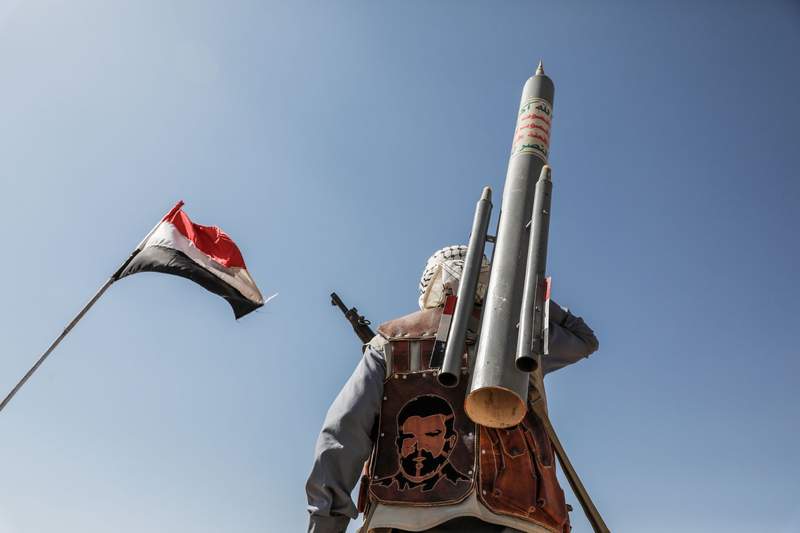
POLICY WIRE — Tel Aviv, Israel — Four years ago, the notion of projectiles traveling over 1,600 kilometers across swaths of desert and contested airspace, launched from Yemen’s rugged terrain to brush Israel’s southern skies, might’ve sounded like the plot of a geopolitical thriller. Not anymore. It’s Tuesday’s sobering reality. This past week, a drone — not a swarm, mind you, just one lonely, determined automaton — made that improbable journey before getting knocked out of the air by Israeli defense systems over the southern tip of the country.
It wasn’t an unprecedented event, frankly. Not for the technology involved, anyway. What feels different now is the casual cadence of these reports; they’re less anomalies and more footnotes in an escalating, geographically dispersed conflict. The drone, an official from Jerusalem confirmed, was on its way from Houthi-controlled territory in Yemen, a nation itself drowning in a humanitarian crisis for years. This latest incursion simply adds another layer to the increasingly dense tapestry of proxy warfare unfolding across the Middle East. It’s almost become mundane, isn’t it? A hostile drone takes flight from a war-torn country, flies a preposterous distance, — and then gets swatted. Life goes on—or tries to.
But the seemingly routine nature belies a deeply unsettling strategic evolution. What was once the domain of state actors now involves non-state groups, increasingly sophisticated in their weaponry, demonstrating an unsettling reach. This isn’t just about Israeli air defenses working, which they evidently did. No, this is about the stretching sinews of conflict, touching places once considered safely peripheral. The range capability of these drones has dramatically shrunk the perceived distance between conflict zones, making any boundary feel less like a hard line and more like a suggestion. It forces everyone to reckon with a new calculus of threat perception.
For nations like Pakistan, thousands of miles away but inextricably linked by regional geopolitics, these incidents are hardly abstract. The ripples extend far. The security of vital shipping lanes through the Red Sea—a common Houthi target—directly impacts global trade, including essential oil and goods destined for or passing through Pakistani ports. A recent UN report, published in January 2024, stated that maritime freight passing through the Suez Canal dropped by 42 percent in the past two months due to Red Sea attacks, signaling significant economic disruption far beyond the immediate flashpoints. That’s real money, real jobs, real supply chain headaches reaching into Karachi — and beyond. But it’s not just economics; there’s a potent, if sometimes latent, sympathy for the Palestinian cause that reverberates through the broader Muslim world, including in South Asia. So, even a largely symbolic, easily intercepted drone strike from Yemen isn’t just about one incident; it’s part of a much larger, often religiously inflected, narrative of struggle that plays out across national boundaries and media landscapes.
And let’s be honest, it’s not just the distance that matters here. It’s the persistent demonstration of intent. It’s a statement, stark and undeniable, from actors who might be materially outmatched but possess an undeniable will to project power, however limited. These sorts of operations are a reminder that a region’s volatility doesn’t stay neatly contained. It seeps, it spreads, it influences policy debates — and public sentiment from Istanbul to Jakarta.
They’ve been saying [QUOTE_PLACEHOLDER] for a while now, haven’t they? That the Middle East is on a knife’s edge. But this feels less like an edge — and more like a series of increasingly wobbly, interconnected tightropes over a chasm. Each event, each interception, each Houthi strike in the Red Sea, or skirmish on another border, nudges another player, another market, another politician a little further out into the void.
What This Means
This latest drone incident, while militarily insignificant in isolation, is politically loaded. It’s essentially another digital finger pointing from the Iranian-aligned ‘Axis of Resistance’ towards Israel, reaffirming a widespread and well-understood network of proxies. But the more worrying trend, to my mind, isn’t just the message; it’s the sheer breadth of active engagement, transforming what used to be distinct regional conflicts into a sprawling, multi-front, multi-actor entanglement. This sort of diffused warfare makes de-escalation a nightmare. It means more points of friction, more opportunities for miscalculation, more strain on air defense systems that are, after all, expensive to maintain and operate continuously. Think of the psychological toll on civilian populations constantly under threat, or the massive economic diversion to military readiness at the expense of social programs across the region.
Economically, this protracted instability around critical waterways has global repercussions that countries far from the Levant—places like Sri Lanka, Bangladesh, or Pakistan—can’t ignore. Delayed shipments mean higher costs; rerouted vessels mean longer transit times. That means inflation, less competitive exports, — and an erosion of consumer confidence. It’s not direct war, but it’s certainly economic attrition. From a policy perspective, Western nations face a deepening dilemma: how to contain a conflict that isn’t contained, how to de-escalate without capitulating, and how to protect international trade while upholding principles of constitutional supremacy amidst a storm of street-level pressure and geopolitical maneuvering. Because frankly, when drones from Yemen can target Israel, no one is really just ‘on the sidelines’ anymore. Everyone’s implicated, one way or another.