


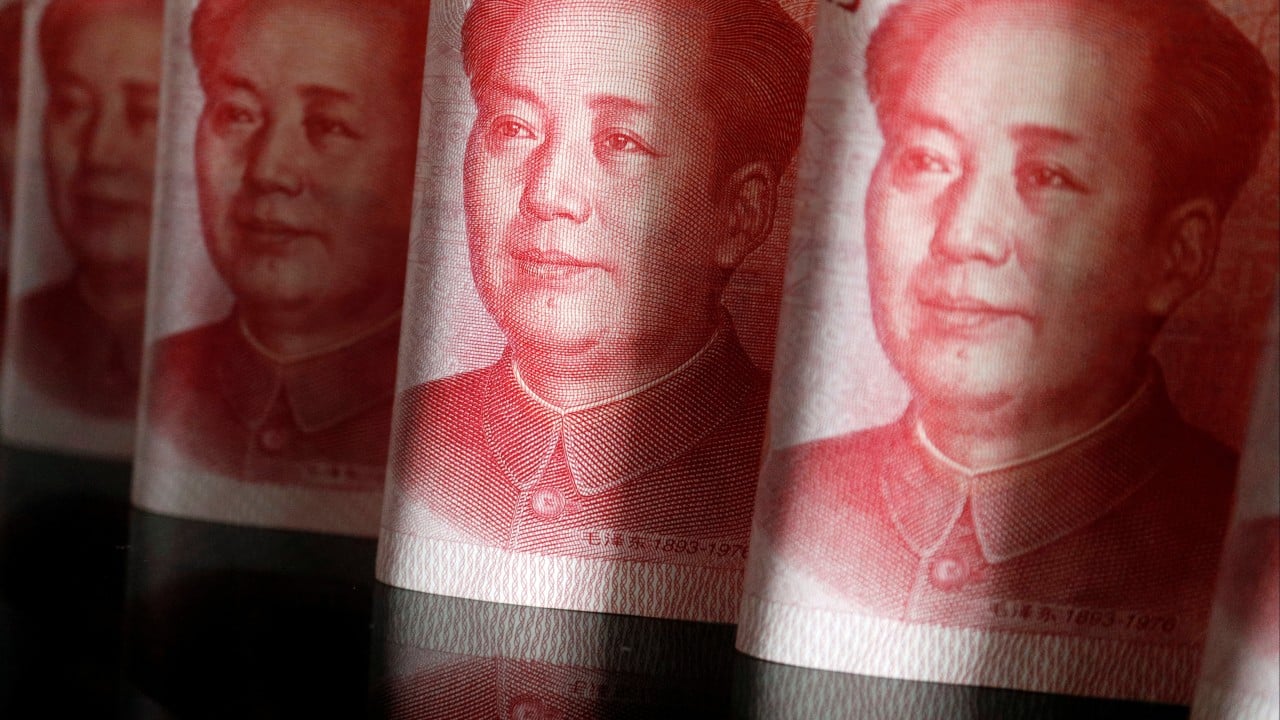
Beijing’s Quiet Coup: Yuan Debt Soars, Reshaping Global Financial Gravity
POLICY WIRE — BEIJING — Remember when everyone worried about Western banks dictating the global financial tune? Turns out, the symphony’s got new conductors, — and they’re playing a...

POLICY WIRE — BEIJING — Remember when everyone worried about Western banks dictating the global financial tune? Turns out, the symphony’s got new conductors, — and they’re playing a decidedly different melody. It isn’t always trumpeted from the rooftops, but a subtle, almost insidious shift is underway, one where the dragon’s economic embrace grows tighter, day by day, dollar by dollar – or rather, yuan by yuan. Beijing isn’t just building highways in faraway lands; it’s building a new financial architecture, one brick, or rather, one bond at a time.
It’s no secret that the global economy has been, shall we say, a tad wobbly. But while everyone’s fixated on inflation figures from Frankfurt or interest rates from Washington, something far more consequential has been brewing quietly in Shanghai and Beijing.
Foreign governments, international banks and multinational companies are increasingly tapping China’s domestic bond market, marking a profound recalibration of where capital now seeks safe harbor—or at least, convenient harbor. They’re queuing up for something called a ‘panda bond,’ — and let me tell you, its profile is less cuddly, more cunning. These aren’t some cute collateralized debt obligations; they’re
yuan-denominated debt instruments issued by foreign entities in mainland China’s onshore market, pure and simple. [QUOTE_PLACEHOLDER]
Because why not tap a burgeoning economy with mountains of liquidity, even if the geopolitical waters are, shall we say, choppy? The numbers don’t lie, even if the implications might make some folks squirm. According to data, the issuance of these yuan-denominated securities has become less of a trickle — and more of a flood. In May alone, 11 different entities saw fit to offload 14 such instruments, totaling a staggering 26.64 billion yuan (that’s about US$3.7 billion). What’s more, that’s
up 246 per cent from a year earlier — and the highest level on record for the month. Yeah, you read that right.
But this isn’t just about headline-grabbing figures. It’s about choices. Nations—and companies, for that matter—have long tethered their financial destinies to the whims of the US dollar. But dollar debt comes with dollar problems. Think about it: a strong dollar means a heavier debt burden for countries that earn in other currencies. A more diversified debt portfolio, even if it includes an increasingly assertive yuan, suddenly looks pretty attractive. It’s practical. It’s smart. It’s just perhaps, politically inconvenient for those who’d rather not see Beijing’s financial influence grow exponentially.
Take Pakistan, for example, a country already enmeshed in China’s sprawling Belt and Road Initiative (BRI) infrastructure projects. Pakistan’s foreign exchange reserves have, shall we say, seen better days. It’s a country always on the lookout for fresh capital, wrestling with a balance of payments crunch that could turn stomach-churning at a moment’s notice. While Pakistan hasn’t been a major issuer of panda bonds directly, the rise of yuan-denominated debt as a global instrument means a couple of things for economies like theirs. Firstly, it offers another potential avenue for funding, diversifying away from traditional Western lenders. And that’s not nothing. But it also deepens the economic architecture dominated by China, cementing Beijing’s role as not just a creditor, but a financial market maker.
We’re talking about a slow burn, here, not a financial bang. But it’s undeniable:
panda bond issuance hit a record high in the first five months of the year, underscoring this creeping, yet accelerating, financial integration. And it forces uncomfortable questions about debt sustainability, economic sovereignty, and where precisely the levers of global power are going to be located in the decades to come. No country, not even the most cash-strapped, takes on new debt lightly, especially when it involves shifting the fundamental currency paradigm. They’re doing it because they’ve to, or because the alternative feels even worse. Or, perhaps, because it just makes economic sense, damn the geopolitical torpedoes.
These bonds—a bit like the iconic bear itself—might seem harmless at first glance. But their rapidly growing prevalence represents something far grander: China’s quiet, strategic play to solidify the yuan’s role on the global stage. It’s financial diplomacy by other means, a bid to provide an alternative, a path away from what many perceive as a dollar-centric chokehold. Countries scrambling for financing, or simply looking to reduce currency risk, find themselves drifting East, inevitably, inexorably, into China’s orbit. It’s an option. And in a world of limited options, any new one looks pretty appealing, doesn’t it?
What This Means
The record-breaking surge in panda bond issuance isn’t merely a financial statistic; it’s a stark geopolitical signal. Politically, it illustrates a growing willingness among sovereign entities and multinational corporations to embrace China’s financial ecosystem, perhaps hedging against future economic realignments or simply bowing to the undeniable reality of China’s economic gravitational pull. It implicitly legitimizes the yuan as a currency of international exchange and investment, chipping away at the dollar’s longstanding hegemony. For Western powers, it signifies a quiet defeat—or at least a strategic erosion—in the financial influence they’ve taken for granted. Their leverage, particularly in shaping global economic policy through financial instruments, incrementally diminishes as other options materialize.
Economically, this trend accelerates the diversification of global capital markets. It presents foreign issuers with an alternative pool of liquidity, potentially at more favorable terms depending on prevailing market conditions in China versus the West. However, it also introduces a layer of complexity for global financial institutions regarding risk assessment and regulatory compliance. For developing economies, especially those along China’s BRI, yuan-denominated debt offers a direct channel to finance projects with their largest trading partner. But because the debt is often opaque, this could potentially deepen financial dependence on Beijing, raising long-term questions about economic sovereignty and debt traps. This move, more than any pronouncement, reshapes global aspirations, creating new power centers beyond traditional Western capitals. One might even argue it sets the stage for a different kind of global aspiration entirely. The sudden burst in activity suggests a market responding to deep-seated structural incentives, rather than ephemeral trends. And it’s not just abstract economics; it’s going to ripple through everything, from commodity prices to national development strategies.
for countries within the Muslim world and South Asia, already navigating complex geopolitical currents, increased access to yuan-denominated funding could mean less reliance on institutions that sometimes impose politically stringent conditions. But the trade-off, of course, is a deepening entanglement with China’s strategic interests. It’s a calculated risk, weighing immediate financial relief against potential long-term geopolitical commitments. Because in this game, nothing’s ever really free. And for states already teetering on the edge of instability, whether due to economic woes or regional conflicts, like those seen in the Middle East, a new financial lifeline, however fraught, might just be irresistible.