


Europe’s Fraying Nerves: Spanish Shores Greet Gaza Flotilla with Fist, Not Flourishes
POLICY WIRE — Madrid, Spain — They’d just wanted to deliver medicine, some building materials, maybe a few desperate rays of hope. But instead of quiet contemplation on a Mediterranean return voyage,...

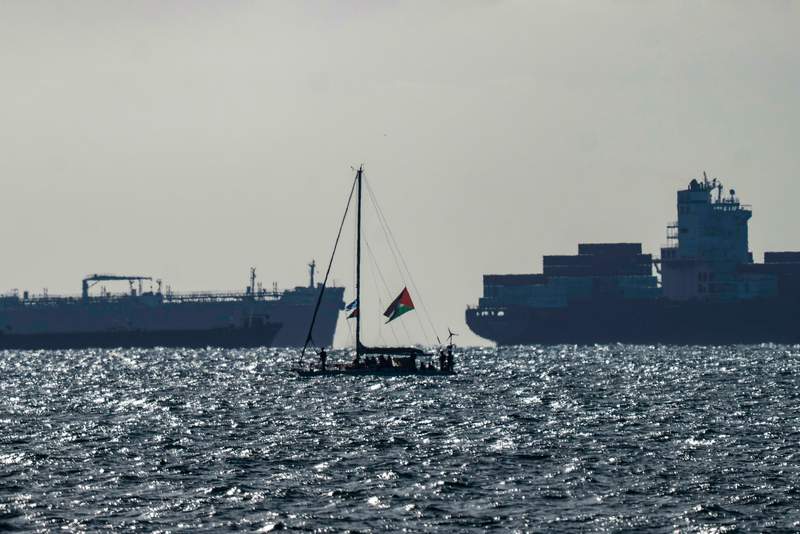
POLICY WIRE — Madrid, Spain — They’d just wanted to deliver medicine, some building materials, maybe a few desperate rays of hope. But instead of quiet contemplation on a Mediterranean return voyage, activists from the latest Gaza-bound flotilla found themselves once again in a familiar, unpleasant dance: human rights against hard power, on the very soil they called home. Spanish police, it seems, weren’t in a mood for sympathetic welcomes, clashing sharply with the returning contingent.
It wasn’t exactly a ticker-tape parade waiting for the flotilla veterans. Fresh from their – largely failed – mission to break the maritime blockade on Gaza, these weren’t just any weary travelers disembarking. They were symbols, walking controversies, — and quite often, as authorities seem to think, an irritant. And Madrid’s security apparatus evidently saw fit to remind them precisely where the line was drawn between peaceful advocacy and, well, whatever the police decided constituted an actionable disturbance.
Reports trickling in from coastal ports paint a picture less of gentle policing — and more of forceful dispersion. Detainees, minor injuries, the kind of scuffle that’s become almost routine when principled defiance meets institutional rigidities. “These individuals were advised repeatedly against actions that could lead to public disturbances,” stated a Spanish police spokesperson, choosing his words carefully from a brief issued later that day. “Their failure to comply led to regrettable but necessary interventions to maintain order. We’re not here to facilitate political theatre.” But isn’t protest, in its rawest form, exactly that? A kind of street theatre, a public display of grievance?
Because the drama on Spanish docks is just a localized echo of a far larger, more agonizing global opera. The desperation that propels activists onto flimsy boats, across international waters, comes from somewhere. It stems from the fact that despite global outrage and mounting casualty tolls, the humanitarian situation in Gaza remains calamitous. According to a recent UN OCHA report, only an estimated 15% of the essential humanitarian aid needed is currently entering the strip, choking a population of over two million. You’d think the gravity of that statistic might temper official reactions to those trying to push past the inertia, wouldn’t you?
And so, activists like Maria Rodriguez, a 63-year-old retired teacher and flotilla participant, feel they’re left with few options. “When ordinary citizens feel compelled to take to the seas for humanitarian principles, governments ought to listen,” she told us, visibly shaken but unbowed after the confrontation. “Suppression of dissent, even if inconvenient, only deepens the underlying frustration. It’s a sad reflection on global policy, really—they’re fine with starving people, just not with people complaining about it too loudly.” Her words, raw and unpolished, cut through the bureaucratic veneer, don’t they?
📄 POLICY WIRE WHITEPAPER PUBLISHED: PAKISTAN'S NATIONAL SECURITY POLICY PRIORITIES
👉 READ BY CLICKING HEREThis isn’t some isolated European quirk. Across the Muslim world, from Cairo to Kuala Lumpur, scenes of confrontation between protestors and authorities are becoming disarmingly familiar. In nations like Pakistan, public sentiment leans heavily on calls for immediate, unimpeded aid to Gaza and stronger international intervention. When even European nations – traditionally champions of civil liberties – respond with batons and arrests to humanitarian advocacy, it sends a chill. It suggests a closing window for expressing dissent, especially when it touches on what many consider politically sensitive conflicts.
But the story’s never that simple, is it? Governments, especially those juggling complex diplomatic relations and their own domestic security concerns, often find themselves on a tightrope. Spain, for instance, has been vocal about Palestinian statehood while also upholding European common policies. That’s a tricky tightrope. So when these boats come calling, it’s not just about humanitarian aid; it’s about a political message, a challenge to state-sanctioned narratives and policies.
What This Means
The latest clashes on Spanish docks are more than just a localized police action. They’re symptomatic of a deepening schism in Europe regarding the Israel-Palestine conflict, reflecting a wider struggle between public sentiment and governmental realpolitik. Politically, the heavy-handed response risks alienating a segment of the Spanish population already critical of what they perceive as EU inaction or complicity in the humanitarian catastrophe. It could galvanize further protest — and deepen societal divisions. Economically, while direct impact is negligible, the continued optics of a region simmering with unrest, even in the heart of Europe, isn’t exactly great for investor confidence or tourism. It suggests instability, even if the underlying issues are thousands of miles away. It shows governments struggling to control a narrative that’s increasingly globalized and emotionally charged, a situation where symbolic acts of defiance often achieve more resonance than official diplomatic communiqués. It’s a slow-motion unraveling, playing out one confrontation at a time, where every push and shove becomes another headline, another testament to a world that feels increasingly off-kilter.