


Hidden Veins, Global Stakes: Colombia’s Margaritas Deposit Ignites a Resource Race
POLICY WIRE — Bogota, Colombia — Sometimes, it isn’t the grand, sweeping declarations that shift geopolitics; it’s the quiet hum of a drill deep beneath tropical earth. A recent discovery...

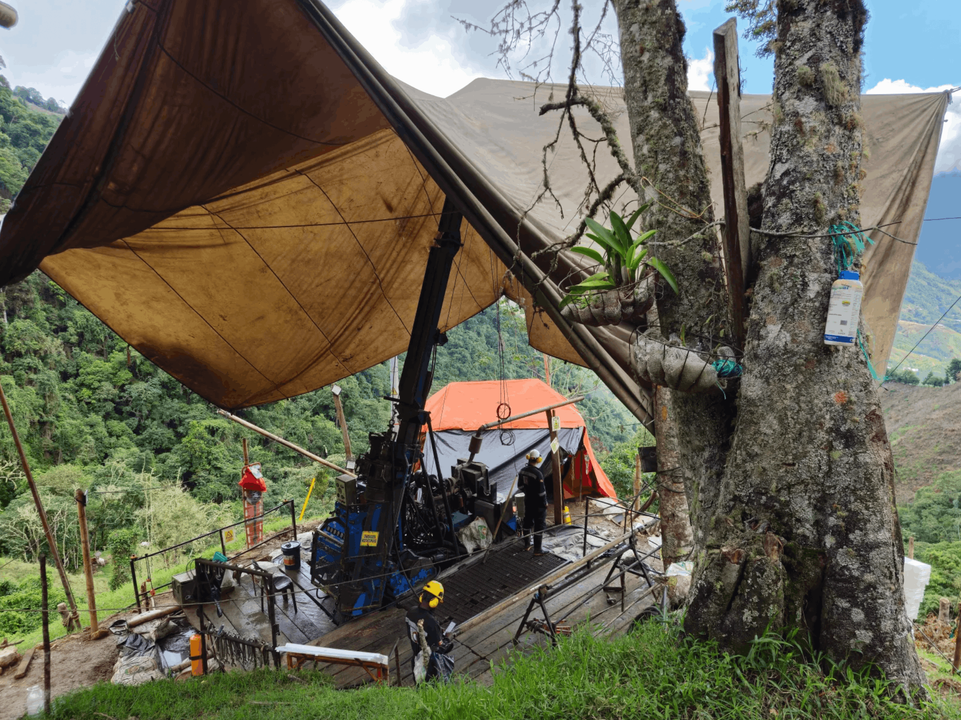
POLICY WIRE — Bogota, Colombia — Sometimes, it isn’t the grand, sweeping declarations that shift geopolitics; it’s the quiet hum of a drill deep beneath tropical earth. A recent discovery in Colombia—a find of high-grade silver and antimony at Royal Road Minerals’ Margaritas target—serves as a stark reminder. This isn’t just another mineral deposit, no. It’s a flashing red light on the global resource dashboard, signaling a potential game-changer in the quiet, brutal scramble for critical raw materials.
Because frankly, the world needs more than just oil these days. It craves rare earths, it hungers for metals vital to every electric vehicle, every solar panel, every piece of cutting-edge defense tech. Antimony, a metal you probably don’t think much about, sits right in that sweet spot—an indispensable component in flame retardants, plastics, and increasingly, those next-gen batteries everyone’s betting their retirement on. Silver, well, that’s just always been currency, isn’t it? An ancient hedge against chaos, — and a modern workhorse in electronics.
Royal Road Minerals, a junior outfit with a penchant for high-risk exploration in politically complicated terrains, announced impressive drill results from Margaritas. We’re talking bonanza-grade silver (up to 3,115 grams per tonne over 0.5 meters) and some truly eye-watering antimony grades (up to 19.34% over 0.5 meters). That kind of purity? It’s like striking liquid gold, but for the 21st century’s digital alchemy. They’ve found a genuine anomaly there, — and it won’t go unnoticed.
And let’s be real, Colombia’s past with mining is a tangled mess of fortunes — and fatalities. Years of internal conflict, guerrilla warfare, and illicit extraction have scarred the landscape and the political psyche. But a find like this? It demands a reevaluation, a fresh calculus for a nation trying to pivot from its violent history toward economic stability. It’s got the power to draw significant foreign direct investment, the kind that might just tip the scales for infrastructure projects, even social programs.
Dr. Timothy Coughlin, CEO of Royal Road Minerals, put it rather succinctly. “This isn’t just about rocks; it’s about unlocking strategic value for a hungry world, and doing it responsibly,” he told Policy Wire, carefully choosing his words. “We’re acutely aware of our role, the expectations on us in a country with Colombia’s particular history. But the potential, my friends, it’s undeniable.” It sounds good, doesn’t it? Very corporate-social-responsibility. But he’s right about the potential.
But the local impacts? Those are often far trickier than assay results. Minister of Mines and Energy, Omar Andrés Camacho, likely faces calls to nationalize, or at least heavily regulate, such a lucrative find. “Colombia holds immense potential,” he might argue, a subtle warning in his tone, “but any extraction must serve our people first, not just quarterly earnings reports. We’re watching very closely for both environmental compliance and community engagement.” A delicate tightrope, that one. Foreign investment’s great, until it isn’t.
Consider the wider implications. The global antimony market, for instance, is projected to reach approximately $2.6 billion by 2028, with demand particularly driven by flame retardants and lead-acid batteries, according to Statista. And guess who’s gobbling up antimony — and silver for burgeoning electronics and defense sectors? Countries like Pakistan, where the drive for technological self-sufficiency and modernizing its infrastructure creates an insatiable appetite for these exact critical minerals. A secure, ethical supply line from a geopolitically less fraught region like South America (compared to, say, some parts of Central Asia) could be highly attractive to Islamabad, or New Delhi, looking to diversify its sourcing. It’s all part of the big supply chain dance.
What This Means
This discovery throws a wrench, or perhaps a gleaming silver spade, into several policy debates. First, it forces Colombia to revisit its mining regulatory framework. How will they balance attracting capital with protecting environmental assets — and indigenous communities? That’s not a question for quarterly reports; it’s one for the nation’s soul. If handled poorly, it could reignite social conflicts in the resource-rich but historically neglected regions. But if done right, it could fuel significant development.
Second, it alters the global equation for these critical minerals. Reduced reliance on traditional, sometimes monopolistic, sources strengthens the hand of nations seeking to industrialize or expand their technological footprint, whether it’s Germany needing components for its auto industry or Pakistan for its electronics assembly lines. Geopolitically, it provides a potentially new front in the ‘great power competition’—who gets access, and under what terms? Countries don’t just secure oil anymore; they secure lithium, cobalt, — and now, more antimony. It’s a new kind of talent war, but for geologic endowments.
Ultimately, Royal Road Minerals’ lucky strike in Margaritas isn’t merely a corporate win; it’s a tremor in the fault lines of international commerce and policy, hinting at a new resource chess game set to unfold on Latin American soil. The pieces are moving, you see. And Colombia, inadvertently, just got a powerful queen on its board.