


Cricket’s Cruel Stage: The Ballad of the ‘3D’ Cricketer Who Never Quite Landed
POLICY WIRE — Chennai, India — There’s a particular kind of quiet despair that accompanies a career etched more by its moments of intense scrutiny than by glittering trophies. And that,...

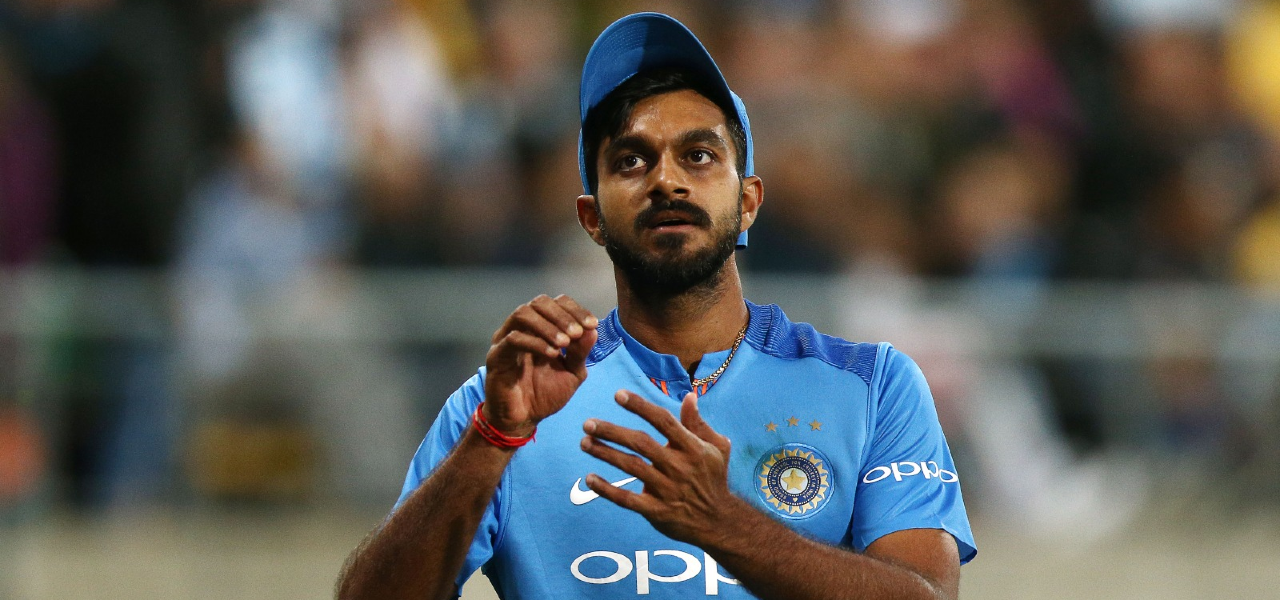
POLICY WIRE — Chennai, India — There’s a particular kind of quiet despair that accompanies a career etched more by its moments of intense scrutiny than by glittering trophies. And that, frankly, pretty much sums up Vijay Shankar’s story.
It wasn’t the runs, nor the wickets, that defined the now 35-year-old all-rounder, whose retirement from all forms of Indian domestic cricket and the cash-rich Indian Premier League (IPL) sent a mild ripple through the country’s cricketing fraternity this past week. Oh no. His legacy, if one can call it that, feels inextricably linked to three little letters and a whole lot of derision: ‘3D’. That label, bestowed upon him by former chief selector MSK Prasad, was meant to elevate him; instead, it became an albatross, weighing down his every move on the field, his every failed attempt to live up to a hype not of his making. It’s an old tale, isn’t it? The public needs heroes. But sometimes, it seems, it prefers its sacrificial lambs.
You’d think a man who played 12 One-Day Internationals and nine T20 Internationals for one of cricket’s most demanding nations—and made it to a World Cup, even if only briefly—would exit with more pomp. But he didn’t. Shankar, a steady hand for his home state Tamil Nadu, spent years honing his craft, batting lower down the order, bowling a bit of medium pace. He managed a not-insignificant 4,253 runs in 77 first-class matches and collected 43 wickets in that format (cricketing archives, ESPNcricinfo). Those aren’t blockbuster numbers, sure, but they certainly aren’t those of a complete slouch either. Yet, the national team’s door, once opened a crack, seemed to swing shut with brutal finality.
It was 2019 when the 3D saga began. Picked for the ODI World Cup squad ahead of a more established Ambati Rayudu, who famously tweeted a ‘3D glasses’ jibe, Shankar found himself under a microscope that magnified every imperfection. His one moment of brief glory in that tournament? A wicket off his very first World Cup delivery against none other than Pakistan. Imagine that — making a mark against your arch-rival, even as a foot injury ended your campaign prematurely. It was, perhaps, a fittingly bittersweet highlight in a career often shadowed by comparison. Such matches, between India and Pakistan, aren’t just games; they’re emotional flashpoints, sometimes even proxies for larger diplomatic sentiments, which makes his contribution in that particular fixture resonate differently, even if subtly. We’ve seen how even the smallest sporting interaction between these two nations can take on an almost exaggerated geopolitical weight, occasionally serving as a moment of connection or, more often, a reflection of simmering tensions.
“The relentless glare, it changes you,” offered former Indian cricket captain and selector Krishnamachari Srikkanth, a figure known for his straightforward observations. “You’ve got a million people dissecting every single stride, every shot, especially if you’re not Rohit or Virat. It’s incredibly unfair, but it’s the game we play, isn’t it? He carried that tag, unfairly, but he kept plugging away.” It’s true. The guy showed resilience. He changed his bowling action mid-career, shifting from off-spin to medium pace – that takes some nerve, some serious graft. Because he couldn’t quite shake the ghost of ‘what if’ from that World Cup, or the tag that stuck like glue.
BCCI President Roger Binny, addressing the media at a recent event, remarked on the immense pressure faced by aspiring cricketers in India. “We’ve got so many young talents vying for so few spots, and the fan expectations, they’re just astronomical,” Binny stated, his voice carrying the weight of decades spent within the system. “To play for India is a dream, but to sustain that dream, to truly excel, it demands an almost impossible mental fortitude, especially when the narratives around a player become so much bigger than just his performances.”
📄 POLICY WIRE WHITEPAPER PUBLISHED: PAKISTAN'S NATIONAL SECURITY POLICY PRIORITIES
👉 READ BY CLICKING HEREShankar, for his part, tried to spin his ending positively. “Every challenge was a lesson,” he reportedly told local outlets, echoing the stoic pronouncements many athletes make upon leaving the unforgiving arena. He isn’t entirely done with the game, apparently harboring hopes of playing in some overseas leagues. You can’t fault him for wanting to keep pushing. But sometimes, what the world sees is a different story from what a player feels.
What This Means
Vijay Shankar’s retirement, rather than being just another entry in the cricketing ledger, offers a telling insight into the brutal economics and unforgiving public scrutiny that defines sports careers in South Asia, particularly in India. In a nation where cricket transcends mere sport to become a national obsession—and a significant economic engine—the path to glory is fraught with peril. Players like Shankar, talented yet not generational, often become conduits for the collective frustrations or projections of a demanding fanbase and media. His ‘3D’ moniker wasn’t just a quirky label; it represented the constant need for players to justify their existence on the national stage, to embody a perfect, multifaceted ideal that’s often unattainable. It’s a cruel game for those caught between genuine talent — and impossible expectation.
Economically, the IPL’s vast wealth, while offering unprecedented opportunities, also amplifies the ‘buy or bust’ mentality. A player’s stock rises and falls not just on performance, but on perception, social media narratives, and the whims of selectors. For Shankar, who earned lucrative IPL contracts with several franchises (Chennai Super Kings, Sunrisers Hyderabad, Delhi Capitals, and Gujarat Titans, to name a few), his value ultimately couldn’t escape the shadow of his national team reputation. It’s a reminder that even in an era of unprecedented cricketing wealth, public opinion and selection narratives can still cast a long, definitive shadow over an individual’s career arc.