
Tasmania’s Great Escape: When Wildness Shatters the Façade of Human Control
POLICY WIRE — Hobart, Australia — Humanity, for all its grand pronouncements about environmental stewardship, sometimes gets a stark, messy reminder: you can build walls, but you can’t truly tame the...

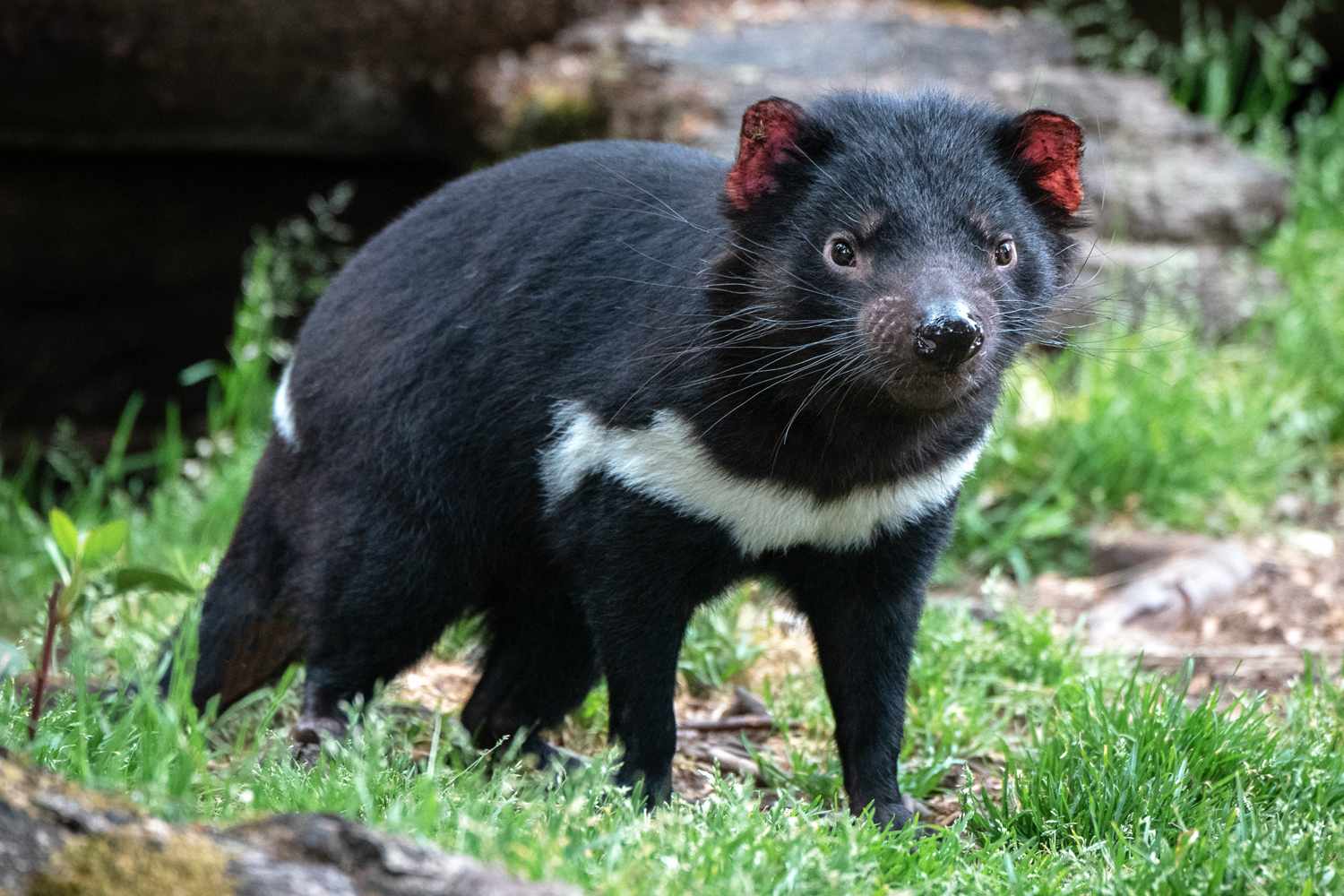
POLICY WIRE — Hobart, Australia — Humanity, for all its grand pronouncements about environmental stewardship, sometimes gets a stark, messy reminder: you can build walls, but you can’t truly tame the wild. Not completely. A recent incident in Tasmania, involving a particularly elusive — and apparently uncooperative — native creature, served as just such a jolt to the system. It wasn’t an international summit collapsing, nor a geopolitical border shifting. But Mary’s bid for freedom, caught on camera no less, speaks volumes about our persistent, often quixotic, attempts to manage nature on our own terms. A Tasmanian Devil named Mary, described with a charmingly misplaced anthropomorphism as ‘shy,’ did what instincts often dictate: she bolted.
She wasn’t making a statement, we can assume. It’s more elemental than that. But her successful, albeit brief, venture beyond the carefully constructed perimeter of an unnamed Australian wildlife park, casts a rather revealing light on the economics and ethics of modern conservation. We spend fortunes trying to restore ecological balance, don’t we? Millions are sunk into captive breeding programs, genetic diversity schemes, and PR campaigns designed to make these often-fierce animals relatable. Mary just ripped a hole through all that, literally.
The surveillance footage, now making its quiet rounds, showed the marsupial demon — (because that’s what a devil is, at heart, despite its cute moniker) — making a break for it. It’s unsettling, perhaps, for those who prefer their conservation stories neat, confined to their designated plots. The incident highlights an unspoken tension: our desire to protect endangered species often clashes with their innate urge for self-determination. You can’t quite quantify the yearning for liberty, can you? It isn’t a line item on a spreadsheet, but it’s a hell of a force.
And let’s be blunt: this isn’t just about one devil, is it? It’s a micro-drama mirroring larger macro-battles across the globe. From the last few Sumatran tigers fighting for jungle scraps against palm oil plantations to the beleaguered populations of snow leopards on the precipitous fringes of the Himalayas—where encroaching human settlements force once-elusive predators into dangerous contact with shepherds from remote Pakistani villages—the tension is universal. Wildlife often loses. Mary’s escapade, therefore, isn’t just a quirky animal story. It’s a pointed illustration of how thin our control truly is.
“We spend millions building sanctuaries, designing habitats that mimic nature, but Mother Nature—she’s always got a trick up her sleeve,” lamented Dr. Evelyn Reed, Director of Conservation for Wildlife Tasmania, during a recent, hushed conservation forum. “Mary’s escape, while concerning for her safety and for our protocols, is also a stark reminder that you can’t truly cage the wild, can you? Not for long.” It’s a poignant truth. Because ultimately, no matter how many resources are poured into maintaining a semblance of control, nature — like geopolitics — tends to find a way to reassert itself. Consider the intricate and often volatile market forces governing endangered species; it’s a silent dance between human protection and exploitation, where the stakes are astronomical.
Minister for Primary Industries — and Water, Michael Abernathy, while pragmatic, echoed the underlying frustrations. “Look, no one wants a headline about an escaped devil. It costs us, doesn’t it? Reputational damage, resources for recapture. But it also shows these aren’t docile pets. There’s a wildness there, something Australians value, even when it gives us a headache.” He’s not wrong. The economic hit from such an event — not just recapture costs but the erosion of visitor confidence and brand damage for ecotourism — can be significant. One analysis from the Australian Bureau of Statistics indicated that ecotourism contributes over A$16 billion annually to the national economy, with native wildlife a prime attraction. An escape, a security breach, casts a long shadow over that carefully curated image.
But the real costs extend beyond the immediate fiscal inconvenience. They seep into the long-term struggle to preserve biodiversity. Mary, after all, belongs to a species that’s seen its numbers plummet. Tasmania’s devil population has declined by more than 80% since the mid-1990s due to Devil Facial Tumour Disease (DFTD), according to data compiled by the Save the Tasmanian Devil Program. They’re effectively refugees in their own homeland, reliant on human intervention—which sometimes includes escape-proof fences—for their survival.
Her brief taste of freedom, therefore, carries a subtle, subversive message. Perhaps the ‘shy’ ones are simply waiting for an opportunity. Perhaps their quietude isn’t timidity, but rather a profound calculation. For Mary, that calculation led her past the perimeter, for a short while at least. It’s a reminder that even in an era of unprecedented human intervention, there are forces that defy our tidy blueprints, just like the unseen players who shape global policy from the shadows.
What This Means
Mary’s caper, viewed through a policy lens, isn’t just about a momentarily mislaid marsupial. It brings into sharp relief the fundamental challenge of conservation in the Anthropocene: managing untameable, unpredictable biological assets within economic and political frameworks that prioritize control and predictability. The sheer cost—of infrastructure, of manpower, of specialized veterinary care—for these programs is astronomical, yet remains perpetually underfunded when set against other, more ‘tangible’ public priorities. When an animal breaks free, it highlights a failure in that economic equation, a return on investment gone sour, even if temporary. And it rattles public trust. People like their endangered species safe, exotic, — and safely contained, like high-value commodities. Any deviation is seen as an operational blip, rather than a symptom of an impossible task. It’s also a poignant, if absurd, metaphor for our broader struggle to manage global crises—like climate change or geopolitical instabilities—where complex systems, like a spirited devil, often confound the best-laid plans. It serves as a sort of bizarre benchmark for how much control we really exert over the wild. Not much, it seems, when instinct kicks in. Because sometimes, despite everything, a wild thing just wants to be wild, consequences be damned.