


Soccer’s Grand Delusion: When World Powers Falter on the Pitch
POLICY WIRE — Washington, D.C. — Grand narratives, much like finely crafted political manifestos or the meticulously planned formations of a dominant football squad, seldom survive the messy reality...

POLICY WIRE — Washington, D.C. — Grand narratives, much like finely crafted political manifestos or the meticulously planned formations of a dominant football squad, seldom survive the messy reality of application. They’re built on assumptions, historical heft, — and the convenient ignoring of inconvenient truths. The sporting world, despite its shiny veneer of controlled spectacle, isn’t immune. In fact, it’s often a mirror for that universal truth.
It’s not just about an errant bounce of a ball or a referee’s whistle, although those do happen. It’s the subtle erosion of perceived invincibility. It’s the moments when established hierarchies wobble. Remember how [QUOTE_PLACEHOLDER] Argentina famously lost its opening match against Saudi Arabia in Qatar before it went on to win the tournament in 2022. Talk about a jarring start! Then there’s the tale of France, [QUOTE_PLACEHOLDER] defending champion when it fell to Senegal in its first game in 2002. These weren’t mere flukes; they were seismic tremors, hinting at deeper shifts.
Now, with the 2026 World Cup looming—a continental fiesta hosted across North America—the chatter focuses on who takes the trophy. But veteran observers, those who’ve seen enough cycles to recognize patterns, know the real stories brew in the group stages. That’s where empires totter, where nascent powers assert themselves, and where the neatly organized world order gets gloriously, wonderfully upended. It’s not if, but where the cracks will show.
Brazil might fancy itself immortal on the global stage, steeped in World Cup lore — and flashy flair. But don’t look past Morocco. The Atlas Lions, fresh off a historic semifinal run in Qatar, possess a blend of homegrown fire and European polish that could catch anyone sleeping. [QUOTE_PLACEHOLDER] The Atlas Lions might be even more talented this time around with Brahim Diaz of Real Madrid and Aschraf Hakimi of Paris Saint-Germain joined by a slew of contributors playing throughout Europe. If Brazil’s offense stalls, Morocco’s counter-attacking prowess—a weapon perfected in regional rivalries and honed in the desert heat—could easily spring a shock. It’s a testament to the evolving power dynamics within football, particularly from the broader Muslim world, a region often underrepresented in these narratives until recently.
And let’s consider the Netherlands versus Japan. The Dutch have their storied past, sure. But Japan? They’re less about the grand individual maestros — and more about a frenetic, almost industrial, collective approach. It’s disorienting. It’s effective. They didn’t just stumble upon success; they carved it out. They already [QUOTE_PLACEHOLDER] beat both Germany and Spain in the group stage in 2022 and can take down the Dutch here. You just know they can. The traditional European powers, perhaps a touch complacent, often struggle against such relentless energy.
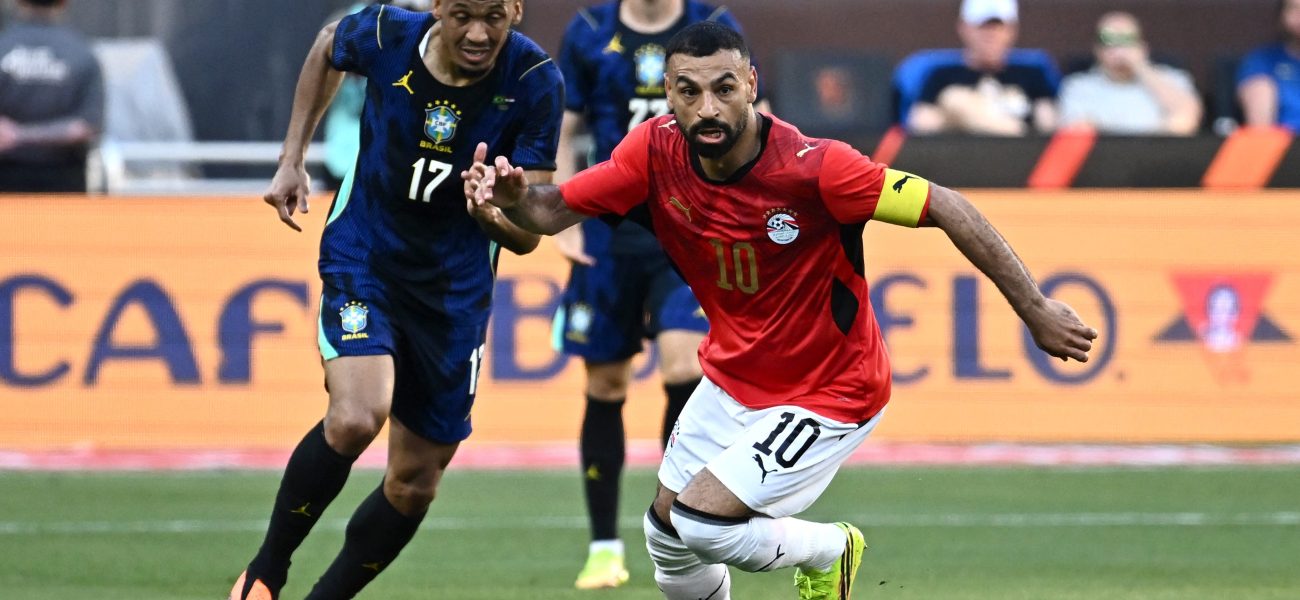
Belgium’s supposed [QUOTE_PLACEHOLDER] golden generation hasn’t gone smoothly, frankly. They fizzled out early in Qatar, proving that aging stars, even brilliant ones like a 34-year-old Kevin De Bruyne, can’t always defy time. Enter Egypt, with Mohamed Salah leading an attack perfectly capable of seizing an early advantage and unsettling any team. That’s enough to shake confidence, isn’t it?
Even England, perpetually burdened by expectations, finds a tricky foe in Croatia. Croatia’s quiet efficiency has been the bane of many a favorite. They bested the Three Lions in the 2018 semifinals, proving their mettle. And because this initial match will be played indoors, the heat — often an issue in North American tournaments — won’t be a factor for Croatia’s veterans like Luka Modric, potentially extending their twilight dance just a bit longer.
📄 POLICY WIRE WHITEPAPER PUBLISHED: PAKISTAN'S NATIONAL SECURITY POLICY PRIORITIES
👉 READ BY CLICKING HEREThe hosts themselves, Mexico, face South Korea. Home field advantage isn’t what it used to be if the squad isn’t gelling. And South Korea? They’ve got top-tier talent in their ranks, names like Son Heung-min and Kim Min-jae, making them far more than just dark horses; they’re genuine threats to a shaky `El Tri` outfit.
Then there’s Germany. A nation synonymous with footballing might. For decades, it was simply an accepted truth that Germany would advance far. In fact, official FIFA records show Germany made the final eight at 11 consecutive World Cups between 1954 — and 2014. Yet, recent tournaments have seen them suffer [QUOTE_PLACEHOLDER] consecutive flameouts in the group stage. Ecuador, with its tough, organized play and midfield lynchpin Moisés Caicedo, represents precisely the kind of gritty opponent that can exploit that new fragility.
And speaking of giants on wobbly legs: Argentina. Winning two World Cups back-to-back? [QUOTE_PLACEHOLDER] Odds are against Argentina becoming the third. Even with a returning Lionel Messi, it won’t be the same relentless force. Austria, under Ralf Rangnick, plays an aggressive, pressing game that’s downright uncomfortable to face. It’s a bit like a swarm of wasps, unsettling the best-laid plans. And with global commerce and attention increasingly focusing on South Asia and other emerging markets, even established sporting narratives need to contend with new realities. For more on how geopolitical shifts ripple into other sectors, you might look at digital sovereignty. Colombia also possesses enough attacking firepower to potentially rattle Portugal and their legendary Cristiano Ronaldo, adding another layer of potential upset to the mix.
What This Means
These sporting tremors aren’t just entertainment; they’re symbolic. When established powers like Germany or Brazil stumble against what were once considered footballing minnows, it reflects a broader global decentralization of power. It’s a subtle but stark reminder that economic dominance and historical legacy don’t guarantee future outcomes, be it on a pitch or in the corridors of geopolitical influence. The rise of nations like Morocco and South Korea—their success built on disciplined organization, tactical innovation, and a growing pool of players developed in top European leagues—parallels the shifting balance of economic and soft power globally. These unexpected results generate immense national pride, driving increased investment in youth sports, and inadvertently boosting national brands on a scale money can’t buy.
The financial implications for teams failing to advance are considerable too. Less prize money, diminished sponsorship opportunities, and a tangible hit to national morale—all have cascading effects. But for the host nations, especially those in North America preparing for 2026, the potential for upsets ensures maximum viewership and heightened drama, fueling the very commercial engine that makes such mega-events profitable. Ultimately, unpredictability isn’t chaos; it’s just the true nature of competition, challenging assumptions everywhere you look.