


Crucible’s Crucible: Higgins Defies Time, Draws Level in Epic Snooker Semi-Final
POLICY WIRE — Sheffield, UK — The hallowed green baize of the Crucible, an arena typically demanding surgical precision and unwavering nerve, saw something more primal unfold Thursday afternoon. It...

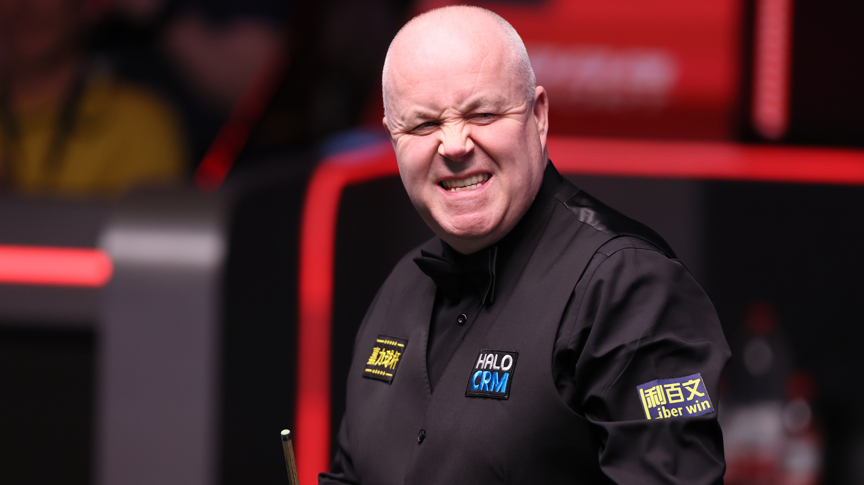
POLICY WIRE — Sheffield, UK — The hallowed green baize of the Crucible, an arena typically demanding surgical precision and unwavering nerve, saw something more primal unfold Thursday afternoon. It wasn’t merely a snooker match; it was a testament to sheer, unyielding endurance, a narrative spun against the relentless march of time and an opponent’s initial dominance. John Higgins, the ‘Wizard of Wishaw,’ a man whose calendar year approaches its 51st revolution, found himself battling not just Shaun Murphy, but the lingering exhaustion of a marathon quarter-final and, perhaps, the very weight of expectation that accompanies his 12th World Championship semi-final appearance.
Murphy, the 2005 world champion, had, for a time, orchestrated a near-flawless opening. He compiled breaks of 68, 69, and a century — 100 points, a clear statement of intent — to seize a commanding 3-1 lead at the session’s midpoint. At that juncture, the narrative seemed settled: the younger, sharper competitor capitalizing on his veteran opponent’s obvious fatigue. But veteran players, particularly those who’ve navigated the shark-infested waters of elite snooker for decades, possess a unique alchemy of grit and guile. Higgins, who’s the oldest semi-finalist since the venerable Ray Reardon in 1985, hadn’t simply forgotten how to win; he was recalibrating.
Indeed, his form was anything but fluent. For significant stretches of the afternoon, the Scotsman appeared visibly sluggish, his normally imperious cue action occasionally faltering, resulting in missed pots that, for a player of his calibre, seemed almost anomalous. He’d been at the Crucible past midnight only hours before, grinding out a victory against Neil Robertson, and that toll was palpable. Yet, not for the first time in this tournament, the four-time world champion peeled back the layers of apparent frailty to reveal a core of granite. He didn’t just claw his way back; he wrestled the momentum away from Murphy with two scrappy frames to level at 3-3, then capped his resurgence with a 40 and a half-century break in the concluding frame, ensuring he finished the session exactly where he started: on even terms.
It’s a familiar script for Higgins, this defiance of odds — and the insidious creep of age. “They’d written me off, hadn’t they?” Higgins mused post-session, a wry smile playing on his lips. “But you don’t play 12 semi-finals without knowing how to bend the narrative back your way. It’s never easy here, not ever.” Conversely, Murphy, visibly perturbed by the squandered advantage, didn’t mince words. “I had him. Plain and simple. To let that slip, after the start I had… it’s a lapse in concentration that’s inexcusable at this stage,” he declared, reflecting a frustration familiar to any athlete who’s tasted dominance only to see it evaporate.
Still, this kind of struggle, this visceral battle for supremacy, isn’t unique to the Crucible. Across the Indian subcontinent and parts of the Middle East, where snooker halls are quietly burgeoning epicenters of local ambition, many might’ve watched Higgins’ struggle with a particular empathy — a recognition of the sheer grind required to persist at the highest echelons. It’s a global narrative of perseverance, transcending cultural divides, as young talents from Karachi to Cairo dream of emulating such longevity.
📄 POLICY WIRE WHITEPAPER PUBLISHED: PAKISTAN'S NATIONAL SECURITY POLICY PRIORITIES
👉 READ BY CLICKING HEREThe best-of-33 frame encounter now resumes on Friday morning, while the other last-four match, featuring China’s Wu Yize and Northern Ireland’s Mark Allen, commences Thursday evening. The Championship’s total prize fund, which notably hit a record £2,395,000 in 2023, underscores the significant financial stakes involved, amplifying the pressure on every shot.
What This Means
At its core, Higgins’s pugnacious comeback is more than just a sporting footnote; it’s a potent symbol in an era increasingly obsessed with youthful dynamism. It underscores the enduring commercial value of veteran athletes, whose resilience and storied careers draw significant viewership and sponsorship – a crucial counterpoint to the often-fickle loyalties of younger fan bases. For broadcasters, a tightly contested match between two established stars like Higgins and Murphy is a goldmine, ensuring sustained engagement and driving advertising revenue. This isn’t just about snooker; it’s about the broader economics of elite competition, where narratives of defiance and comeback translate directly into palpable economic impact. And for nations, particularly those with a rich sporting heritage, the success of such enduring icons contributes subtly but significantly to national morale and international soft power. The ‘Wizard’ didn’t just level the score; he reaffirmed the timeless appeal of seasoned expertise over raw, albeit temporary, momentum. It’s a lesson that often resonates in more complex arenas too, from geopolitical negotiations to corporate boardroom battles, where experience frequently trumps initial bravado, much like football’s constant search for instant gratification often overlooks deeper tactical wisdom.