


Spain’s Faustian Bargain: Chinese Automaker Changan Eyes European Foothold Amidst Industrial Anxiety
POLICY WIRE — Madrid, Spain — Europe’s grand industrial capitulation, or perhaps its pragmatic adaptation, took another subtle turn this week. It isn’t a European titan announcing expansion;...

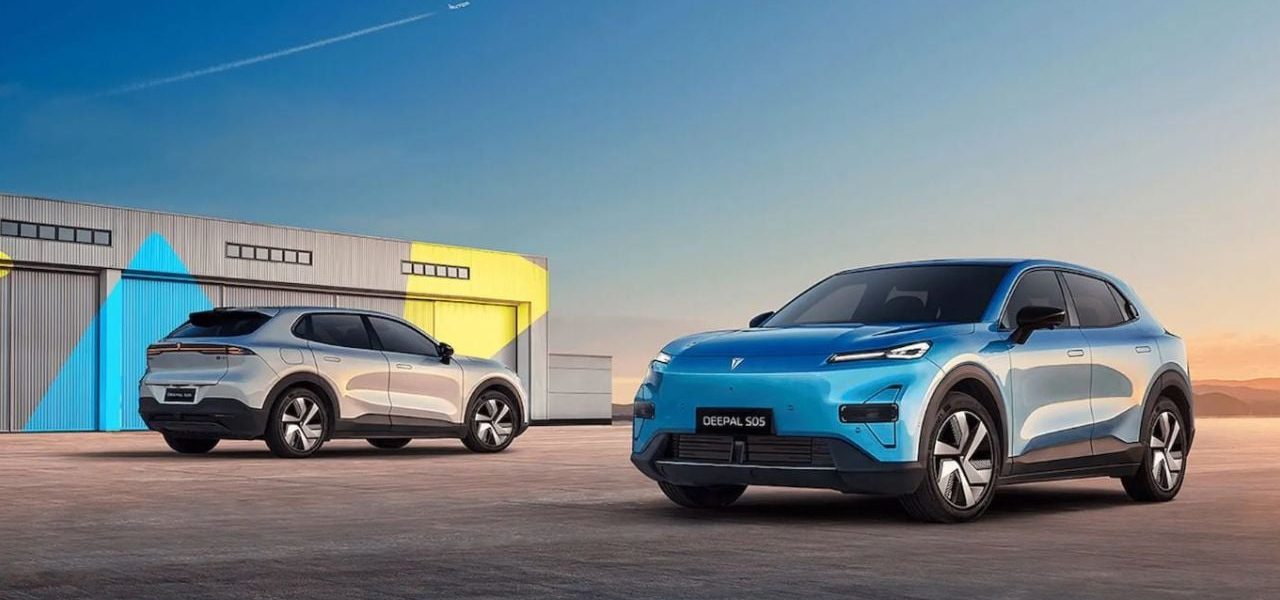
POLICY WIRE — Madrid, Spain — Europe’s grand industrial capitulation, or perhaps its pragmatic adaptation, took another subtle turn this week. It isn’t a European titan announcing expansion; it’s China’s Changan Automobile, one of the nation’s colossal state-owned carmakers, openly mulling Spain as the prime location for its first electric vehicle factory on European soil. The very idea, once inconceivable, now feels almost inevitable, doesn’t it?
Behind the headlines of job creation and economic revitalization lurks a more complex narrative: the continent’s deepening reliance on Chinese capital and manufacturing might, particularly as it attempts to navigate the treacherous transition to an electrified automotive future. Changan’s potential move isn’t just a business decision; it’s a strategic geopolitical maneuver, a palpable extension of China’s industrial influence right into the heart of the EU.
And so, as European capitals fret over tariffs and protectionist measures against a surge of affordable Chinese EVs, a crucial member state, Spain, eagerly dangles incentives. It’s an intricate dance, this—courting investment while simultaneously guarding against perceived market distortions. The Spanish government, keen to secure any substantial manufacturing project, has reportedly been engaged in extensive discussions with Changan officials. Their overtures come as the Chinese firm, a formidable player back home, seeks to sidestep potential EU import duties and cement its position in a market ripe for lower-cost, high-tech electric vehicles.
“This isn’t merely about assembling cars; it’s about anchoring a future industry, one that creates skilled jobs and revitalizes our industrial heartland,” shot back Jordi Hereu, Spain’s Minister of Industry and Tourism, in a recent interview. His optimism, while understandable given Spain’s unemployment figures (hovering stubbornly around 12% in the last quarter of 2023, according to Eurostat data), doesn’t entirely mask the underlying anxieties of Brussels. Still, the prospect of thousands of direct and indirect jobs, plus a significant boost to local economies, is a powerful lure, isn’t it?
But the broader implications aren’t lost on everyone. “While we welcome foreign investment, Europe must ensure a level playing field,” cautioned a senior EU trade official, speaking off the record. “We’re wary of strategies that could undermine our indigenous manufacturing base long-term, particularly in a sector as strategically consequential as automotive.” His words underscore the delicate tightrope walk the EU is performing, caught between the imperative for green transition technologies and the protection of its legacy industries.
Changan isn’t just dipping its toe in; it’s making a concerted push. This Spanish foray is merely one facet of China’s grand global economic strategy, an extension of the Belt and Road Initiative (BRI) that has seen Beijing invest heavily across Asia, Africa, and parts of Europe. From infrastructure projects in Pakistan—where the China-Pakistan Economic Corridor (CPEC) symbolizes a foundational pillar of its regional influence—to advanced manufacturing in Europe, China’s industrial footprint is expanding relentlessly. It’s a calculated chess move, cementing supply chains — and market dominance.
📄 POLICY WIRE WHITEPAPER PUBLISHED: PAKISTAN'S NATIONAL SECURITY POLICY PRIORITIES
👉 READ BY CLICKING HEREAnd Spain, with its relatively competitive labor costs and existing automotive infrastructure, presents an attractive proposition for Chinese manufacturers looking to establish a foothold. Stellantis, for instance, has already forged an alliance with China’s Leapmotor, a move that underscores the deep currents of Chinese influence now shaping Western automotive strategies. These aren’t isolated incidents; they’re symptoms of a systemic shift.
At its core, this isn’t just about selling cars. It’s about data, about control over the value chain, and about establishing an industrial presence that could redefine Europe’s manufacturing landscape for decades. The Spanish factory, if realized, will represent far more than just a new production line; it’ll be a physical manifestation of a new economic order.
What This Means
Changan’s potential factory in Spain portends a pivotal shift in Europe’s industrial landscape and its geopolitical alignments. Economically, it signifies a pragmatic, if fraught, embrace of foreign direct investment as the EU navigates the costly energy transition. For Spain, it promises much-needed jobs — and technological transfer, bolstering its manufacturing sector. Politically, it complicates the EU’s already strained relationship with China, particularly as Brussels contemplates stricter trade measures against Chinese EV imports. A major Chinese plant within the EU customs union could dilute the impact of external tariffs, allowing Chinese brands to compete more fiercely from within. This could also fuel further protectionist sentiments from other EU member states, intensifying internal policy debates on industrial sovereignty versus globalized supply chains. it underscores China’s long-term vision—a strategy that seamlessly integrates economic expansion with geopolitical influence, leveraging projects like the BRI to build a global industrial and trade network that now includes key European markets.