


Echoes of Roar: Honda’s Risky Ride on Nostalgia’s Slippery Track
POLICY WIRE — Tokyo, Japan — In an industry wrestling with everything from dwindling fossil fuel patience to supply chain snarls, one might expect a global titan like Honda to be fixated solely on...

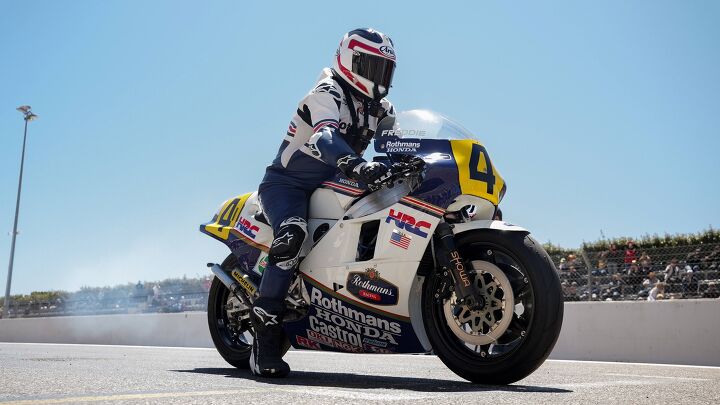
POLICY WIRE — Tokyo, Japan — In an industry wrestling with everything from dwindling fossil fuel patience to supply chain snarls, one might expect a global titan like Honda to be fixated solely on tomorrow’s battery tech or autonomous algorithms. Not so fast, it seems. Because sometimes, the shrewd play isn’t to race forward, but to gaze intently in the rearview mirror. That’s precisely what the multinational industrial giant’s motorcycle arm just did, staging a high-profile hagiography—a celebration of its golden-age racing history, complete with two-wheeled demigod Freddie Spencer and an array of beautifully restored classic bikes.
It wasn’t merely a quaint gathering of enthusiasts, you understand. This was a calculated cultural intervention, a powerful exercise in brand mythology building. Honda pulled out all the stops, showcasing the machines that roared to glory decades ago, inviting attendees to relive—or at least romanticize—a time when motorcycle racing wasn’t just a sport; it was a white-knuckle, gasoline-fueled spectacle of human daring. Spencer, often dubbed ‘Fast Freddie,’ held court, a living embodiment of that era, his stories undoubtedly lubricated by the smooth PR machinery now so adept at polishing even the most well-worn tales.
And what’s the big idea? To reconnect with a past that, for many, remains the sport’s emotional lodestone. It’s a smart move in a market grappling with demographic shifts. We’ve seen similar tactics—sports franchises endlessly recounting championships from a generation ago—but few do it with such precise, mechanical reverence. This wasn’t some haphazard garage sale of old parts; it was a carefully curated museum exhibit, designed to tug at the heartstrings and, naturally, loosen the purse strings.
But does nostalgia always translate to sales? One can hope. Senior Vice President for Honda Motorcycles Europe, Shigeo Aoyama, offered the corporate line with customary earnestness. “Our legacy isn’t just about horsepower; it’s about the relentless pursuit of perfection, a spirit we carry into every model today,” Aoyama asserted from behind a podium, likely positioned just so that a gleaming, decades-old racer was perfectly in frame. “The devotion to our heritage isn’t a backward glance, it’s a launchpad for what’s next. We haven’t forgotten where we came from.” One almost believes him.
Perhaps it’s a testament to the timeless appeal of brute engineering — and daring deeds. Former Grand Prix world champion Freddie Spencer, whose twin 500cc titles for Honda in ’83 and ’85 remain iconic, put it more simply, his voice cracking just a bit with emotion. “The sound of that RC30, the smell of the fuel—it just reminds you what a motorcycle is supposed to be. Pure, exhilarating speed.” You could hear the conviction, a true believer in the mechanical church of speed, right there in his words.
Globally, motorcycle sales are a varied beast. While electric models carve out niche markets, and high-performance machines chase affluent Western consumers, the backbone of the industry often rests on smaller, more utilitarian bikes in developing nations. In places like Pakistan, for instance, Honda bikes dominate, but not with chrome-laden superbikes; rather, with fuel-efficient 125cc models that serve as the primary mode of transportation for millions. It’s a stark contrast to the glittering showcase held in Japan, highlighting the divergent market strategies Honda must balance, maintaining aspirational high-performance imagery while delivering workhorse reliability elsewhere.
This calculated dip into the past occurs at a peculiar juncture. Consumer confidence, globally, sits somewhere between “cautious” and “plain anxious.” You see, in an age where innovation cycles shrink daily, an anchor to what worked, to what felt genuine, can be mighty compelling. Data from industry analyst firm Statista suggests that the global motorcycle market, while recovering from recent downturns, still projects a Compound Annual Growth Rate (CAGR) of just over 3% between 2023 and 2028, significantly slower than the heady expansion of past decades. They’ve gotta find a new angle, haven’t they?
What This Means
This event, far from a mere trip down memory lane, telegraphs Honda’s savvy, if somewhat conservative, play for market stability and brand relevance. It’s a double-barreled strategy. First, it directly appeals to an aging demographic of affluent riders who remember the glory days, a demographic with disposable income and an appreciation for quality over novelty. Secondly, it serves as a powerful branding exercise for younger generations, offering an aspirational narrative rooted in tangible achievement rather than ephemeral hype.
Economically, Honda isn’t just selling bikes; they’re selling identity, a sense of belonging to a storied tradition. In an increasingly commoditized world, that’s gold. Politically, while seemingly apolitical, such events subtly project soft power—Japanese engineering prowess, resilience, and cultural influence—globally. It’s a form of corporate statecraft, asserting leadership through celebrated exports and cultural icons, not unlike how cultural phenomena like Japanese anime or martial arts often capture global imagination.
So, as the global economy splutters through post-pandemic recalibrations and geopolitical tensions, Honda’s decision to showcase roaring relics and living legends suggests a fundamental belief: that the emotional core of a brand, built on decades of blood, sweat, and screaming engines, can still move markets. It’s a bold bet. But when the future feels murky, sometimes the clearest path forward is found by illuminating the brightest moments of the past. It just makes good business sense, you know?