


Shadow Fleet: Gaza Aid Standoff Reignites Perennial Mideast Tensions
POLICY WIRE — Istanbul, Turkey — Another season, another flotilla, another round of global indignation. You’d think by now someone might’ve scripted a new scene, but the tired old play rolls on: a...

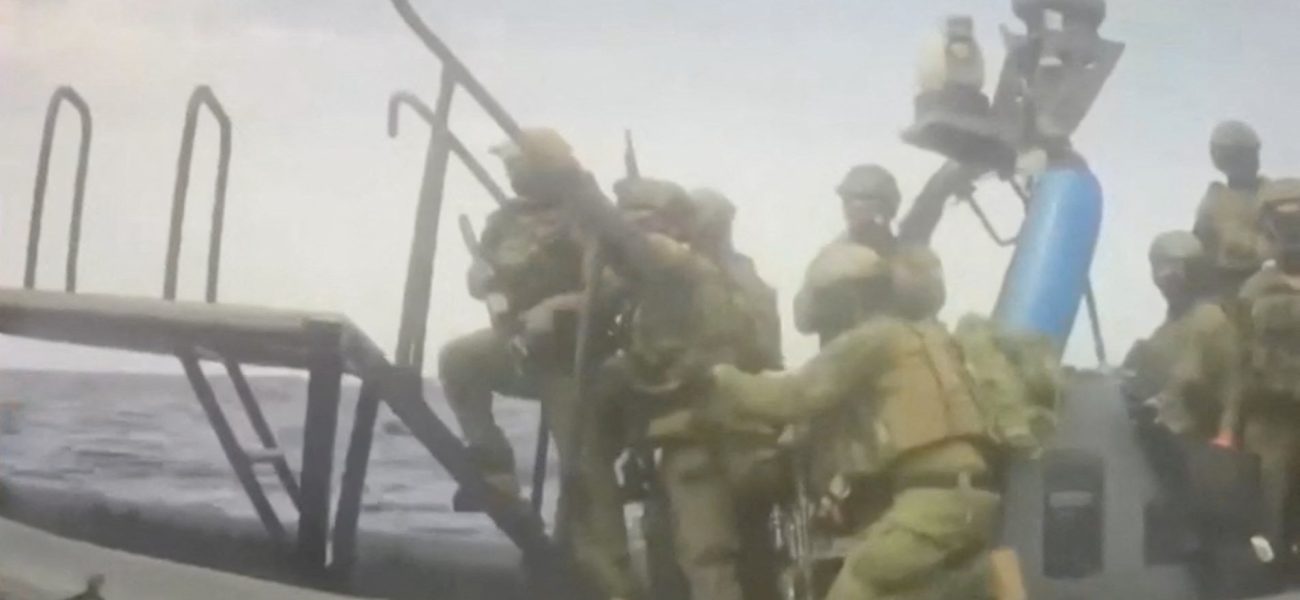
POLICY WIRE — Istanbul, Turkey — Another season, another flotilla, another round of global indignation. You’d think by now someone might’ve scripted a new scene, but the tired old play rolls on: a convoy of goodwill, a contested blockade, and the inevitable naval choreography. Organizers of the Freedom Flotilla Coalition, having dispatched 51 vessels ostensibly loaded with humanitarian supplies for Gaza, confirmed Tuesday that 41 of them had—predictably, perhaps even tragically—been intercepted or turned back. Ten, they insist, remain on course, though ‘course’ here feels more like a term of hope than a navigational certainty. It’s a drama that unfolds with wearying regularity, highlighting the region’s enduring stalemate and the international community’s capacity for performative hand-wringing.
The latest iteration of this maritime chess match began with much fanfare, proponents speaking of breaking a siege that, to many, constitutes collective punishment. And certainly, the scenes from Gaza paint a stark picture: over 2 million people confined to a sliver of land, their lives held hostage by geopolitical realities that few outside the territory can truly fathom. One organization, the Integrated Food Security Phase Classification (IPC), reported last year that a staggering 96% of Gaza’s population is in acute food insecurity—meaning they’re one step from famine, according to UN-backed analysis. Think about that for a second. Ninety-six percent. This isn’t just hunger; it’s an open wound.
“We won’t stand idly by as children starve and the world watches from the comfort of their secure borders,” declared Hakan Kani, a spokesperson for the Turkish-based humanitarian group IHH, one of the primary organizers, in a fiery online statement. “Our resolve only strengthens with every obstacle.” It’s a familiar refrain, ringing with moral conviction, but it clashes with Israel’s unwavering security posture.
Because, for Jerusalem, these are not simply mercy missions; they’re provocative acts, challenging sovereignty and security protocols. “Every vessel attempting to breach our legitimate naval blockade is considered a direct threat to Israeli national security,” countered Brigadier General (res.) Amir Lev, an Israeli defense analyst and former IDF officer, during a Tel Aviv security briefing. “We’ve intercepted countless such attempts, and we do so within international law, to prevent the rearmament of terror groups operating within the Gaza Strip.” It’s a narrative well-worn, oft-repeated, and consistently defended, even as international pressure mounts for unfettered aid access.
But the true complexity here isn’t just about ships — and their cargoes. It’s about the very concept of international intervention—or the lack thereof—in a humanitarian crisis. The sheer number of participants, from doctors and journalists to activists and religious leaders across Europe, the Middle East, and beyond, underscores the deep frustration festering over Gaza. They’re not just delivering flour; they’re delivering a potent message of global dissent against what they perceive as inaction. It’s a performance, yes, but one with incredibly high stakes.
Pakistan, along with other Muslim-majority nations, watches these developments closely. Public sentiment there, as in Indonesia, Malaysia, and parts of the Gulf, often aligns vociferously with Palestinian causes. While official Pakistani responses often walk a diplomatic tightrope, the domestic pressure to condemn Israeli actions—and celebrate attempts to break the blockade—is intense. It isn’t just a distant conflict; it’s a shared emotional landscape, reflecting a broader geopolitical solidarity that occasionally erupts in significant diplomatic maneuvers or even troop deployments, as seen with Islamabad’s role in bolstering Saudi defenses.
What This Means
This latest flotilla incident, predictable as it may have been, carries considerable weight. Politically, it re-energizes an international conversation around the Gaza blockade, putting fresh pressure on world leaders who’d prefer to address the conflict on their own, more controlled terms. For Israel, it reinforces the perception of needing constant vigilance against external threats, solidifying a hardline stance internally, even as it draws condemnation internationally. Economically, while the direct impact of the intercepted aid is minimal in the grand scheme of Gaza’s colossal needs, the constant drain of resources—both for security operations and for managing public relations—is non-trivial.
It forces diplomatic conversations, not always pleasant ones, between countries like Turkey and Israel, whose relationship has seen more twists and turns than a spy novel. And for humanitarian organizations, it represents a continued, agonizing search for alternative delivery methods, for any loophole in a system designed, it often feels, to thwart rather than facilitate. This isn’t merely about aid delivery; it’s about a performative dance of protest and control that, frankly, leaves everyone exhausted but rarely moves the needle significantly toward true resolution.
But here’s the thing: each intercepted ship, each frustrated activist, each condemning headline, they don’t solve the core issue. They simply reinforce the deep, seemingly unbridgeable chasm between competing narratives. It’s a testament not to the failure of humanitarian aid, but to the stubborn resilience of an intractable geopolitical problem. The flotillas aren’t just bringing aid; they’re bringing the crisis right back to the front page, again and again, for better or for worse.