


Football’s Relentless Revolving Door: English Clubs Betray Long-Term Vision for Immediate Gratification
POLICY WIRE — London, UK — In the high-stakes theater of English football, the manager’s dugout has long been a notoriously hot seat. But for the 2025-26 season, it wasn’t...

POLICY WIRE — London, UK — In the high-stakes theater of English football, the manager’s dugout has long been a notoriously hot seat. But for the 2025-26 season, it wasn’t just hot; it was a veritable inferno, incinerating careers with a rapidity that suggests less a strategic game of chess and more a panicked game of musical chairs.
Behind the glossy broadcast rights — and the roar of the crowd lies a brutal economic calculus. And frankly, it’s exhausting. Clubs across the Premier League, Scottish Premiership, Women’s Super League, and the English Football League jettisoned leaders at an astonishing clip. The churn isn’t just a statistical anomaly; it’s a stark, unblinking mirror reflecting the precarious nature of modern elite sport, where long-term vision frequently capitulates to immediate, often fleeting, results.
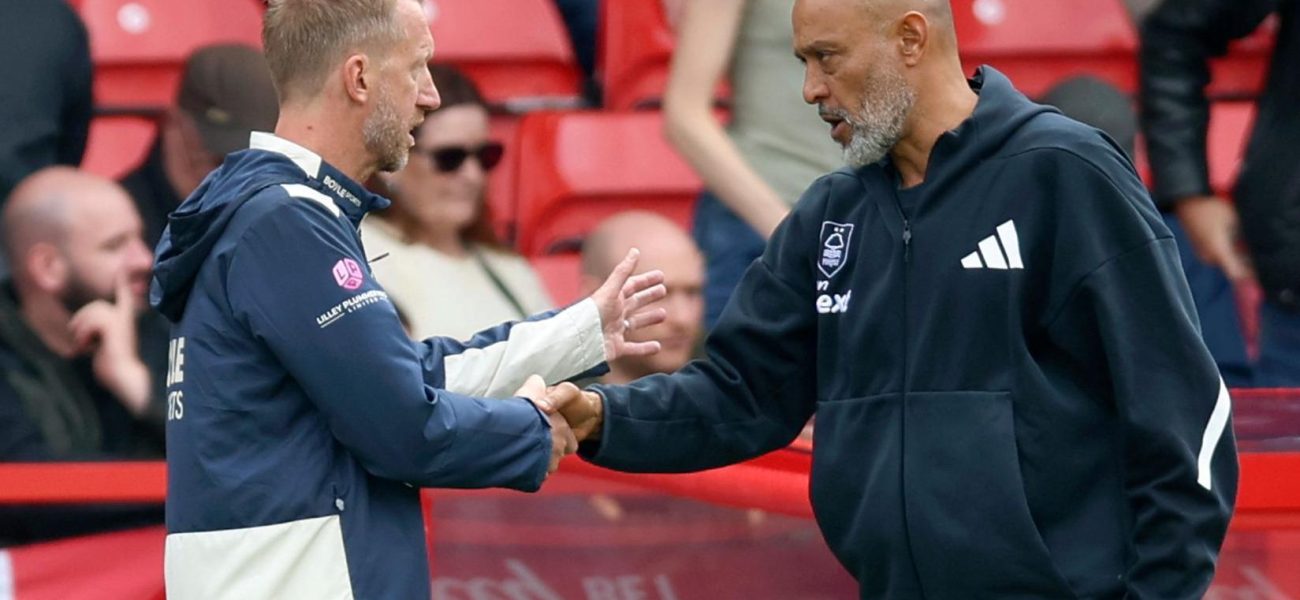
Consider the plight of Nottingham Forest. The East Midlands outfit, known for its historic European triumphs, became a cautionary tale in managerial instability. Sean Dyche, appointed with fanfare in October 2025, was unceremoniously dispatched by February 2026, only to be replaced by Vitor Pereira. This isn’t just instability; it’s managerial vertigo, a club seemingly unable to catch its breath, let alone forge a coherent strategy. Dyche wasn’t alone in this brutal dance; Graham Potter, after steering West Ham into what many considered calmer waters, found himself ousted in September 2025, his place taken by Nuno Espirito Santo. It’s a cycle that seems to be accelerating.
At its core, this relentless merry-go-round underscores a broader truth: managerial stability has become a luxury few owners can afford, or perhaps, even desire. Over 60 managerial positions changed hands across England’s top five leagues in a mere ten-month span of the 2025-26 season alone, according to Policy Wire’s analysis of BBC Sport data. That’s an average of six high-pressure departures every month. It’s not just a statistic; it’s a systemic tremor.
And it’s not just the smaller clubs or those teetering on the brink of relegation. Powerhouses felt the tremor too. Enzo Maresca’s departure from Chelsea in January 2026, with Liam Rosenior ushered in, sent ripples through the sport. Likewise, Ruben Amorim’s exit from Manchester United that same month underscores the pressure cooker environment at the very pinnacle. These aren’t merely personnel changes; they’re seismic shifts in organizational leadership, each carrying a hefty financial and emotional toll.
“In this fiercely competitive landscape, clubs must always pursue optimal performance,” shot back Premier League Chief Executive Richard Masters, defending the relentless churn. “Sometimes, difficult decisions become unfortunately necessary to protect investment — and ambition. It’s a results-driven business, after all.” Masters’ pragmatism, however, sidesteps the increasingly disposable nature of these leadership roles, hinting at a deeper malaise within the sport.
📄 POLICY WIRE WHITEPAPER PUBLISHED: PAKISTAN'S NATIONAL SECURITY POLICY PRIORITIES
👉 READ BY CLICKING HEREStill, the stakes are astronomical. Clubs are global brands, their successes and failures dissected by millions, including a burgeoning fanbase in the Muslim world. Pakistan, for instance, boasts a fervent following for English football, with millions tuning in, their hopes and dreams often vicariously tied to the fortunes of these teams. For them, the rapid sacking of a manager isn’t just a news item; it’s a disruption to an often-cherished weekly ritual, an unexpected jolt in an otherwise predictable rhythm. One could argue this instability mirrors the political volatility observed in certain South Asian nations, where public offices can be similarly fleeting, dependent on popular sentiment or internal power dynamics rather than sustained performance. It’s a brutal game, whether on the pitch or in the political arena.
But the question remains: does this constant change actually yield better results? Or does it merely perpetuate a cycle of short-term thinking that ultimately undermines stability — and growth? Dr. Amira Khan, Professor of Sports Sociology at SOAS, University of London, offered a more critical perspective. “We’re witnessing a hyper-accelerated cycle of managerial consumption — and disposal. It’s less about long-term vision and more about immediate gratification, a reflection of our broader societal impatience. Stability has become a luxury few owners can afford, or perhaps, even desire.” Her assessment suggests that the brutal economics of modern football – a cruel lottery for some – has warped the very concept of leadership.
What This Means
This unprecedented managerial turnover paints a grim picture of modern football’s economic — and political undercurrents. For clubs, it reflects a desperation to secure lucrative broadcasting revenues and European competition spots, justifying what are often eye-watering severance packages. It’s a Faustian bargain: chase immediate glory, however fleeting, — and risk structural disarray. Economically, this translates to inflated compensation packages for incoming managers and their staff, compounded by payouts to the outgoing regime — a cycle of expenditure that often isn’t reflected in improved on-field performance or sustainable growth.
Politically, the phenomenon highlights the immense, often unchecked, power wielded by club owners, many of whom operate with a distinct lack of accountability for long-term strategic coherence. These uncouth titans, sometimes distant and disconnected from the club’s traditional identity, treat managerial talent as a commodity, to be acquired and discarded with surprising alacrity. This isn’t just about football; it’s about the broader implications of short-termism, where the pressure for instant success overshadows the merits of patience and strategic development, echoing challenges seen in corporate boardrooms and, indeed, political administrations worldwide.