


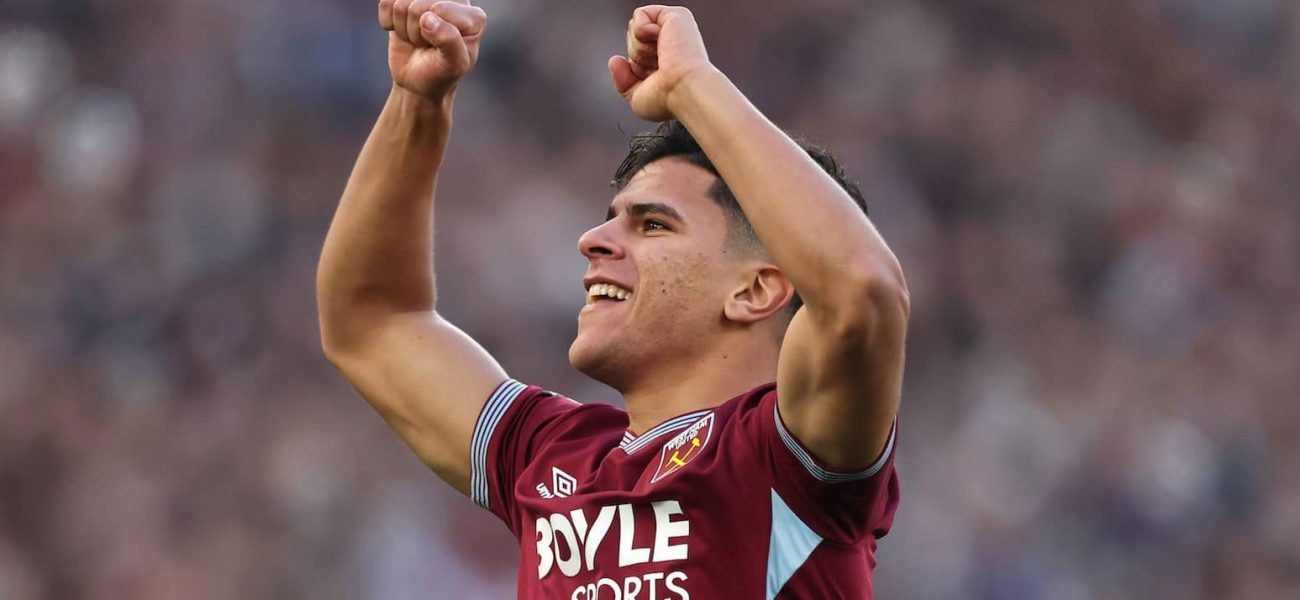
Hammered Hopes: West Ham’s ‘For Sale’ Sign Looms for Young Star, Rattling Premier League Status Quo
POLICY WIRE — London, UK — Forget the final whistle or the frantic scramble to avoid relegation. For West Ham United, the season’s endgame seems to be playing out quietly, with an unnerving hum of...

POLICY WIRE — London, UK — Forget the final whistle or the frantic scramble to avoid relegation. For West Ham United, the season’s endgame seems to be playing out quietly, with an unnerving hum of resignation, not just on the pitch but deep within the club’s administrative corridors. It isn’t the threat of the Championship that’s dominating boardroom discussions anymore. No, it’s the increasingly cold, hard reality of balancing books, even if that means cashing in their brightest jewel before he’s even truly polished.
Mateus Fernandes, a name whispered with reverence among the London faithful barely a year ago, now appears destined for a marquee sale. At just 21, the Portuguese midfielder embodies the ruthless arithmetic of modern football: prodigious talent equals hefty transfer fee. And West Ham, by all accounts, has already started mentally tallying the prospective millions.
It’s a peculiar irony, really. This isn’t a distressed asset sale from a club staring bankruptcy in the face – at least not outwardly. But when the reports from outlets like The Athletic begin to surface, detailing how West Ham’s hierarchy is preparing for life
without a player barely nine months into his tenure, you can’t help but wonder if the beautiful game has finally devoured its own soul entirely. The notion is simple, stark, and utterly commercial: Fernandes will be sold, relegation or not, to fund summer reinforcements. Because, ultimately, the business must go on.
And Manchester United, of course, are circling. The Red Devils, fresh off another season that’s probably best described as ‘transitional’ – a euphemism for ‘underwhelming’ – see Fernandes as the perfect antidote to their midfield malaise. With Casemiro’s exit practically confirmed, United, under their new INEOS-driven sporting directorship, isn’t messing around. They want someone who can step in, right now, — and ignite their engine room. Fernandes, with five goals and four assists in 37 appearances across all competitions this season, according to Transfermarkt, looks like he fits the bill perfectly.
Paris Saint-Germain are reportedly also in the mix, turning this potential transfer into a high-stakes bidding war, though it’s Manchester United who seem to hold the edge given their clear intent to overhaul their midfield. The rumoured asking price? A cool £60 million, a figure that would make most casual observers choke on their morning chai – an astonishing sum for a young player still finding his feet, even if those feet are ridiculously quick and adept.
West Ham manager David Moyes, speaking —hypothetically, of course— on the perpetual churn of player movements, probably understands the harsh reality better than most. It’s never easy to see a talent like Mateus go,
he’d lament, adjusting his glasses. But in this game, sometimes difficult decisions are just that – difficult, but necessary for the long-term health of the club. We’ve got our targets, believe me. You just learn to move on, don’t you?
A true professional’s resignation, laced with the pragmatism required to survive in England’s top flight.
📄 POLICY WIRE WHITEPAPER PUBLISHED: PAKISTAN'S NATIONAL SECURITY POLICY PRIORITIES
👉 READ BY CLICKING HEREMeanwhile, from the glass and steel offices at Old Trafford, an INEOS executive — let’s call him ‘Mr. E. Valuator’ — would likely offer a more clinical assessment: Our strategy is clear: acquire generational talent. When you find a player who aligns with your long-term vision, you act decisively. Fernandes represents that blend of immediate impact — and future potential. We’re always scanning the market, both locally and internationally, for players who can truly elevate the squad.
They mean it too. They don’t want another Donny van de Beek situation.
What This Means
This potential move, if it materializes, isn’t just another transfer headline. For West Ham, it’s a blunt declaration of their economic reality. Despite the Premier League’s colossal TV rights money, many clubs operate on a precarious model, where player sales are often less about profit and more about survival and staying competitive – funding future acquisitions that simply keep them treading water. It’s the ultimate ‘eat what you kill’ philosophy, forcing clubs to constantly unearth and then, inevitably, sell their stars to the wealthier predators.
The ‘academy-to-cash-cow’ pipeline is more established than ever. But Fernandes wasn’t an academy product; he was a smart signing from a relegated Southampton (who’d signed him from Sporting, making this a true triple play). That makes West Ham’s concession all the more telling. They’ve gone from buying promising youngsters to essentially becoming a high-end intermediary, albeit involuntarily. Their struggle near the relegation zone (they’re currently 18th, just two points shy of safety with two games remaining) amplifies this financial tightrope walk, illustrating how a dip in form can quickly force clubs into difficult choices, turning even fan favorites into tradable assets.
And for Manchester United, this signals the further entrenchment of their INEOS-backed ‘Premier League-centric’ transfer strategy. They’re banking on known quantities in England, or those with proven pedigree within European leagues, rather than chasing ‘flair’ signings who might take ages to adapt. It’s a less romantic approach, certainly, but perhaps a more stable one for a club desperate for a return to consistent elite performance. The global viewership — particularly the fervent support from regions like South Asia, where millions in Lahore and Karachi tune in weekly to the Premier League — continues to pour commercial value into these clubs, inadvertently fueling the exorbitant transfer fees that make moves like Fernandes’ possible, yet perpetually complex.