


Tartan Ambition: Scotland’s Long-Awaited World Cup Return Plagued by familiar Wounds
POLICY WIRE — Edinburgh, Scotland — Twenty-eight years. That’s how long the global showpiece has unfolded without the defiant skirl of bagpipes echoing from the stands in anticipation of a Scottish...

POLICY WIRE — Edinburgh, Scotland — Twenty-eight years. That’s how long the global showpiece has unfolded without the defiant skirl of bagpipes echoing from the stands in anticipation of a Scottish goal. An entire generation has matured, learned the bitter taste of ‘almost,’ and then suddenly, there it’s: a slot in the 2026 FIFA World Cup. But like any good Scottish tale, this triumph comes wrapped in a grimacing forecast of lingering injuries and the cruel mathematics of group stage survival. The Tartan Army might be marching, but some key drumbeats are sounding decidedly off-rhythm.
It wasn’t a given, this qualification. Quite the opposite, really. After what felt like an eternity of near misses and playoff heartbreak, Steve Clarke’s side wrestled an automatic spot from the jaws of despair last November, a dramatic 4-2 scalp against Denmark doing the trick. But that exhilarating high has given way to a quieter, more anxious hum as the roster announcement nears. And you know how it’s with Scotland; one step forward, usually two steps into a puddle.
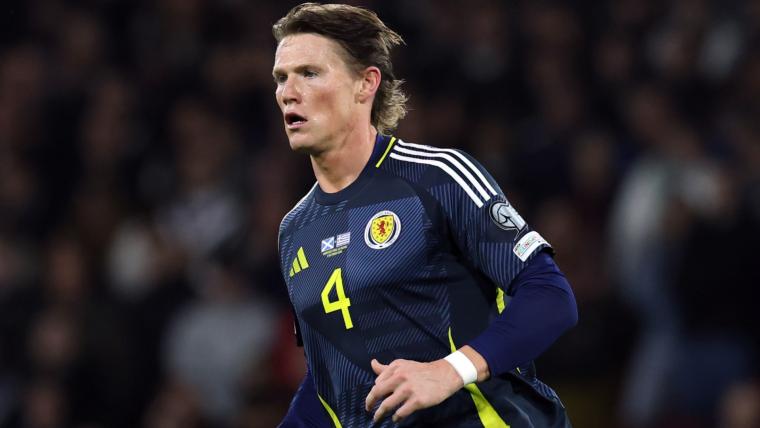
Much of the collective hope, — and no small measure of media adulation, centers on Scott McTominay. Since making the shrewd jump from Manchester United to Napoli in 2024, the midfielder has, quite simply, been transformative. He wasn’t just lighting up Serie A – collecting MVP honors, for heaven’s sake – but he then carried that blistering form into the qualification campaign. His acrobatic bicycle kick against Denmark, sealing Scotland’s ticket to North America, was the stuff of legends. Because without that particular moment of genius, we might well be discussing another four-year wait. The man’s a colossus.
But heroes, even those seemingly chiseled from granite, can’t win tournaments alone. Liverpool’s Andy Robertson — and Aston Villa’s John McGinn add top-flight grit, certainly. Yet, Clarke faces an unenviable task: building a cohesive unit while key pieces limp or look less than sharp. Young Tommy Conway, a promising striker, is out. Ben Gannon-Doak has scarcely seen pitch time since hamstring surgery. Che Adams has wrestled with muscle issues. Even the prolific Hearts striker Lawrence Shankland, boasting 20 goals this season, endured an eight-game layoff. That’s a headache for any manager, let alone one trying to break a nation’s curse.
“Look, nobody’s naive. We know the history,” Head Coach Steve Clarke reportedly remarked to a close confidante after an intense training session. “But this squad, they’re not carrying 28 years of weight. They’re creating their own. We’re going to North America to compete, not just to participate.” A pragmatic perspective, but one perhaps underselling the sheer weight of expectation pressing down.
The global game’s dynamic shifts often escape the insular narratives of European football. While Scotland yearns for a first knockout stage appearance, nations like Morocco, also in their group alongside giants Brazil and newcomers Haiti, have built impressive programs through smart investment and robust domestic leagues. Morocco’s football ascendancy, a testament to long-term planning within the Muslim world’s sports ecosystem, stands in stark contrast to the intermittent highs and lows of the Scottish side. But both will converge in the same stadiums, competing under the same spotlight.
“The roar of the Tartan Army, from Glasgow to global hubs—it’s an incredible soft power dividend for Scotland,” an anonymous but senior official within the Scottish Football Association confided. “It’s more than just a game; it’s our identity on the world stage, boosting tourism and spirit alike, even before a ball is kicked.” And that’s the rub, isn’t it? The spectacle often eclipses the practicalities.
The squad, ranked 43rd globally by FIFA as of April 2026, heads into Group C with a monumental challenge. They’ll open against Haiti—no pushovers, particularly given the global reach of their talent—before facing Morocco and finally, the behemoth Brazil. Can they finally clear that hurdle? Scotland has never progressed beyond the group stage in eight prior World Cup appearances. They haven’t. Not once. But maybe, just maybe, this is the time to write a new script, even with the walking wounded on the team sheet.
What This Means
Scotland’s presence in the World Cup isn’t just about football; it’s a palpable economic — and political booster shot. For a nation frequently debating its place within the UK, and facing the complexities of post-Brexit economic adjustments, this global exposure is invaluable. It fuels tourism, as devoted fans—the ‘Tartan Army’—descend upon North American cities, injecting foreign currency. But also, it’s a significant branding exercise. National identity, distinctiveness, and pride surge, potentially galvanizing domestic support for broader Scottish initiatives. For Clarke, his tenure could either be enshrined in glory or seen as another valiant but ultimately unfulfilled chapter. Politically, a strong performance provides a narrative of national success and resilience, a useful talking point for the Scottish government. Conversely, a quick exit could dampen spirits, proving another example of Scotland punching above its weight but falling short on the grandest stage. It’s high-stakes stuff, extending far beyond the 90 minutes of a football match.
For more insights into global dynamics and market shifts, read about the Wembanyama Gambit disrupting Western elites. Or consider how Gaza’s fractured grip affects regional stability, an example of how national narratives, whether sporting or political, resonate across borders.