


Cleveland’s Unlikely Savior: Schroder’s Clutch Performance Reshapes Playoff Narrative and Economic Hopes
POLICY WIRE — Cleveland, United States — The air in Cleveland hung heavy, not with celebration, but with the suffocating dread of a season’s premature end. Game 5 of the NBA Playoffs — a single...

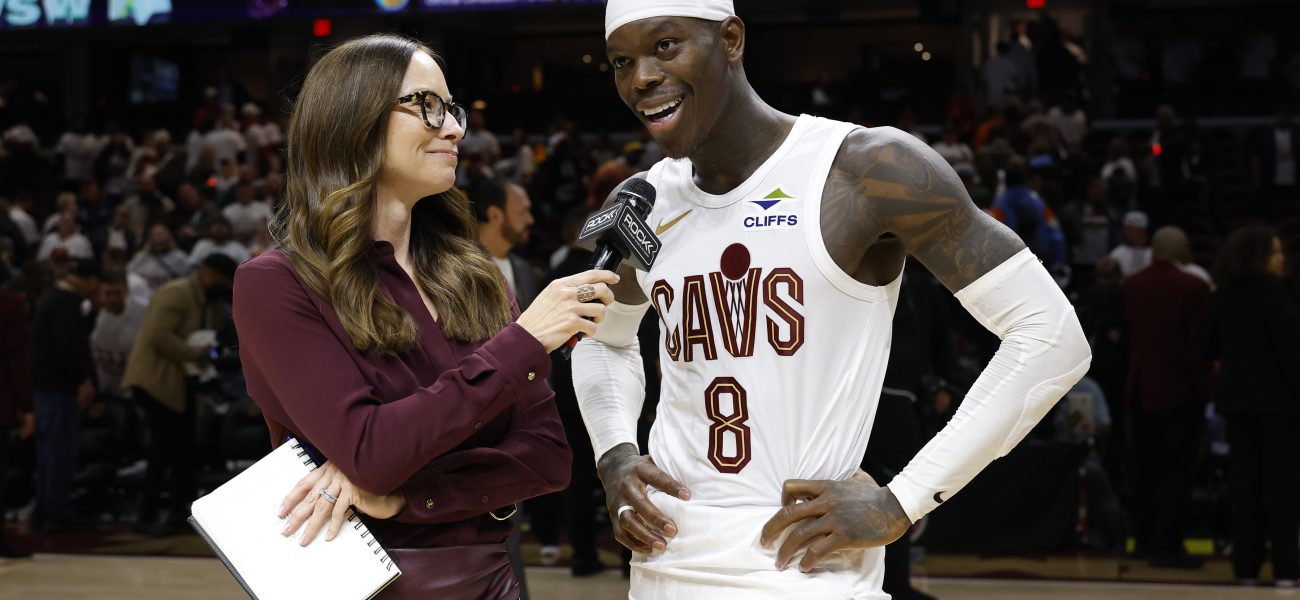
POLICY WIRE — Cleveland, United States — The air in Cleveland hung heavy, not with celebration, but with the suffocating dread of a season’s premature end. Game 5 of the NBA Playoffs — a single misstep, a solitary lapse in focus, and the Cleveland Cavaliers would find themselves on the precipice, their championship aspirations teetering. Then, a most improbable architect of salvation emerged from the shadows: Dennis Schroder, whose name, just hours prior, had been whispered more often in exasperated tones than in praise. His late-game heroics weren’t just a win; they were a stark redefinition of leadership, a visceral reminder that salvation often arrives from the most unexpected quarters.
For much of the contest against the tenacious Toronto Raptors, the Cavaliers seemed to be wrestling as much with their own collective psyche as with their opponents. The early narrative was one of struggle, a team seemingly adrift. Toronto, fueled by a relentless offense, piled up 74 points in the first half alone, leaving Cleveland scrambling, grasping for purchase in a game that felt like it was slipping away. And yet, beneath the surface of statistical mediocrity, a different story was slowly, painstakingly being written.
Donovan Mitchell, the team’s undisputed superstar, found himself battling inconsistency, his decision-making described as ‘off’ by observers, struggling to decipher Toronto’s defensive schematics. But something shifted in the second half. Mitchell, despite his own offensive surges, recognized the emergent force on the floor. Head coach Kenny Atkinson later confirmed that Mitchell had insisted on remaining on the bench, deferring to the hot hand. It’s on me to take a step back,
Mitchell later mused, a rare moment of superstar humility. I know who I am, y’all know who I am… the only thing that matters is winning the game… I could score zero points, as long as we win, I don’t give a damn.
It was a statement that resonated with the veteran leadership required in such dire straits.
Still, the narrative pivot belonged squarely to Schroder. He wasn’t simply effective; he was incandescent, particularly in the decisive fourth quarter, where he poured in 11 crucial points. His ball-handling wizardry pried open the Raptors’ defense, and his drives to the rim were accompanied by a flurry of clutch shots that seemed to deflate Toronto’s resolve with each swish. We weren’t playing our basketball, not the way we know we can,
Schroder shot back after the game, eyes still blazing with residual intensity. Sometimes, you’ve just got to grab the wheel and remind everyone what we’re capable of — especially with two big men like Evan and Jarrett, they’re foundational.
His words underscored a profound understanding of team dynamics, a rare blend of individual brilliance and collective vision.
It wasn’t a solo act, of course. James Harden’s early scoring kept Cleveland tethered to the game, even if his six turnovers offered a stark reminder of his perennial Achilles’ heel. Evan Mobley, under immense scrutiny for prior subpar performances, delivered two critical triples in the fourth quarter, a powerful rebuke to his critics. His defensive presence, too, solidified Cleveland’s late-game stand. Even the oft-overlooked Sam Merrill emerged as a silent hero, finishing with a team-high plus-19, underscoring the depth that championship contenders often require.
Behind the headlines of athletic prowess lies a compelling story of strategy, resilience, and the intricate dance between individual talent and collective will. This Cleveland victory, however narrow, carries implications far beyond the hardwood. It speaks to the broader socio-economic currents propelled by global sports, where national teams and international leagues increasingly become conduits for cultural exchange and economic influence. The NBA, for instance, isn’t merely an American phenomenon; its tentacles stretch globally, captivating audiences in diverse markets. Countries across South Asia and the Muslim world, from the bustling streets of Lahore to the growing urban centers of the Gulf, are increasingly tuning into these contests, drawn by the drama and the aspiration embodied by these athletes. This engagement represents a significant, if understated, form of soft power, fostering connections that often bypass traditional diplomatic channels. The global sports market, for context, was valued at approximately $488.5 billion in 2023, with projections to reach $826.0 billion by 2030, according to a report by Grand View Research — a colossal economic engine.
📄 POLICY WIRE WHITEPAPER PUBLISHED: PAKISTAN'S NATIONAL SECURITY POLICY PRIORITIES
👉 READ BY CLICKING HEREWhat This Means
At its core, Schroder’s performance is a case study in unexpected leadership during a crisis — a phenomenon not unfamiliar to policy makers. For Cleveland, a city often defined by its industrial grit, the Cavaliers’ playoff journey represents more than just basketball; it’s a vital artery of civic pride and economic stimulus. A deep playoff run translates directly into increased tourism, local spending, and heightened national visibility, boosting the city’s brand image. This isn’t just about a game; it’s about the tangible and intangible returns of investing in a successful sports franchise.
the reliance on international talent, exemplified by Germany’s Schroder, speaks volumes about the globalization of professional sports and its intersection with broader immigration and economic policies. Players like him aren’t just athletes; they’re cultural ambassadors, bridging divides and reinforcing the notion of a merit-based global talent pool. This extends to the dynamic economic shifts within sports, mirrored in phenomena like the unseen economic currents reshaping American collegiate sports, where player mobility now dictates fortunes. The decision by Mitchell to prioritize team success over individual accolades, letting Schroder lead, also offers a powerful metaphor for diplomatic collaboration — sometimes, the most influential figures must cede the spotlight for the greater good.
And what of the geopolitical resonance? Schroder, a German national, performing heroically in an American institution, serves as a subtle counter-narrative to more divisive international headlines. It’s a reminder that cultural and economic ties, sometimes forged on a basketball court, often prove more resilient than political skirmishes — a stark contrast to, say, the strategic maneuvering impacting troop deployments. For now, however, Cleveland breathes a collective sigh of relief, their playoff hopes rekindled by the unexpected brilliance of an international star.