


Old Trafford’s Calculated Gamble: Can Champions League Lure Anchor Bruno Fernandes Amidst Contract Brinkmanship?
POLICY WIRE — Manchester, England — In the dizzying, high-stakes theater of professional football, loyalty often feels less like an immutable virtue and more like a carefully negotiated commodity....

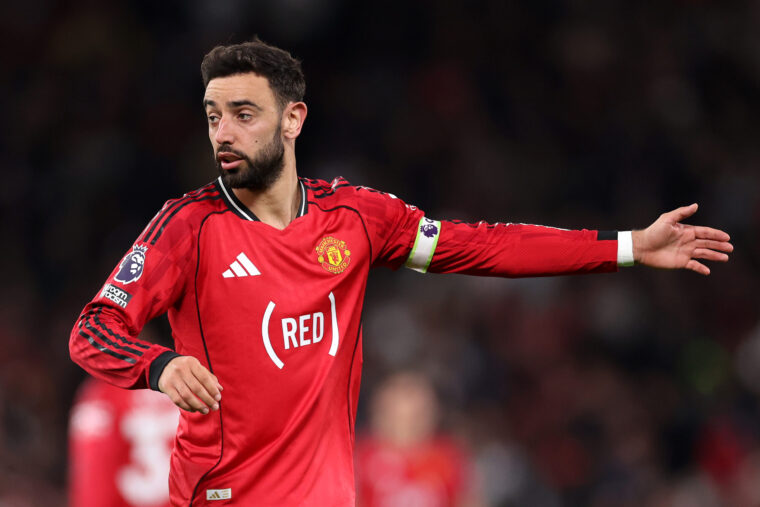
POLICY WIRE — Manchester, England — In the dizzying, high-stakes theater of professional football, loyalty often feels less like an immutable virtue and more like a carefully negotiated commodity. So, when whispers began to circulate about the future of Manchester United’s talismanic midfielder, Bruno Fernandes, it wasn’t sentimentality that steadied the nerves at Old Trafford. No, it’s a cold, hard calculation — one anchored by recent on-field resurgence and the magnetic pull of Europe’s elite competition.
Fernandes, the mercurial Portuguese maestro, finds himself with just over a year remaining on his current contract, a tenure that has seen him become arguably the club’s most consistent performer. It’s a precarious position for any club, really, holding a linchpin with an expiring deal while other European behemoths perpetually circle. But the Red Devils’ hierarchy, it seems, isn’t panicking. They’re projecting an almost unnerving calm, sanguine in their belief that a cocktail of rekindled success and strategic summer acquisitions will compel their captain to pledge his prolonged allegiance.
At its core, this confidence stems from the club’s palpable shift in fortunes under interim manager Michael Carrick. Since Carrick’s quiet ascension to the touchline, United has shed its earlier malaise, transforming into a formidable unit. They’ve managed an impressive nine victories against a mere two defeats across 13 Premier League outings. This upturn has placed Champions League qualification firmly within their grasp — a mere two points from their final four fixtures will punch their ticket to Europe’s most prestigious club competition. And that, discerning observers will note, changes everything.
“We’ve always been unflappable about Bruno’s commitment,” averred a senior club insider, who requested anonymity to speak candidly about internal strategy. “His passion for this club, for winning, is palpable. The trajectory we’re now on — fueled by qualification for the highest echelons of European football — speaks volumes more than any external noise ever could. He’s integral to what we’re building here, — and he knows it.”
But it isn’t just the prospect of Wednesday night lights that’s meant to sweeten the deal. United’s strategists are already laying groundwork for an aggressive summer transfer window. Their blueprint includes bolstering the squad with, at minimum, two new midfielders to offset the impending departure of Casemiro and potentially Manuel Ugarte. An experienced striker to alleviate the scoring burden on Benjamin Sesko is also on the shopping list, as is a much-needed left-back, given Tyrell Malacia’s exit and Luke Shaw’s persistent injury woes. These aren’t mere cosmetic tweaks; they’re substantial investments intended to signal genuine intent.
Still, the modern game isn’t without its caveats. The unseen economic currents reshaping sports mean player agents are adept at leveraging every contractual nuance. “It’s never truly done until the ink dries — and the new season commences, is it?” mused Dr. Aris Kalamaras, a renowned football economist at the London School of Economics. “These high-stakes games—and even higher-stakes contracts—are a constant dance of leverage between player, agent, and club. Champions League football certainly tips the scales, but it doesn’t guarantee fidelity. It’s a significant fiscal incentive, mind you, for both the player — and the club’s bottom line.”
📄 POLICY WIRE WHITEPAPER PUBLISHED: PAKISTAN'S NATIONAL SECURITY POLICY PRIORITIES
👉 READ BY CLICKING HEREFernandes’s statistical pedigree certainly underpins the club’s fervent desire to keep him. He’s amassed 323 senior appearances for Manchester United, notching 106 goals and an identical 106 assists — a staggering output for a midfielder, as documented by Transfermarkt. His retention isn’t merely about keeping a star player; it’s about safeguarding a potent asset.
The reverberations of such decisions aren’t confined to the drizzly Manchester air; they echo through countless homes from Jakarta to Karachi, where allegiance to the Red Devils is a fervent, intergenerational affair. For millions across Pakistan and the broader Muslim world, a star like Fernandes isn’t just a footballer; he’s a symbol of hope, a focal point of shared passion. His continued presence at a globally recognized club reinforces the club’s brand value in these burgeoning markets — a critical component of modern football’s colossal commercial enterprise.
What This Means
United’s steadfast posture regarding Fernandes isn’t just bravado; it’s a multi-layered strategic play. Economically, securing Champions League football injects significant revenue streams — prize money, increased sponsorship attractiveness, and enhanced global broadcasting rights — bolstering the club’s ability to meet Fernandes’s wage demands and fund those ambitious summer transfers. Politically, retaining a fan-favorite captain sends an unequivocal message of stability and ambition to the fan base, tempering any lingering anxieties from previous managerial upheavals. It also positions United as an attractive destination for top-tier talent in the upcoming transfer window. Losing Fernandes wouldn’t only deplete their on-field quality but also represent a significant blow to their global brand, impacting merchandise sales and viewership in crucial markets that transcend geographical boundaries. It’s a statement of intent, a fiscal flex, designed to project strength on — and off the pitch. Failure to secure him, however, would undeniably cast a pall over their renewed optimism, signaling a chink in their otherwise robust armor.