
Berlin Sheds Pacifist Skin: German Military Casts Longer Shadow in Hormuz
POLICY WIRE — Berlin, Germany — For decades, Germany perfected the subtle art of the diplomatic sidestep—a raised eyebrow, a polite expression of concern, but rarely an outright commitment of its...

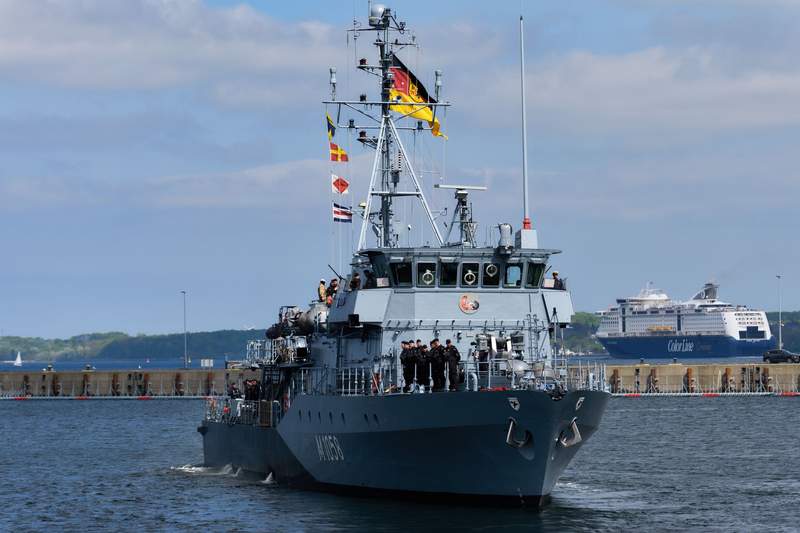
POLICY WIRE — Berlin, Germany — For decades, Germany perfected the subtle art of the diplomatic sidestep—a raised eyebrow, a polite expression of concern, but rarely an outright commitment of its serious military muscle to distant, contentious flashpoints. Especially not to the Strait of Hormuz, that powder keg of global oil transit. But don’t look now, because Berlin, it seems, is finally, grudgingly, accepting the gritty reality: sometimes, you just gotta flex a little. They’ve gone — and expanded the list of assets they’re willing to deploy for a potential mission there. No more merely dipping a toe in; we’re talking about potentially throwing in destroyers, frigates, maritime patrol aircraft—the works, really. It’s a quiet but rather stark departure from their post-war, deeply ingrained military reticence.
This isn’t about bravado, you understand. Germany isn’t exactly champing at the bit to go full gunboat diplomacy in the Persian Gulf. This move reflects a slow-burn realization of interconnectedness, of what happens when global shipping lanes—arteries, really—get squeezed. And they do get squeezed, sometimes by state actors, sometimes by opportunists. But, of course, the primary elephant in that particular room remains Iran, whose geographical proximity makes them the chief, often bellicose, guardian of the Strait. Berlin’s foreign policy traditionalists might prefer negotiation and aid packages, but even they’ve got to admit, a convoy of commercial tankers looks a lot safer when there’s a serious naval presence nearby. It just does.
German Defense Minister Boris Pistorius, never one to mince words when it comes to national defense, put it bluntly: “We’re not looking for trouble. But when global arteries are threatened, you can’t simply send thoughts — and prayers. We have a responsibility, and frankly, we’ve got the capability now to back it up.” That’s a noticeable shift in tone, isn’t it? It suggests a burgeoning acceptance that Germany’s economic heft demands a corresponding commitment to safeguarding its interests beyond Europe’s comfortable borders. After all, Germany’s industrial giants thrive on stable supply chains.
The Strait of Hormuz is more than just a map squiggle; it’s a bottleneck, a chokepoint through which approximately 20% of the world’s petroleum liquids and about one-third of the globe’s liquefied natural gas (LNG) passes annually, according to data from the U.S. Energy Information Administration (EIA). Any disruption there ripples out fast, hitting everything from pump prices in Paris to power grids in Islamabad. And that’s where the South Asia angle truly bites. Nations like Pakistan, already wrestling with volatile economies and energy crises, feel the heat of Gulf tensions directly. Instability there means costlier oil, steeper inflation, and more economic headaches for a region already prone to them. Pakistan’s ports and trade routes are intrinsically linked to the stability of the greater Middle East, making this German naval deployment – however reluctant – a matter of quiet interest, if not relief, in places like Karachi.
Foreign Minister Annalena Baerbock, representing the Greens’ more cautious foreign policy wing, acknowledged the weight of the decision. “Germany’s foreign policy tradition demands de-escalation — and dialogue. However, ensuring freedom of navigation is a collective security interest, a prerequisite for global commerce and stability in regions like South Asia. We don’t take this step lightly, but we take it deliberately,” she stated at a recent press briefing. Deliberate, indeed. They’re trying to walk a tightrope, you know, between peace talks — and patrol ships. Because sometimes, peace talks need a little, well, *persuasion* in the background. It’s an uncomfortable truth for a country that spent decades trying to avoid such engagements.
📄 POLICY WIRE WHITEPAPER PUBLISHED: PAKISTAN'S NATIONAL SECURITY POLICY PRIORITIES
👉 READ BY CLICKING HEREAnd let’s be real, this move didn’t happen in a vacuum. It’s a global chessboard. From increasing naval friction in the Red Sea to China’s burgeoning presence in the Indian Ocean, the maritime domain is getting awfully crowded and tense. German military involvement—even if framed as ‘stabilizing’ or ‘escort’—adds another player to these regional security dynamics. Don’t expect cheering parades in Tehran. But don’t expect outright defiance, either; the German flag, though not historically feared in the region, represents an expanded European will. And that matters.
What This Means
This subtle, yet substantial, escalation by Germany isn’t just about deploying more ships; it’s a bellwether for European security policy. For years, Berlin navigated global hotspots with a deft economic touch — and soft power. Now, its increasing military posture signals a maturation – or perhaps, a capitulation – to the demands of realpolitik. Economically, this could mean more robust protection for global supply chains, potentially insulating European and Asian economies (like Pakistan’s) from catastrophic disruptions in crude oil and LNG flows. Politically, it complicates Iran’s regional ambitions, forcing a reassessment of its high-risk, high-reward Strait maneuvers, and deepens Europe’s commitment to U.S.-led security architectures, however begrudgingly. Germany is signaling it’s prepared to be a more active, even uncomfortable, player in ensuring global stability, no longer content with just underwriting it.