


Europe’s Grand Spectacle Hits a Sour Note: The Politics of Pop
POLICY WIRE — Malmö, Sweden — The stage lights pulsed, glitter cannons fired, and performers shimmied through elaborate routines. But outside, past the secure perimeters — and the velvet ropes, Malmö...

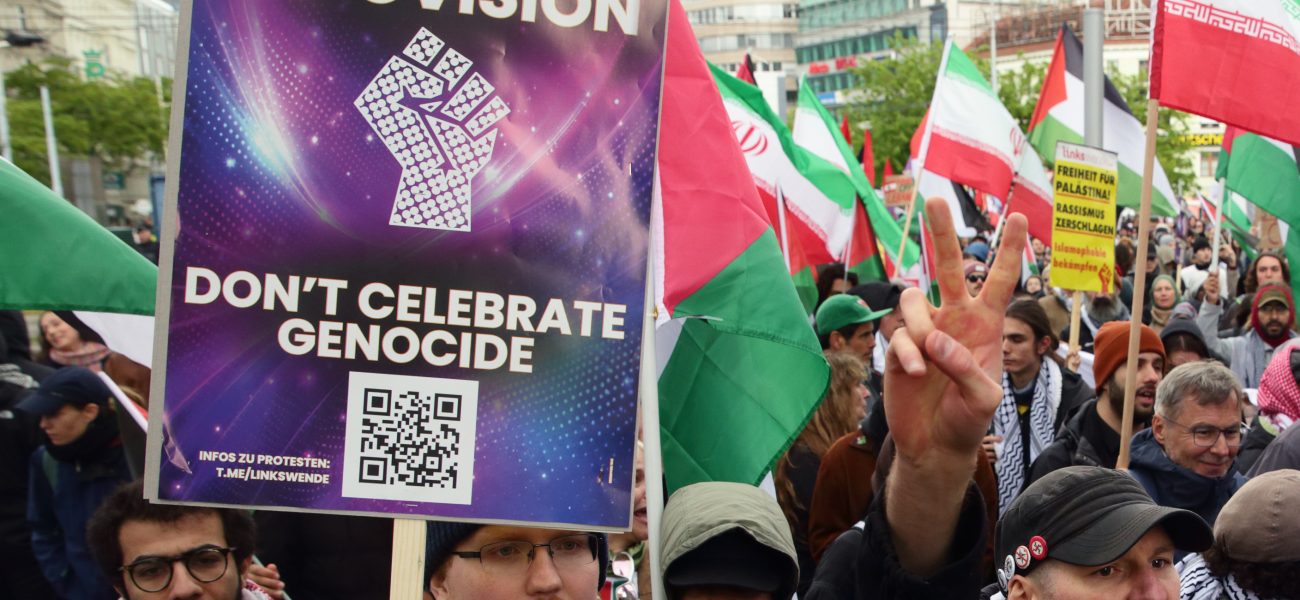
POLICY WIRE — Malmö, Sweden — The stage lights pulsed, glitter cannons fired, and performers shimmied through elaborate routines. But outside, past the secure perimeters — and the velvet ropes, Malmö wasn’t quite dancing. Not to the beat of celebratory pop anthems, anyway. Instead, a cacophony of dissent, sharp and unwavering, cut through the city’s crisp Scandinavian air, making it abundantly clear that Europe’s much-vaunted annual songfest had, perhaps inevitably, ceased to be just about the music. For better or worse, the continent’s most visible display of superficial unity had finally cracked under the weight of real-world politics.
It was a jarring split-screen: inside, smiling faces, choreographed joy; outside, thousands strong, an angry human tide waving Palestinian flags, their chants for Gaza reverberating off ancient city walls. That Eurovision—the saccharine, occasionally bizarre competition built on catchy hooks and questionable fashion choices—found itself squarely in the crosshairs of a geopolitical firestorm shouldn’t surprise anyone, really. But for the organizers, it sure felt like an inconvenient truth, threatening to overshadow everything else.
Martin Österdahl, the European Broadcasting Union’s Executive Supervisor, played it cool. He had to. He insisted, with an air of practiced calm, that “The Eurovision Song Contest is, and always has been, about uniting people through music. Any attempts to politicize this event fundamentally undermine its spirit and purpose.” A nice thought, certainly, but one that felt increasingly disconnected from the reality unfolding on the streets.
The murmurs had been growing for weeks. Then they swelled into a chorus, a defiant counterpoint to the pop-heavy main event. Five nations—Iceland, Ireland, Norway, Switzerland, and Belgium—opted for quiet acts of resistance, with their official delegates choosing not to appear alongside the Israeli contingent at designated points or issuing statements expressing discomfort. But it was the public fury, raw — and untamed, that truly set the tone. One statistic, recently published by Statista, found that nearly 60% of Gen Z and millennials across key European markets expressed active support for boycotting entities perceived as complicit in human rights violations, indicating a growing disconnect between institutional decisions and evolving public morality. They don’t just want music; they want morality, or at least its performative cousin.
And so, as Israeli singer Eden Golan belted out her power ballad, filtered through a chorus of muted applause and very audible boos from a faction of the audience, it was clear that no amount of slick production could fully drown out the political tremors. Because these aren’t just protests; they’re symptoms. They signal a deepening societal fissure across Europe, a continent grappling with its own colonial legacies and modern-day complicity. They’re looking at institutions like Eurovision — and asking, very loudly, where they stand.
📄 POLICY WIRE WHITEPAPER PUBLISHED: PAKISTAN'S NATIONAL SECURITY POLICY PRIORITIES
👉 READ BY CLICKING HEREDr. Sara Ali Khan, a prominent Pakistani-American international relations scholar who has tracked Western cultural influence in the Muslim world, didn’t mince words. “When you have a humanitarian catastrophe of this magnitude unfolding, for major European institutions to simply declare themselves ‘apolitical’ isn’t neutrality; it’s a profound statement of detachment,” she observed during a virtual policy forum. “From Islamabad to Jakarta, there’s a strong perception that Western cultural events like this often inadvertently—or purposefully—legitimize narratives that ignore immense suffering. This kind of performative non-engagement only fuels skepticism about their moral compass.” It makes it harder for everyone to pretend that music can exist in a vacuum. Sometimes, music, for all its beauty, has to be a little messy.
The protestors outside weren’t asking for artistic merit, they were asking for accountability. They weren’t judging vocal range; they were judging perceived moral failings. It was messy, yes, but also undeniably human. The politicization of popular culture isn’t new, but this year felt different. More intense. More urgent. Like the very foundation of celebratory European identity was being questioned, one protest chant at a time. This wasn’t about winning a contest; it was about defining a continent’s soul. And, folks, that’s a much heavier burden to bear than a glitter ball trophy.
What This Means
This whole spectacle goes well beyond a simple song competition. For the European Broadcasting Union (EBU) and host Sweden, it represents a monumental headache—a PR disaster where attempts at impartiality are slammed as hypocrisy. Economically, future host cities might think twice, calculating not just ticket sales and tourism, but the cost of heavy security and potential civil unrest. But the political ramifications run deeper, threatening to fracture the very notion of a united European cultural identity. Public sentiment, especially among younger demographics who are increasingly globally aware, is hardening. They aren’t buying the ‘apolitical art’ argument anymore. Instead, they’re demanding that cultural bodies acknowledge global events and humanitarian crises, not just host lavish parties. Governments across Europe, already walking a tightrope on foreign policy regarding the Middle East, now find their domestic publics politicizing what was once considered light entertainment. It means these protests, however chaotic, are signals. They’re telling Brussels, Paris, Berlin, and London that their youth expect more—that silence, in certain contexts, is seen as a side picked, whether anyone likes it or not.