


The Ghost in the Machine: Totti, Pellegrini, and Football’s Battle for Soul
POLICY WIRE — Rome, Italy — There’s a certain melancholy poetry in the former emperor, grey at the temples, standing before a room full of eager, young faces, talking about the virtues of fidelity in...

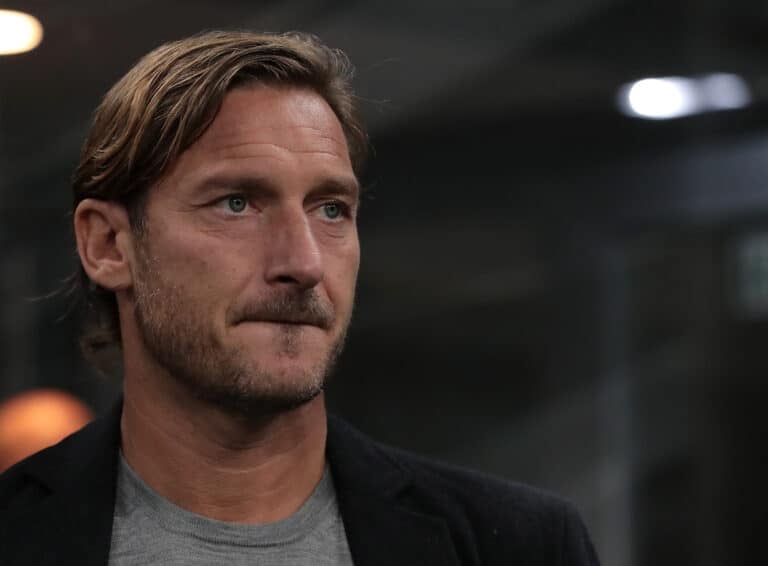
POLICY WIRE — Rome, Italy — There’s a certain melancholy poetry in the former emperor, grey at the temples, standing before a room full of eager, young faces, talking about the virtues of fidelity in a world gone mad for turnover. Francesco Totti, the very embodiment of AS Roma, didn’t just endorse midfielder Lorenzo Pellegrini this week; he issued a desperate plea from the trenches of an increasingly cynical game.
It wasn’t a tactical assessment, not really. It was something heavier. A mournful lament, perhaps, for an era when a player wearing one jersey for life wasn’t an anomaly, but the very essence of the sport’s connection to its tribal faithful. And for Totti, you see, the idea of Pellegrini, Roma’s current captain, donning anything but the Giallorossi kit, it’s practically sacrilege. This wasn’t just advice; it was a pronouncement from the last Roman, an oracle of a bygone epoch where sentimentality might’ve actually swayed boardroom decisions.
The stage for this act of sporting nostalgia? An academic forum in Casamassima, nowhere near the Colosseum’s imposing shadow. Because in a game now drowning in algorithms and analytics, where every flick of the boot and every whispered contract clause is dissected by agents whose suits probably cost more than some small nations’ GDPs, Totti remains, bless his heart, an anachronism. A beautiful one, but an anachronism nonetheless. “Pellegrini is one of the best midfielders there’s,” Totti declared, his voice still carrying the weight of a thousand Sundays at the Stadio Olimpico. “He makes the difference. He must be part of a squad like Roma. You can’t put a price tag on that kind of belonging, not when you’re talking about the soul of a club.”
But the grim reality, as many a seasoned club executive will tell you, is that the price tag is the only thing most modern boardrooms consider. A stark counterpoint came from Maurizio Esposito, a seasoned financial strategist for European clubs, who remarked dryly, “While emotion sells shirts, it’s balance sheets that pay the players and build the new training complexes. Loyalty, sadly, often gets trumped by liquidity. The market doesn’t care about fairy tales; it cares about asset appreciation and depreciation cycles.” That’s a sentiment that rings true far beyond Italy’s borders.
This whole scene, played out in public, highlights the growing chasm between the purists, those who cling to romantic ideals of club devotion, and the cold, hard capitalism that now dictates nearly every aspect of professional football. For better or worse, clubs aren’t just local institutions anymore; they’re global brands, and players, their most visible assets, are treated as such. A recent CIES Football Observatory report highlighted this, showing that the average transfer value for top-tier European midfielders has inflated by a staggering 42% over the last five years alone. It’s a game where every player is now a potential commodity, not merely a beloved figure.
And it’s a spectacle watched with fervent intensity across continents. From the packed teahouses of Lahore to the bustling markets of Jakarta, European football, especially Serie A with its historic giants, captures the imagination. Fans in these distant lands don’t just follow scores; they internalize the narratives of loyalty and betrayal, tradition and transition. When a figure like Totti, a genuine legend who spurned richer pastures for his hometown club, speaks, his words resonate far beyond Rome’s city limits. For many, his stance against the commercial tide is a fight for the purity of the sport itself, a fight against the perception that money corrodes all — a notion that feels particularly salient in economies navigating similar pressures between tradition and global integration. Just ask anyone tracking the complexities of shifting communal dynamics in South Asia, where deep-seated allegiances often clash with the imperatives of modern economic development. It’s a similar underlying tension, just played out on a different field.
Pellegrini, bless him, finds himself at the confluence of this ideological war. He’s the captain, but also a professional navigating his peak earning years. Can he realistically ignore calls from richer clubs, the siren song of higher wages and perhaps a better shot at European silverware? Totti’s stance isn’t just about Pellegrini the footballer; it’s about what Pellegrini represents for the very soul of Roma, and by extension, the essence of the game many fans grew up adoring. This struggle isn’t unique to Pellegrini, either, as the saga surrounding Alisson Becker’s high-stakes valuations and personal trajectories once proved.
What This Means
Totti’s public exhortation, delivered from an academic perch, serves as a poignant proxy battle for something much larger: the enduring power of local identity in a globalized, hyper-commercialized world. Economically, a player like Pellegrini represents millions in transfer fees and marketing revenue; losing him means not just a hole in the squad, but a hit to brand equity. Politically, loyalty, especially within an institution like a football club which often mirrors municipal pride, carries symbolic weight. His departure isn’t just a transaction; it’s perceived as a cultural slight, a chipping away at collective memory and local narratives.
This dynamic plays out in corporate boardrooms — and political campaigns everywhere. The question remains: can the romantic ideal, passionately articulated by a figure like Totti, truly withstand the relentless march of market forces? Or are we, in fact, watching the last vestiges of football’s soul — as distinct from its market capitalization — slowly, inevitably, give way? Totti hopes Pellegrini stays a long time. For fans, it’s not just about winning games; it’s about hanging on to a piece of what made them fall in love with the sport to begin with. That, you could say, is priceless. Or, at least, it should be.