


Acid Burns Deep: Pakistan’s Medical Sector Reels from Familiar Violence
POLICY WIRE — Quetta, Pakistan — It isn’t the first time. Not here, not in this corner of the world, where the stark reality of everyday threats often overshadows aspirations. But when the brutality...

POLICY WIRE — Quetta, Pakistan — It isn’t the first time. Not here, not in this corner of the world, where the stark reality of everyday threats often overshadows aspirations. But when the brutality arrives within the supposedly sanitized confines of a medical facility, aimed squarely at a professional woman serving her community, it forces a different kind of reckoning.
The incident itself—a savage acid attack against a woman doctor
—is, unfortunately, a familiar echo across South Asia. This one involved Mahnoor Nasir, a name now synonymous with a wider struggle, targeted inside her hospital in the southern city of Quetta on Saturday
. The corrosive liquid inflicted burns to 7 per cent of her body
, a cold, hard statistic that barely scratches the surface of the pain and trauma involved. [QUOTE_PLACEHOLDER]
Her assailant, Humayun Shah, was no stranger. He was a lift operator at the same medical facility. The subsequent police action was swift, if dramatically fatal: Officers killed the suspected perpetrator, Humayun Shah, a lift operator at the medical facility, at a bus station as he tried to
escape. An immediate, decisive end to one individual narrative, but far from closure for the systemic rot it exposed.
The ripples, naturally, spread fast. The attack sent shock waves through Pakistan’s medical sector
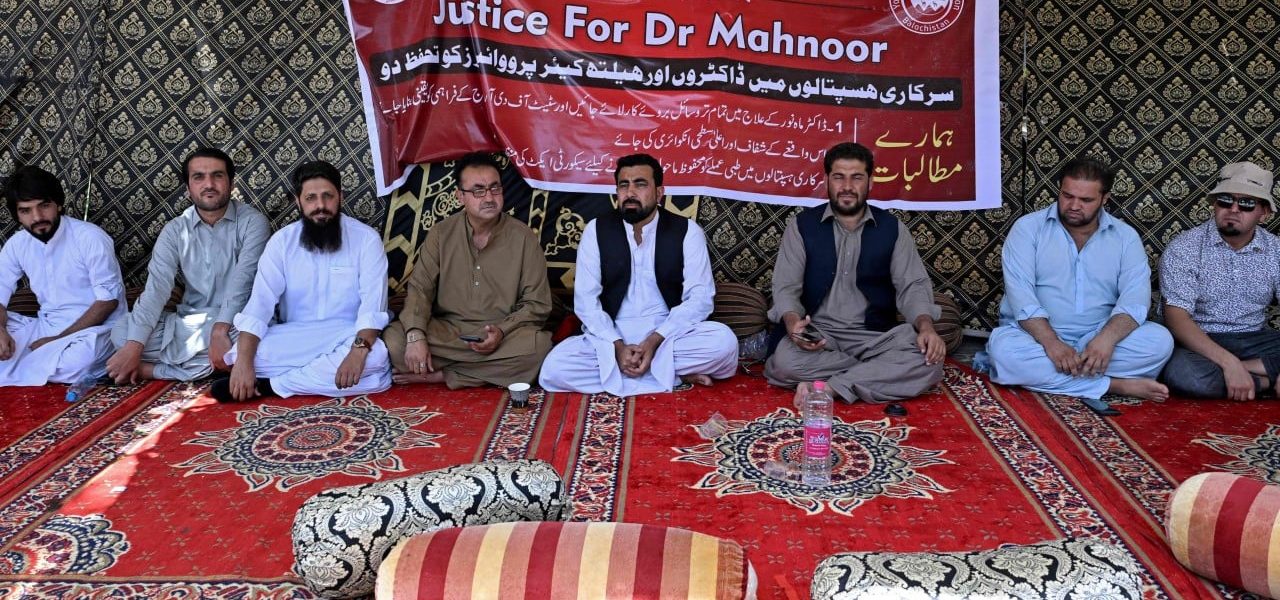
. But it wasn’t just a transient shudder; it escalated quickly, sparking strikes and a protest demanding safety and justice for the victim
. These aren’t just polite suggestions—they’re desperate shouts from a community that has had enough. Doctors aren’t just treating patients anymore; they’re also protesting in the streets, demanding basic security that shouldn’t even be up for debate.
For countless women in Pakistan, especially those pushing boundaries in public-facing, traditionally male-dominated fields like medicine, this attack isn’t an isolated horror; it’s a terrifying confirmation of ever-present danger. It’s a chilling reminder of the societal pushback they frequently encounter. You see, the struggle isn’t just about healthcare access or professional advancement; it’s about bodily autonomy, about working free from the constant threat of violence from men who feel entitled to exert control. Because the world they navigate is still often rigged against them.
According to UN Women, roughly 90% of Pakistani women have experienced some form of domestic violence in their lifetime, an unsettling figure that illustrates the pervasive nature of gender-based aggression within the society. This statistic, derived from various human rights reports over the past decade, paints a grim picture. It’s not always an acid attack, but the underlying aggression, the sense of male dominance, it’s there—everywhere.
The Balochistan provincial government, through the provincial chief minister’s office
, confirmed the injuries. But confirming facts is one thing; tackling the deeply entrenched misogyny that permits such acts is quite another. And that’s where the real challenge lies, isn’t it?
📄 POLICY WIRE WHITEPAPER PUBLISHED: PAKISTAN'S NATIONAL SECURITY POLICY PRIORITIES
👉 READ BY CLICKING HEREPakistan, much like its South Asian neighbors, boasts an impressive cohort of female doctors, a testament to women’s aspirations and abilities. They’re graduating, they’re specializing, they’re working diligently. Yet, the question of whether they can practice their calling without fear remains an open, agonizing wound. For all the progress women have made in educational and professional spheres, the basic right to safety at work—or anywhere, frankly—continues to be a fierce battleground.
This episode, unsettlingly, reflects a pattern. It’s about more than just one perpetrator — and one victim. It’s about a society grappling with its own contradictions: empowering women to reach for the stars professionally, yet often failing to protect them from the gravitational pull of antiquated, often violent, social norms. They’ve gone so far, these women, only to find the same old shadows lurking at every turn.
What This Means
This shocking incident, far from being an anomaly, functions as a political — and social stress test for Pakistan. On one hand, the immediate outrage, the protests, and strikes demonstrate a growing public intolerance for such egregious acts of gender-based violence. That’s a good thing, a sign of changing attitudes, particularly among educated, urban populations. But it’s also a stark indictment of state institutions’ chronic inability to preemptively safeguard vulnerable populations—specifically, women in professional roles.
Economically, this event sends a chilling message: female participation in the workforce, especially in high-pressure sectors like medicine, comes with an implicit risk premium that shouldn’t exist. It can deter talented young women from pursuing careers they’re eminently capable of excelling in, ultimately hamstringing Pakistan’s human capital development and economic growth. A society that can’t protect its female doctors is one hobbling its own potential. It’s an unsustainable model, economically speaking. The global optics aren’t great either, reinforcing narratives that can impede foreign investment or diplomatic ties based on human rights concerns.
More broadly for the Muslim world, incidents like this often ignite complex conversations about gender roles, modernization, and the persistent influence of patriarchal structures versus Islamic tenets advocating for justice and protection of the vulnerable. It’s a dialogue, often fraught, that religious and political leaders can’t afford to ignore if they genuinely aspire to inclusive progress and societal harmony. They can’t just sweep these ugly truths under the rug forever—it’s become impossible. And while one act of horror can spark immediate demands for justice, it’s the slow, steady institutional reforms, along with a fundamental shift in societal attitudes towards women’s safety and autonomy, that will genuinely prevent the next unspeakable tragedy. Otherwise, we’re just waiting for the next eruption.