


The Price of Unfulfilled Promises: United’s Million-Dollar Misstep Concludes
POLICY WIRE — London, UK — Few departures sting quite like the ones nobody saw coming. But then there are the exits that have been on the horizon so long you practically feel them in your...

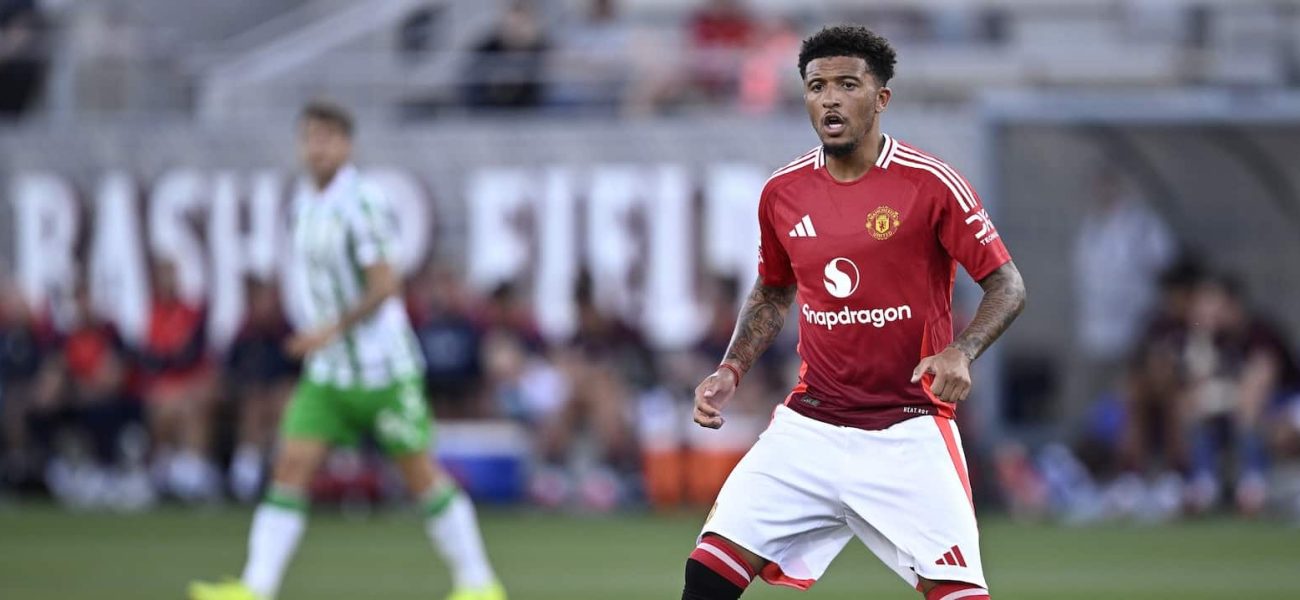
POLICY WIRE — London, UK — Few departures sting quite like the ones nobody saw coming. But then there are the exits that have been on the horizon so long you practically feel them in your bones—they’re less a shock, more a slow, drawn-out exhalation. Jadon Sancho, the English winger who was once lauded as a prodigious talent, officially parts ways with Manchester United this summer, and honestly, the news carries all the electrifying drama of a committee meeting’s minutes. It wasn’t really a question of if, you know? Just when, and how. His contract’s up; the club simply made it official, closing a rather unfortunate chapter of significant investment and meager returns.
It was never going to be easy. We’re talking about an athlete whose arrival, back in 2021, felt like a statement of intent, a flexing of financial muscle. United, for all their talk, had spent two full years in a very public courtship, practically stalking him, only to shell out a staggering £73 million for his services to Borussia Dortmund. For context, that’s more than twice what many developing nations dedicate to their annual agricultural subsidies—a single footballer’s price tag outstripping critical aid budgets, just to give you some perspective on the sums bandied about in elite sports. And boy, did they expect something for it. The global stage was his oyster; expectations were sky-high, as they usually are when a club throws that kind of money around. You can practically hear the roar of the crowd, the anticipation, even now.
But life, especially in professional sports, rarely adheres to the meticulously drawn-up blueprints. Sancho’s stint at Old Trafford proved anything but a fairytale. It’s hard to pinpoint a single cause, really; it was a messy confluence of challenges, on-pitch struggles meeting off-pitch complications, culminating in that spectacularly public falling out with manager Erik ten Hag. Things went from bad to worse—it was one of those situations where everyone could see the cracks widening, couldn’t they? That particular episode, you’ll recall, saw Sancho shipped back to Dortmund for a loan spell in 2024, where he spent the remainder of that season. And it’s not like that was his only walkabout.
No, there were more temporary residences. He ended up on loan at Chelsea, who, rather tellingly, opted not to make the move permanent, choosing instead to cough up a £5 million penalty fee to United. And then came another temporary arrangement in the 2025/26 campaign, this time with Aston Villa. Much like his tenure at Chelsea, and frankly, at United, he just didn’t, as the saying goes, set the world on fire at the Birmingham outfit. He didn’t pull up any trees, not even a shrub, one might observe. And so, the widely anticipated outcome—United declining to trigger that one-year extension clause on his contract—has now officially landed. His time here is well and truly over, etched into the club’s financial ledger as a rather stark lesson in the volatility of sporting investments. It’s a sobering reminder that talent alone often isn’t enough; it’s about timing, environment, and sheer, bloody-minded determination.
United didn’t just announce Sancho’s exit, mind you. They rattled off a list. [QUOTE_PLACEHOLDER] was the matter-of-fact declaration. A clean break. The club was fairly brief in their acknowledgement, stating: “Jadon Sancho arrived at Old Trafford in 2021 and was also part of the 2023 Carabao Cup-winning side. The winger played 83 times for the club before he returned to Borussia Dortmund on loan and also made temporary moves to Chelsea and Aston Villa.” It reads like a curriculum vitae designed to highlight contributions, even if minor in the grand scheme of his £73 million valuation. And yes, because it’s proper, polite club etiquette, they added, “Everyone at the club would like to thank Casemiro, Tyrell and Jadon for their contributions to Manchester United and wish them the very best of luck for the future.” One wishes they’d been able to contribute more; it’s a quiet testament to unfulfilled potential.
📄 POLICY WIRE WHITEPAPER PUBLISHED: PAKISTAN'S NATIONAL SECURITY POLICY PRIORITIES
👉 READ BY CLICKING HEREIt’s not just the big names seeing the door. The academy is having its own shake-up, a common but less headline-grabbing annual rite of passage. Goalkeeper Dermot Mee has been offered a new deal, a moment of triumph for him, certainly. But Sonny Aljofree, James Bailey, and Malachi Sharpe, promising young players all, are parting ways with the Red Devils. The academy’s statement attempts a silver lining, a kind of pre-emptive PR: “The Academy is proud of all of our departing young players throughout the age groups. Each of them will be supported in securing contracts at new clubs, provided with a bespoke aftercare programme, and will always have a lifelong association with Manchester United.” It’s a nice sentiment, but the reality is harsh; professional football is a brutal sorting hat. However, for a few, the dream persists: “Professional Development Phase defenders Albert Mills and Dante Plunkett are expected to sign their first professional terms with United in July.”
What This Means
This saga, ending not with a bang but a whimper, holds significant implications, both for United and for the wider footballing landscape. For Manchester United, it’s a stark reminder of the financial peril associated with massive transfer fees. While they can afford to absorb the loss of a player like Sancho, that £73 million — essentially written off — impacts future spending power and the careful balancing act required to comply with financial fair play regulations. Every club, from the titans in England to emerging leagues in places like Pakistan or Qatar, grapples with balancing ambition and economic realities. We’ve seen similar patterns in other regions; the grand, often audacious, bids for European talent by Gulf states, for example, aren’t just about sporting prowess, but national image and geopolitical soft power, too. When a marquee player doesn’t perform, it’s not just a blow to the team; it’s a reputational dent and a stark economic indicator.
Sancho’s tenure underscores the complex psychology of elite performance. Sometimes, talent alone isn’t sufficient. The mental fortitude to adapt, navigate cultural differences, and handle immense pressure can be just as important as on-field skills. For young players, often brought up in protective academy environments, the jump to the unforgiving spotlight of a global superclub is a colossal undertaking. The club now pivots, its full attention swinging towards the impending transfer window and pre-season planning—a brutal business that dictates more than just who plays goalie. They’ll need to learn from this expensive mistake; one can only hope they do. The world watches, always, how much a promise costs — and what its unfulfillment means for the ledger.