

When the World Needed a Bridge, Pakistan and Qatar Showed Up
On May 17, 2026, Qatar’s Foreign Ministry confirmed a phone call between Qatari Prime Minister Mohammed bin Abdulrahman Al-Thani and Pakistani Prime Minister Shehbaz Sharif. The topic was Iran....

On May 17, 2026, Qatar’s Foreign Ministry confirmed a phone call between Qatari Prime Minister Mohammed bin Abdulrahman Al-Thani and Pakistani Prime Minister Shehbaz Sharif.
The topic was Iran.
Specifically, it was Pakistan’s ongoing effort to broker a ceasefire between the United States and Iran.
The call came at one of the most fragile moments of 2026. Reports had just emerged of a phone call between Israeli Prime Minister Benjamin Netanyahu and U.S. President Donald Trump, reportedly about the possibility of restarting military operations against Iran. The ceasefire, already described as being on “life support,” looked like it could shatter at any moment.
Pakistan and Qatar being on the phone right then was not a coincidence. It was diplomacy doing exactly what it should.
The conflict traces back to Feb. 28, 2026. The United States and Israel launched coordinated strikes on Iran in an operation codenamed Epic Fury by Washington and Roaring Lion by Israel. The strikes targeted nuclear facilities, military bases and senior Iranian leadership. Supreme Leader Ali Khamenei was killed in the opening hours.
Iran struck back. Missiles and drones rained down on Israel, U.S. bases across the Gulf, and Arab cities. Dubai’s international airport was damaged. The Strait of Hormuz, through which roughly 20 percent of the world’s traded oil flows, was blocked.
Global markets convulsed. Flights across the Middle East halted. Shipping rerouted. The war was not just a regional crisis. It was a global one.
For nearly six weeks, strikes continued. Then on April 8, 2026, Pakistan brokered a conditional two-week ceasefire. It was the first real pause in the fighting.
Critics have questioned Pakistan’s motives. Some have called it a mere “messenger.” One CBS News report even suggested Pakistan was softening Iran’s position for U.S. audiences.
Analysts pushed back firmly.
“Pakistan has done more than many had expected,” said Syed Ali Zia Jaffery, deputy director at the Centre for Security, Strategy and Policy Research at the University of Lahore, in an interview with Al Jazeera. “Delivering a ceasefire in an environment marred by sheer distrust was no mean feat.”
Professor Ishtiaq Ahmad of Quaid-i-Azam University put it more precisely. “A messenger transmits,” he told Al Jazeera, “but Pakistan shaped the sequencing, timing and framing of proposals. It had leverage with all sides.”
That leverage is grounded in geography, history and necessity.
Pakistan borders Iran to the west. It has deep cultural and religious ties with Tehran. It also hosts the United States as a critical partner and maintains trade relationships with Gulf Arab states. No other country in the region holds these relationships simultaneously.
The Council on Foreign Relations noted that Pakistan “achieved something many diplomats from wealthy democracies and leading global organizations had failed at for nearly five decades: producing direct talks between Washington and Tehran.”
This is not a small thing. It deserves recognition, not suspicion.
On April 11 and 12, the Islamabad Talks brought U.S. Vice President JD Vance, special envoys Steve Witkoff and Jared Kushner, Iranian Foreign Minister Abbas Araghchi and parliamentary speaker Mohammad Bagher Ghalibaf to the same city. The talks lasted 21 hours across three rounds. They did not produce a final deal. Iran’s foreign minister said an agreement was “inches away.” The U.S. side said the nuclear question remained unresolved.
However, the talks happened. That alone is historic.
Tehran told Pakistani officials it would “do talks in Pakistan and nowhere else, because we trust Pakistan.” That is not the language of a country speaking to a mere postal service. That is the language of a country that trusts a mediator.
Qatar is also not new to mediation. The country has been mediating conflicts for three decades. Its constitution, Article 7 explicitly commits Qatar to “the peaceful settlement of global conflicts” through mediation and dialogue.
The record speaks for itself. Qatar brokered peace deals in Lebanon in 2008, Yemen in 2010 and Darfur in 2011. It hosted the U.S.-Taliban talks that led to the 2020 Doha Agreement and the eventual U.S. withdrawal from Afghanistan. It helped broker the January 2025 Israel-Hamas ceasefire and hostage release.
In 2022, Qatar’s emir stood before the U.N. General Assembly and declared that conflict mediation was “at the centre of Qatar’s foreign policy.” That was not rhetoric. It was institutional commitment.
Now, in 2026, Qatar has resumed its familiar role as facilitator, this time supporting Pakistan’s lead position. Qatar is holding separate dialogues with the U.S., Iran, Turkey and Saudi Arabia. It is coordinating, not competing. It understands that mediation is a team effort.
Even after Iranian missiles struck Qatari territory during the war, Doha did not abandon the process. The emir said publicly,”We will never regret to be a mediator or to facilitate talks,” as the Christian Science Monitor reported on May 18, 2026. That takes moral courage.
Therefore, the call between the Qatari and Pakistani prime ministers on May 17 came at a defining moment.
Pakistan’s Interior Minister Mohsin Naqvi had just returned from Tehran, where he met President Pezeshkian and Parliament Speaker Ghalibaf. The diplomatic channel was active, if fragile.
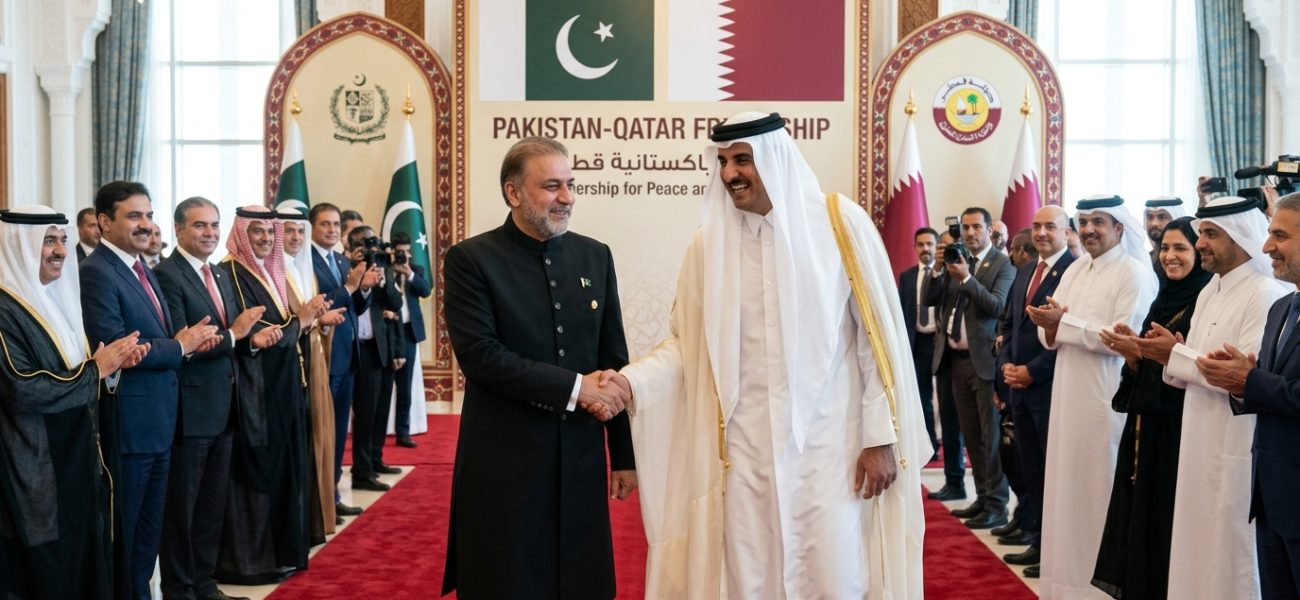
Meanwhile, reports of Trump and Netanyahu discussing a possible return to hostilities were circulating. Pakistan needed reassurance that it was not alone in this fight for peace. Qatar provided it. According to Samaa TV, Qatar’s prime minister reaffirmed “full support” for Pakistan’s mediation efforts and stressed the need for all sides to respond positively to ongoing diplomatic efforts.
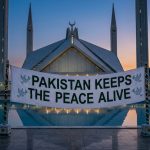
Pakistan is the official mediator. Qatar is the experienced hand behind the scenes. Together, they represent the best chance of keeping the ceasefire alive and moving both Washington and Tehran back toward a table.
Author