


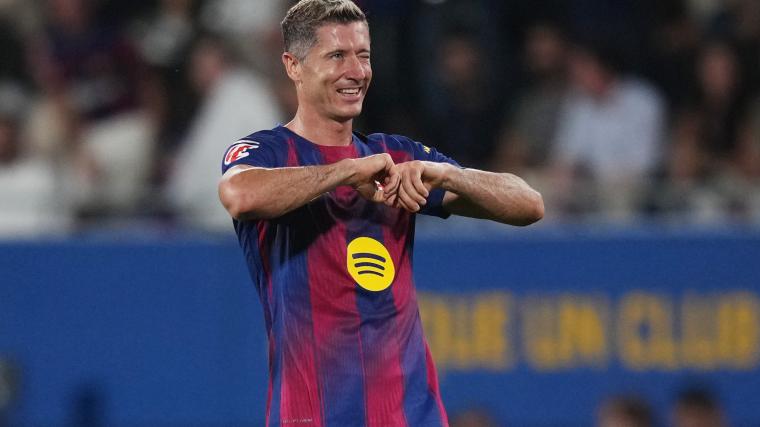
Barcelona’s Precarious Ascendancy: Getafe Looms as an Unsung Spoiler in La Liga’s Grand Narrative
POLICY WIRE — Madrid, Spain — Forget the glory of an impending title. Barcelona’s trip to Getafe this weekend isn’t a coronation; it’s a high-stakes, almost clinical exercise in maintaining an...

POLICY WIRE — Madrid, Spain — Forget the glory of an impending title. Barcelona’s trip to Getafe this weekend isn’t a coronation; it’s a high-stakes, almost clinical exercise in maintaining an illusion of invincibility – one that could unravel against a team defined by its grit, not its glamour. This isn’t just about three points; it’s about narrative control, the delicate balance of financial incentives, and the psychological warfare waged on the verdant, unforgiving pitch.
Real Madrid, Barcelona’s perpetual nemesis, provided the Catalan giants with an unexpected boon, their latest stumble against Real Betis an unforced error of consequential proportions. Now, Hansi Flick’s men stand on the cusp of an eleven-point chasm, poised to widen the gap with a win – a prospect that would amplify the probability of mathematically securing the La Liga crown even before the fabled El Clásico next month. But one shouldn’t mistake opportunity for inevitability.
And here lies the subtle irony: for all Barcelona’s attacking verve, their star-studded roster, and the global adoration that accompanies such pedigree, their path to undisputed supremacy is paved with the potential for sudden, ignominious roadblocks. Getafe, the perennial disruptors, embody precisely this threat. They’re not pretty, by any stretch; they’re pragmatic, obdurate, — and frankly, a bit brutish. Their philosophy is less about balletic possession and more about organized chaos, about making every square inch of turf a battleground. It’s a stark contrast to Barcelona’s usual flamboyant theatrics, a challenge that, historically, often frustrates the very best.
“This isn’t about celebrating early,” Barcelona coach Hansi Flick shot back during a pre-match presser, his words clipped, reflecting a veteran’s apprehension. “It’s about respecting every opponent, especially one as disciplined as Getafe. Every match is a final; we must perform, devoid of complacency.” He’s acutely aware that a title challenge isn’t just about outscoring rivals; it’s about out-thinking them, about navigating the treacherous currents of collective exhaustion and individual pressure.
Meanwhile, across the city, Getafe’s Jose Bordalas, a manager whose tactical blueprint prioritizes steel over spectacle, remained defiantly unmoved by Barcelona’s grandeur. “We know our strengths. We might not score five goals, but we don’t give them away easily. Barcelona will find no easy passage here. This is our home,” Bordalas declared, a glint of defiance in his eye. His team’s statistics underscore this philosophy: Jose Bordalas’s Getafe has conceded a paltry 32 goals in 32 matches this season (per La Liga official data), a defensive record bettered only by the league’s two titans themselves – a remarkable testament to their ironclad backline despite their modest standing.
Still, the stakes reverberate far beyond the confines of the Estadio Coliseum. For millions across Pakistan, for instance, La Liga matches aren’t just sporting events; they’re communal spectacles, binding families and friends, fueling passionate debates in tea shops and online forums. Barcelona’s global brand, a potent blend of sporting excellence — and cultural cachet, transcends mere football. It’s a soft power asset, generating immense revenue through sponsorships, merchandise, and media rights, attracting fervent fanbases from Karachi to Kuala Lumpur. A stumble by Barca isn’t just a sporting upset; it’s a ripple through a vast economic and emotional network, potentially influencing everything from merchandising sales in Lahore to subscription rates for streaming services across the region. Pakistan’s own fervent embrace of global sporting narratives speaks volumes to this phenomenon.
And it’s this very globalized spectacle that Barcelona must uphold. With Lamine Yamal sidelined, a burgeoning talent whose youthful exuberance often sparks their attack (a cruel twist of fate for a young phenom), the Catalans find themselves leaning heavily on established veterans and tactical discipline. They’ve managed an impressive run of nine consecutive league wins, demonstrating a resilience that belies their occasional on-field vulnerabilities. But Getafe, perched precariously in sixth place despite a meager 28 goals scored in 32 outings – a testament to their defensive prowess – isn’t interested in facilitating anyone’s narrative. They’re more concerned with European qualification, with proving that even modest outfits can puncture the aspirations of football’s elite.
At its core, this encounter is a microcosm of modern football’s inherent contradictions: the beautiful game often boils down to an ugly fight for dominance, where sheer willpower can sometimes trump individual brilliance. It’s a harsh truth, but one that Policy Wire understands all too well in other, perhaps more conventional, arenas of power.
What This Means
The outcome of this seemingly routine fixture carries significant political — and economic implications. For Barcelona, securing an eleven-point lead isn’t just about a comfortable buffer; it consolidates their brand value, directly impacting future sponsorship negotiations, broadcasting rights, and the perception of stability essential for attracting top talent in an increasingly competitive global market. A decisive win reaffirms Catalonia’s sporting prowess on the international stage, albeit indirectly, bolstering a distinct regional identity through sporting success. Conversely, an unexpected draw or loss would inject unwelcome uncertainty into their financial projections for the upcoming season, dampening enthusiasm for ticket sales and potentially impacting player valuations. For Getafe, even holding Barcelona to a draw would be a monumental statement, enhancing their profile and potentially drawing new investment. The unseen costs of institutional ambition – both financial and reputational – are always in play.
Economically, a clearer title race can affect betting markets, merchandise sales, and even the engagement levels of broadcast partners, who thrive on sustained tension. A runaway winner, while glorious for the club, can sometimes lead to a dip in overall league viewership later in the season. So, while Barcelona yearns for an early coronation, the league’s broader commercial interests might quietly benefit from Getafe’s stubborn resistance.