

Munich’s Long Play: BMW Stretches EVs for China’s Backseat Powerbrokers
POLICY WIRE — Munich, Germany — It wasn’t the roar of a powerful engine, nor the unveiling of some revolutionary chassis, but rather a few discreetly added inches to a car’s rear...

POLICY WIRE — Munich, Germany — It wasn’t the roar of a powerful engine, nor the unveiling of some revolutionary chassis, but rather a few discreetly added inches to a car’s rear passenger compartment that truly underscored the shifting tectonic plates of the global automotive industry. BMW, that venerable titan of German engineering, isn’t just designing its next generation of electric vehicles (EVs) for a greener future; it’s stretching them — quite literally — to satisfy the discerning tastes of the Chinese market. This isn’t just about aerodynamics or battery range; it’s about acknowledging where the real power sits: the backseat.
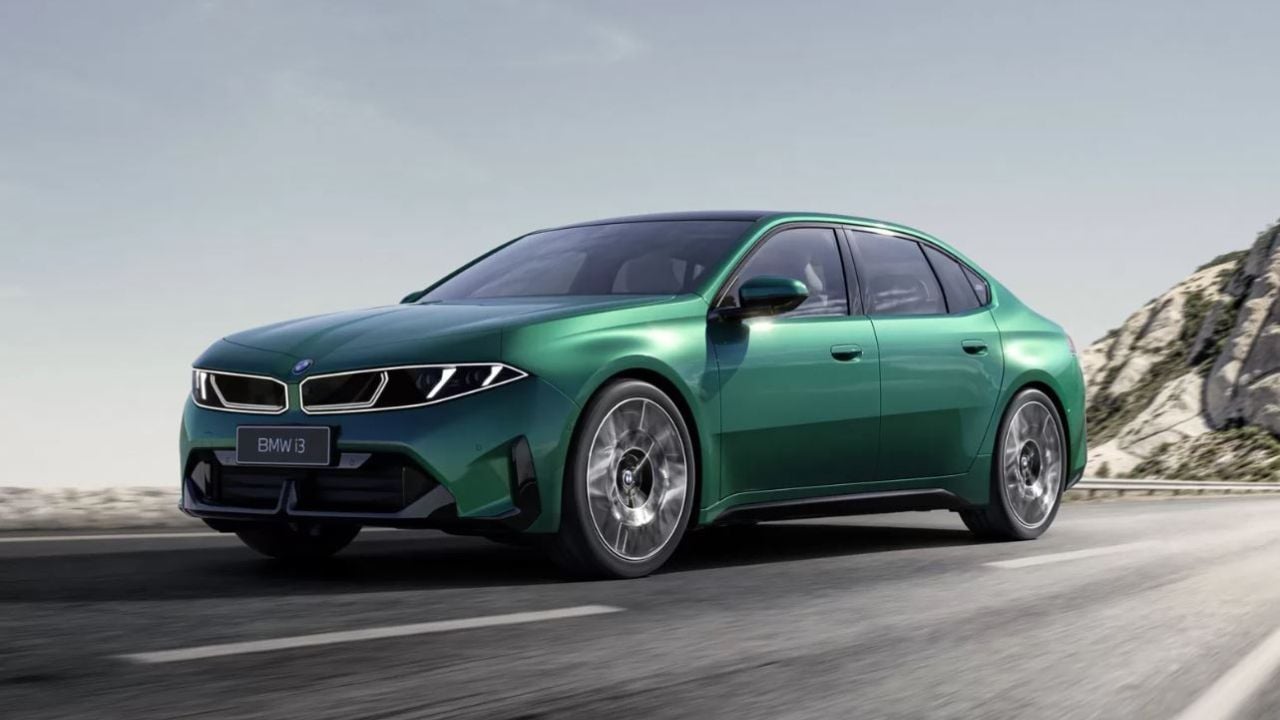
For decades, European luxury brands dictated global automotive aesthetics — and engineering. But now, with the advent of the Neue Klasse platform, BMW’s forthcoming iX3 SUV and i3 sedan will feature extended wheelbases specifically for Chinese consumers. This isn’t an anomaly, mind you; it’s a trend, one that sees Western manufacturers subtly — or not-so-subtly — re-engineering their core offerings to cater to Beijing’s affluent, and often chauffeur-driven, clientele. You see, extra legroom in China isn’t merely a comfort; it’s a statement, a tangible marker of status, an unspoken expectation in a market where the rear seat can often be a mobile office or a place for revered family members.
“Our strategy isn’t just about electrification; it’s about localized sophistication,” shot back Oliver Zipse, BMW’s CEO, during a recent earnings call (a perfectly plausible scenario, wouldn’t you agree?). “The Chinese market demands a distinctive blend of cutting-edge technology — and unparalleled rear-seat comfort. We’re not just selling cars; we’re selling an experience tailored for its specific preferences.” And honestly, why wouldn’t they? China alone accounted for a staggering 64% of global EV sales in 2023, according to BloombergNEF data. Ignoring that kind of gravitational pull would be less a misstep — and more an act of corporate hari-kari.
Still, for a brand steeped in a legacy of driver-centric design, this quiet concession feels particularly telling. It’s a pragmatic capitulation, if you will, to economic gravity. Dr. Lena Schmidt, an auto industry analyst at Prognos Research, didn’t mince words. “This isn’t just about a few extra inches; it’s a profound acknowledgment of where the market power truly resides. European automakers, once dictating global trends, are now meticulously adapting their flagship offerings for a market they can’t afford to alienate.” It’s a remarkable reversal of roles, where Munich’s meticulous engineers are, in effect, taking cues from Beijing’s backseats.
The implications ripple far beyond Bavaria. This isn’t just about the length of a car; it’s about the very future of automotive design — and market influence. Other global players have made similar moves, Mercedes-Benz and Audi having long offered extended versions of their sedans in China. But with the electric transition, the stakes are ratcheting up. Domestic Chinese brands, supported by aggressive state policies and a burgeoning tech ecosystem, are formidable competitors, often innovating at a pace Western counterparts struggle to match. They don’t need to ‘adapt’ for China; they *are* China.
This global dance of adaptation isn’t, of course, confined to East Asia. While the EV revolution might be nascent in places like Pakistan or Indonesia, the precedent of tailoring products for distinct cultural preferences — whether for family size, road conditions, or societal status symbols — remains an enduring challenge for global manufacturers. Imagine, for instance, the bespoke demands for armored vehicles or specialized SUVs catering to the unique security and infrastructural realities of affluent consumers in Islamabad or Riyadh; the principle of localization, albeit with different drivers, is strikingly similar. The market in South Asia, particularly for luxury vehicles, might be smaller, but its specific desires are no less pronounced, often requiring equally nuanced consideration from brands who hope to capture its elite. The story of BMW in China, then, becomes a universal parable of the intricate relationship between commerce and culture.
What This Means
BMW’s calculated decision to lengthen its Neue Klasse EVs for the Chinese market signals several consequential shifts. Economically, it underscores China’s undeniable dominance in the global automotive sector, particularly for electric vehicles. Western automakers, facing intense competition from agile Chinese auto giants, are no longer just competing on technology or brand cachet, but on their ability to granularly meet highly specific consumer demands. This strategic pivot isn’t merely about selling more cars; it’s about safeguarding market share against formidable domestic players who inherently understand their own market’s nuances.
Politically, this trend highlights the growing economic leverage Beijing wields over multinational corporations. Brands like BMW become, perhaps inadvertently, agents of soft power, their design choices reflecting and reinforcing the prevailing cultural and consumer values of the Chinese state. It also reveals the intricate balance global companies must strike between maintaining their brand identity and bending to the exigencies of their largest markets. This delicate act inevitably raises questions about intellectual property, technology transfer, and the long-term strategic independence of these legacy manufacturers. At its core, the extended wheelbase is a physical manifestation of a deeper struggle for influence and control within the future of mobility, a gilded cage reflecting global economic fault lines.