


Cricket’s Crucible: India’s Unrelenting Machine Forges New Talent From Hinterland Hopefuls
POLICY WIRE — New Delhi, India — The true measure of a nation isn’t just its economic might, nor its geopolitical maneuvers—it’s sometimes found in the relentless churn of its sports...

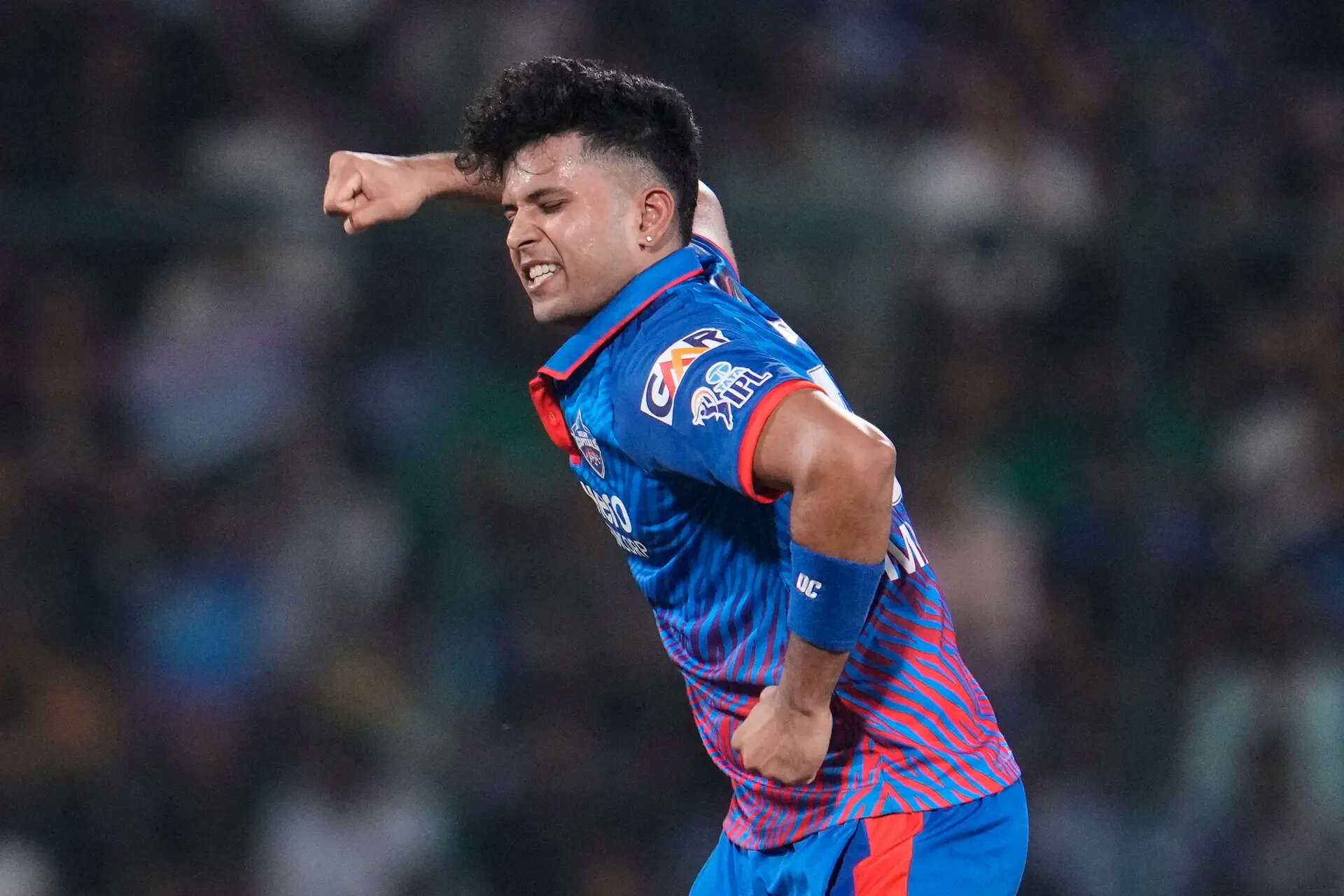
POLICY WIRE — New Delhi, India — The true measure of a nation isn’t just its economic might, nor its geopolitical maneuvers—it’s sometimes found in the relentless churn of its sports machine. In India, that machine is cricket. Every season, the Indian Premier League (IPL) becomes a crucible, melting down raw, unproven talent and reforging a select few into contenders. Madhav Tiwari, a name barely whispered beyond Madhya Pradesh’s dusty cricket pitches just two seasons ago, now embodies this very process—a testament to ambition, yes, but also to a system designed to swallow aspirations whole, or elevate them to staggering heights.
It’s not just a game; it’s an industry. And the competition? Brutal. Here, success isn’t just about bat and ball; it’s about navigating a labyrinth of expectations, political patronage, and sheer, grinding luck. Tiwari, all of 22 years old, emerged from Mauganj—a blink-and-you’ll-miss-it town in Rewa—to snatch attention in the IPL. But what you didn’t hear about, what the glitzy broadcast often omits, is the years of anonymity, the near-zero-sum game played out in thousands of small-town stadiums where dreams regularly expire. His story, they say, is about grit. It’s also about the infrastructure that—intentionally or not—transforms hopeful boys into market commodities.
Initially a batter, Tiwari’s arc took a turn, nudged by former national player Amay Khurasiya, who apparently saw something more. He morphed into an all-rounder, a ‘two-way’ player in a game that increasingly demands versatile specialists. “Talent gets you in,” Khurasiya would reportedly drill into him, “but fitness decides how long you stick around.” In a sport obsessed with statistical niches, Tiwari proved he could pivot, deliver in pressure cooker situations. Playing only four IPL matches in 2026, he still made noise, bagging four wickets against some big names. Because, frankly, in this league, you’ve got to grab your moment like it’s your last. One match, facing the very first ball of his IPL career, he steered it for a boundary. Then, a six, then a four, cementing a high-stakes chase. It’s the sort of moment highlights reels are made for, designed to sell franchises — and keep eyes glued to screens.
And what’s the official line on this relentless conveyor belt? “India’s cricketing ecosystem is unmatched globally, not just in its scale but its ability to unearth talent from every corner,” commented Anurag Thakur, India’s Minister for Youth Affairs and Sports, offering a perspective heavy on national pride. “These young athletes aren’t just players; they’re symbols of a New India, resilient and aspirational, contributing significantly to our global standing.” His sentiment, while undoubtedly true to a degree, neatly sidesteps the stark reality that for every Madhav Tiwari, there are thousands of equally dedicated aspirants whose journeys end before they even begin.
Indeed, the sheer volume of this system is staggering. The Board of Control for Cricket in India (BCCI) reported a record revenue of approximately $2 billion for the 2022-23 financial year, largely driven by broadcast rights for events like the IPL. That’s a serious chunk of change—money that bankrolls the development pathways, even if only a tiny fraction of its beneficiaries ever reach the top tier. “The talent pipeline here is unique, often raw, but astonishingly resilient,” mused former national selector Chetan Sharma, speaking informally. “We aren’t just looking for skills anymore; it’s about mental fortitude, that hunger only those from the smaller towns often truly possess. They don’t just want to play for India; they see it as the only way out, the only way up.” It’s a sentiment that speaks volumes about the societal pressures and stakes involved, turning sport into a socio-economic ladder. Madhav, like many others, wants to represent India for 15 years, a tenure that suggests stability, security—and frankly, a ticket out of relative obscurity.
He’d learned, apparently, how to cope with the glaring spotlight, too. In the Delhi Capitals dressing room, amongst multi-million-dollar players like Axar Patel and Mitchell Starc (bought for a sum that dwarfs his own IPL contract of Rs 40 lakh), he didn’t feel overwhelmed. It’s often the small moments, the unscripted ones, that tell the real story. “They taught me what pressure at the highest level really means,” he admitted, referring to net sessions against the likes of David Miller. But the biggest lesson, perhaps, wasn’t about the game itself, but the commerce that drives it—the quiet mastery required to perform under hyper-monetized scrutiny. These lessons, however invaluable for a nascent career, are ultimately lessons in surviving a globally commodified sporting environment.
What This Means
Madhav Tiwari’s journey isn’t just a feel-good sports narrative; it’s a policy blueprint in microcosm. India’s cricketing dominance—economic, cultural, and sporting—doesn’t happen by accident. It’s built on an aggressively decentralized talent search coupled with a highly centralized, ruthlessly competitive league system that dwarfs anything in neighboring South Asian nations. Pakistan, for instance, with its considerable cricketing passion, struggles to replicate India’s commercial engine, hampered by geopolitical tensions and, until recently, security concerns that drove international cricket away. This asymmetry in cricketing development—fueled by India’s colossal domestic market and robust sponsorship ecosystem—has profound implications.
Economically, the IPL has transformed from a mere league into a significant soft power asset, generating billions and employing thousands, establishing India not just as a sporting giant but a major global entertainment exporter. Politically, every young success story from a ‘forgotten’ region, like Mauganj, reinforces a national narrative of opportunity and progress, deflecting from persistent development disparities. But it also creates immense pressure. For boys across South Asia, from Karachi to Dhaka, India’s success highlights both aspiration and, for many, the unattainable. This makes talent poaching, cross-border viewership, and cultural influence particularly acute, transforming cricket into a subtle tool of regional statecraft and economic leverage. It suggests that economic policy, even if not directly intended, can have ripple effects far beyond GDP reports, shaping regional aspirations and rivalries in ways few policy strategists consider. Just look at the high-stakes game New Delhi often plays on the international economic stage—it’s always a fierce negotiation, whether for trade agreements or sporting dominance. Washington’s Whipsaw is another example of India’s unwavering posture when negotiating global terms.