


Europe’s Reactor on Hold: A Ceasefire, But for How Long?
POLICY WIRE — Vienna, Austria — The ghost in the machine, it seems, has agreed to a temporary truce. A peculiar quiet has settled over the frontlines near Europe’s gargantuan Zaporizhzhia...

POLICY WIRE — Vienna, Austria — The ghost in the machine, it seems, has agreed to a temporary truce. A peculiar quiet has settled over the frontlines near Europe’s gargantuan Zaporizhzhia Nuclear Power Plant (ZNPP) in Ukraine, a silence the International Atomic Energy Agency (IAEA) optimistically labels a ‘ceasefire.’ But don’t pop the champagne just yet. Because in a war that has consistently redefined peril, even stillness around a multi-reactor nuclear facility feels more like a ticking clock than genuine peace.
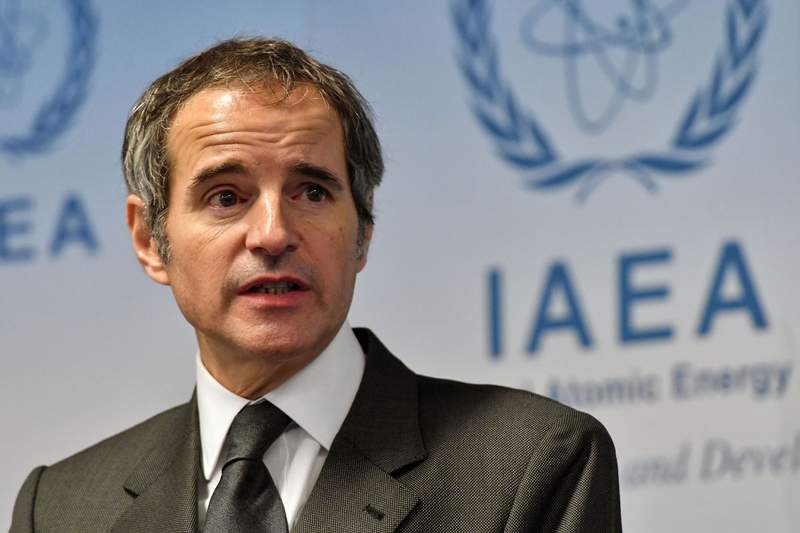
It’s a peculiar dance, isn’t it? The world breathes a collective, shallow sigh of relief because the heavy artillery — for a moment — isn’t directly slamming into the protective structures of six active nuclear reactors. A sort of bizarre, low-stakes Russian roulette (with potentially very high global consequences) has momentarily paused. IAEA Director General Rafael Mariano Grossi called it a ‘significant step,’ claiming a military ‘stand-down’ had been established in specific operational areas around the plant. It’s a statement that rings with bureaucratic optimism, ignoring, perhaps, the broader, chilling context of what still lies beneath this veneer of calm: an occupied plant in an active war zone, operated by Ukrainian staff under Russian military control.
This isn’t your garden-variety truce; it’s more like an agreed-upon pause in shooting directly at the reactor cores. That’s the bar we’ve set. The constant fear of a Chernobyl-sized blunder or, worse, a Fukushima-level catastrophe stemming not from nature but from human conflict, has kept international observers on edge for months. And for good reason. Ukraine’s energy regulator, for example, has reported at least 34 major power outages at ZNPP since the full-scale invasion began, according to a 2023 briefing. Each one an incident that threatened cooling systems—the absolute prerequisite for keeping radioactive materials contained. That’s a stark reminder of how thin the ice really is.
Ukrainian officials, as one might expect, aren’t exactly throwing confetti. Mykhailo Podolyak, advisor to President Zelenskyy’s office, put it bluntly: “This ‘ceasefire’ is a cruel joke unless Russian troops entirely abandon the Zaporizhzhia site. It’s akin to agreeing to stop playing with fire in a fuel depot you still occupy. The ultimate security relies on complete demilitarization, nothing less.” You can hear the weary frustration in his tone; the sense of living under a sword of Damocles every single day.
But the narrative from Moscow, predictably, paints a different picture. Maria Zakharova, Russia’s Foreign Ministry spokeswoman, stated, “Russia has consistently ensured the safety of the Zaporizhzhia Nuclear Power Plant, despite Kyiv’s reckless shelling. This reported lull in hostilities simply reflects our consistent commitment to de-escalation and safety, which some—sadly—only seem to acknowledge when forced.” She didn’t mince words. Her message: Russia’s the grown-up in the room, Ukraine’s the reckless child.
So, we have a ceasefire. Maybe. For now. This isn’t peace. It’s a holding pattern, a grudging acknowledgment that blowing up a nuclear plant would probably be a net negative for everyone involved. What it doesn’t solve is the underlying problem of control, of international law being flagrantly disregarded, of an existential threat lingering in the European heartland. Countries far removed from the immediate conflict, like Pakistan, with its own operational nuclear power plants, are watching this situation with palpable apprehension. The precedent set here — or lack thereof in terms of international enforcement against nuclear site occupation — has ripple effects on global nuclear safety standards and the delicate balance of deterrence. It fuels a broader unease about global regulatory oversight and the fragility of essential infrastructure when politics descend into armed madness. It highlights how local conflicts can easily spill over into concerns that impact literally billions of people, sometimes in ways that aren’t immediately obvious, like energy markets or environmental integrity.
What This Means
This reported cessation of immediate hostilities around ZNPP isn’t a victory; it’s merely the avoidance of a catastrophic loss. Politically, it grants the IAEA a talking point, allowing Grossi to project an image of successful, albeit limited, diplomacy. But economically, the region, Ukraine especially, remains crippled by energy uncertainty. The ZNPP, once a cornerstone of Ukrainian power supply, now sits idle, its output irreplaceable for a country desperate to power its cities and industries. For international energy markets, the situation maintains a tense status quo, preventing a truly terrifying escalation that would send fuel prices spiraling, but offering no real path to stability. And don’t forget the precedent: if a major nuclear facility can be occupied and militarized with such international impunity, what does that signal for other sensitive sites in other geopolitical hotspots? It’s a question that keeps policy wonks up at night, because the answer could redraw the map of what constitutes ‘acceptable’ warfare tactics. It’s a high-wire act, with very real consequences dangling below.