


Infernal Rhythms: Venezuela’s Dancing Devils Persist Amidst Lingering Despair
POLICY WIRE — Caracas, Venezuela — It’s quite something, the tenacious grip of old beliefs, especially when everything else seems intent on slipping through your fingers. While Venezuela...

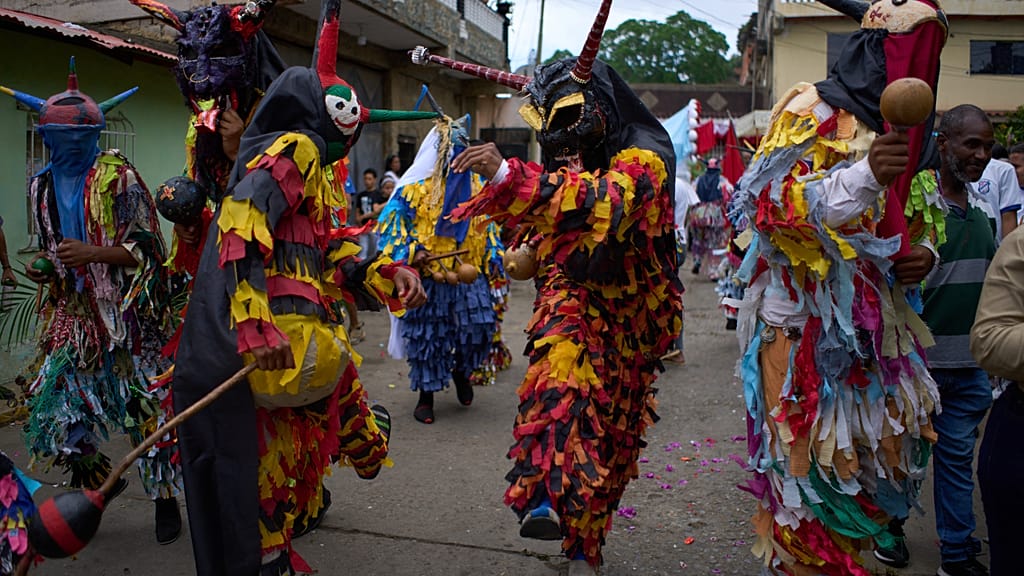
POLICY WIRE — Caracas, Venezuela — It’s quite something, the tenacious grip of old beliefs, especially when everything else seems intent on slipping through your fingers. While Venezuela continues its peculiar dance with economic uncertainty and a global spotlight that often spotlights little more than its struggles, down in the coastal towns and sun-baked plains, another, far older, choreography unfolds.
No, we’re not talking about geopolitical chess. We’re talking about horned masks, rhythmic percussion, — and a whole lot of sweaty exuberance. Every year, men and boys transform into ‘Dancing Devils’ for Corpus Christi—a bizarre, visceral spectacle designed, ostensibly, to humble Satan before the Body of Christ. It’s a tradition centuries deep, a strange blend of Indigenous, African, and European spiritual threads, all woven into a profoundly Venezuelan fabric.
Because, let’s be frank, for a nation often painted in monochrome strokes of scarcity and strongmen, this riot of color and clamor offers a splash of defiant life. These devils aren’t just performing a religious duty; they’re upholding a cultural inheritance, one passed down through generations, unbroken by sanctions or food shortages. The ritual is an acknowledged UNESCO cultural heritage, and frankly, it feels like an act of collective will in a country where individual agency can feel…limited.
One might wonder how such elaborate pageantry—the handmade masks, the detailed costumes, the months of practice—persists when basic amenities are a daily grind. But it does. The economy might be a roller coaster of the dispossessed, with annual inflation rates stubbornly remaining astronomical for basic goods, as reported by the IMF, which noted headline inflation for Venezuela reached 193% year-on-year in July 2023 for specific sectors, marking only a decelerated but still crippling pace. Yet, the drums beat on.
“These traditions aren’t just folklore; they’re the marrow of our nation,” insisted Ernesto Villegas, Venezuela’s Minister of Culture, speaking recently on the importance of such rites. “They’re a defiant act against those who wish to see us fail, a proof that our spirit, our unique identity, remains undiminished.” He’s not wrong. It’s a pretty strong statement without saying much about economics. It reminds you how similar this attachment to local custom can be in other places battling the relentless homogenizing forces of modernity, or poverty. Think of how deep-rooted Eid traditions, for instance, endure across Pakistan or other parts of the Muslim world—even in the face of devastating floods or economic downturns, these moments of collective identity persist, often strengthened by adversity.
And it’s not just the devils. It’s the surrounding communities, the families preparing the traditional food, the local artisans painstakingly crafting new masks or mending old ones. It’s a small, localized economy of faith — and identity, humming beneath the thrum of national crises. Governor Héctor Rodríguez of Miranda State, where many of these traditions flourish, puts it simply, if perhaps a tad optimistically: “Our economy might be a tightrope walk for many, but our spirit? That’s solid rock, carved by centuries of faith — and celebration. It holds us together when everything else threatens to fray.” It’s that kind of grit that keeps societies, well, society-ing.
Because you can bomb infrastructure, or collapse currencies—these aren’t hypothetical scenarios here, after all—but you can’t really eradicate a song in the blood, a dance in the bones. These Corpus Christi Devils are more than just a colorful relic; they’re a barometer of persistence, a measure of how much cultural DNA can survive under duress. They’ve weathered centuries, seen empires rise and fall (and more than a few regimes, let’s be honest), and still, they put on the masks and face down the forces of damnation, or at least, give ’em a good, sweaty scare.
What This Means
This enduring tradition of the Dancing Devils isn’t merely cultural pageantry; it’s a silent political statement and a socioeconomic anomaly. Politically, its survival, despite immense pressure, becomes a powerful symbol of national resilience and defiance against external interference, however justified some perceive it to be. The Maduro government, always eager to champion any symbol of Venezuelan exceptionalism, readily embraces and promotes these traditions, using them to project an image of a vibrant, unyielding culture rather than a struggling economy. It helps distract from the fact that citizens are often grappling with significant supply chain disruptions that go far beyond a forgotten religious festival. Economically, while seemingly trivial on a macro scale, the devotion of resources, time, and collective effort into maintaining this practice demonstrates an innate value placed on non-material heritage—a cultural economy of resilience. It highlights a critical disparity: while the national economy struggles with basics, micro-economies of tradition find a way, even if it means foregoing other necessities. It’s a fascinating look at the internal priorities of a populace, and what they’ll sacrifice to keep something meaningful alive. You can see parallels elsewhere in the world, where communities pour resources into festivals even when their governments are locked in high-stakes trade disputes or resource allocation debates.