

Warner’s Late Season Blitz: A High-Stakes Wager in Pakistan’s Premier Cricket Crucible
POLICY WIRE — Lahore, Pakistan — It wasn’t the roar of the crowd, nor the dizzying speed of the ball, that defined the Karachi Kings’ late-season gamble; it was the quiet, almost...

POLICY WIRE — Lahore, Pakistan — It wasn’t the roar of the crowd, nor the dizzying speed of the ball, that defined the Karachi Kings’ late-season gamble; it was the quiet, almost imperceptible tremor of consequence. In a league as capricious as the Pakistan Super League, the margin between triumph and ignominy often boils down to a single, extraordinary innings, or a veteran’s defiant stand. And stand he did.
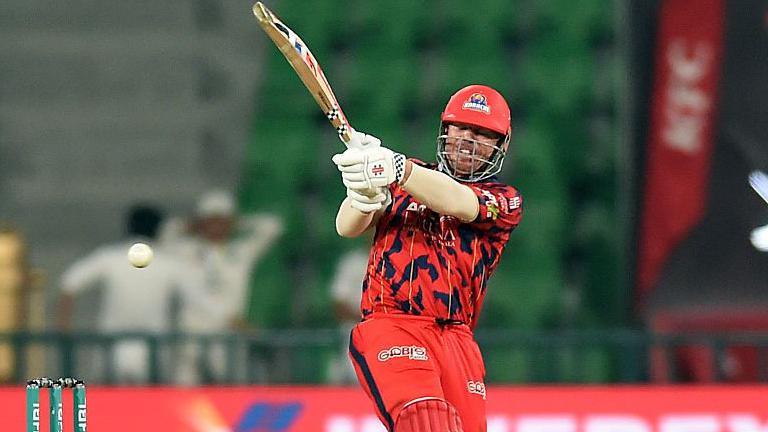
David Warner, the 39-year-old Australian luminary, returned from an injury hiatus to orchestrate a breathtaking chase against the Quetta Gladiators, keeping his side’s playoff aspirations flickering by the thinnest of threads. His unbeaten 89 off 48 deliveries, a masterclass of calculated aggression peppered with ten fours and four sixes, wasn’t merely a statistical highlight; it was a psychological anchor for a franchise teetering on the brink. This wasn’t just cricket; it was a high-stakes negotiation with fate, played out under the floodlights of Lahore.
Warner, who’d been sidelined for two crucial matches due to a nagging back strain, didn’t just participate; he led. He captained, he dominated, he compelled. His partnership with Reeza Hendricks, a monumental 141-run stand for the second wicket, systematically dismantled Quetta’s challenging target of 196. They navigated the pressure with a seasoned composure that belied the cut-throat nature of the tournament, sealing victory with nine balls to spare. It’s the kind of performance that shifts narratives, that injects a dose of potent belief into a locker room plagued by inconsistency.
But how much weight does a single individual carry in a team sport, particularly in a global franchise league where the pressure on players can be immense? For Warner, it appears to be considerable. His absence had undoubtedly been felt. His return, however, was a stark reminder of why he remains one of the most coveted commodities in T20 cricket. “We knew what was on the line tonight. Every match is a final now,” Warner asserted after the match, his voice carrying the calm resolve of a man who’s faced down far greater adversaries than a 195-run target. “The lads dug deep, — and it’s a testament to our collective belief, even when things looked grim.”
Still, the Kings’ path isn’t clear sailing. Their five wins from ten matches place them precariously in fourth position with 10 points. They’re just two points ahead of Lahore Qalandars and Hyderabad Kingsmen, both of whom possess the luxury of a game in hand. The mathematical gymnastics required for a playoff berth are, at this juncture, as complex as international trade negotiations, but at least now they’re possible.
Behind the headlines of Warner’s heroics lay Quetta’s despondency. Their earlier innings had been robust, anchored by Rilee Rossouw’s blistering 90 off 54 balls and captain Saud Shakeel’s brisk 57 from 34. They’d posted a formidable 195-6, a total that, on many nights, would have been insurmountable. Yet, it wasn’t. For Quetta, this seventh defeat of the campaign extinguished any lingering embers of playoff hope, consigning them to a disappointing seventh-place finish. “It’s tough to swallow, especially after putting up a strong total,” conceded Gladiators captain Saud Shakeel, his tone laced with resignation. “We fought hard, but Warner — and Hendricks were simply exceptional. It wasn’t our season, plainly.”
So, what does this pulsating contest reveal about the broader ecosystem of the Pakistan Super League, an entity that has become a vital artery in Pakistan’s sporting and economic landscape? It underscores the league’s volatile nature, its capacity for dramatic swings, and the pivotal role global talent plays in elevating its stature. Industry analysts estimate the Pakistan Super League contributes upwards of $100 million annually to the national economy through sponsorships, media rights, and tourism, a figure that underscores its profound significance beyond the boundary ropes.
What This Means
At its core, this dramatic Kings victory isn’t merely a sports result; it’s a micro-snapshot of macro-trends affecting the broader South Asian sporting economy. The PSL, much like its counterparts in India and Bangladesh, serves as a crucial platform for both local talent development and international soft power projection. A competitive, high-octane league enhances Pakistan’s global image, drawing foreign investment and tourism (albeit selectively), and fostering national pride. When marquee international players like Warner deliver under immense pressure, it validates the league’s quality and its ability to attract top-tier talent, which, in turn, boosts broadcast rights and sponsorship valuations.
But there’s a deeper, more subtle implication. The precarious playoff race, often decided by net run rate or late-stage upsets, mirrors the unpredictable nature of emerging markets. Success isn’t guaranteed; it’s earned through relentless performance and, sometimes, the sheer will of an individual. For a nation that has historically grappled with perceptions of instability, the consistent delivery of a world-class sporting product like the PSL becomes a quiet, yet powerful, narrative of resilience and capability. The passion of the Pakistani crowd, the intense scrutiny from fans (who often vent their frustrations with a digital fury that can be merciless), and the high stakes involved in every match all contribute to a compelling spectacle that transcends mere entertainment. It’s a testament to the fact that even amid global economic headwinds, the spectacle of sport, particularly cricket in this region, remains an indispensable cultural and commercial force.
It’s not just about who makes the playoffs; it’s about the continued viability of a crucial institution, one game at a time. The Kings’ win wasn’t just two points; it was a reaffirmation of the PSL’s enduring allure.